
Article
What Does Home Coffee Cost Per Cup?
Edited and reviewed by Coffee Made Clear TeamUpdated 6 min read
Start with the cost of the beans in one cup: bag price ÷ bag weight in grams × your dose.
Add milk, filters and expected waste for the marginal cost. Keep equipment separate, in an all-in figure, so a grinder purchase does not hide the day-to-day cost.
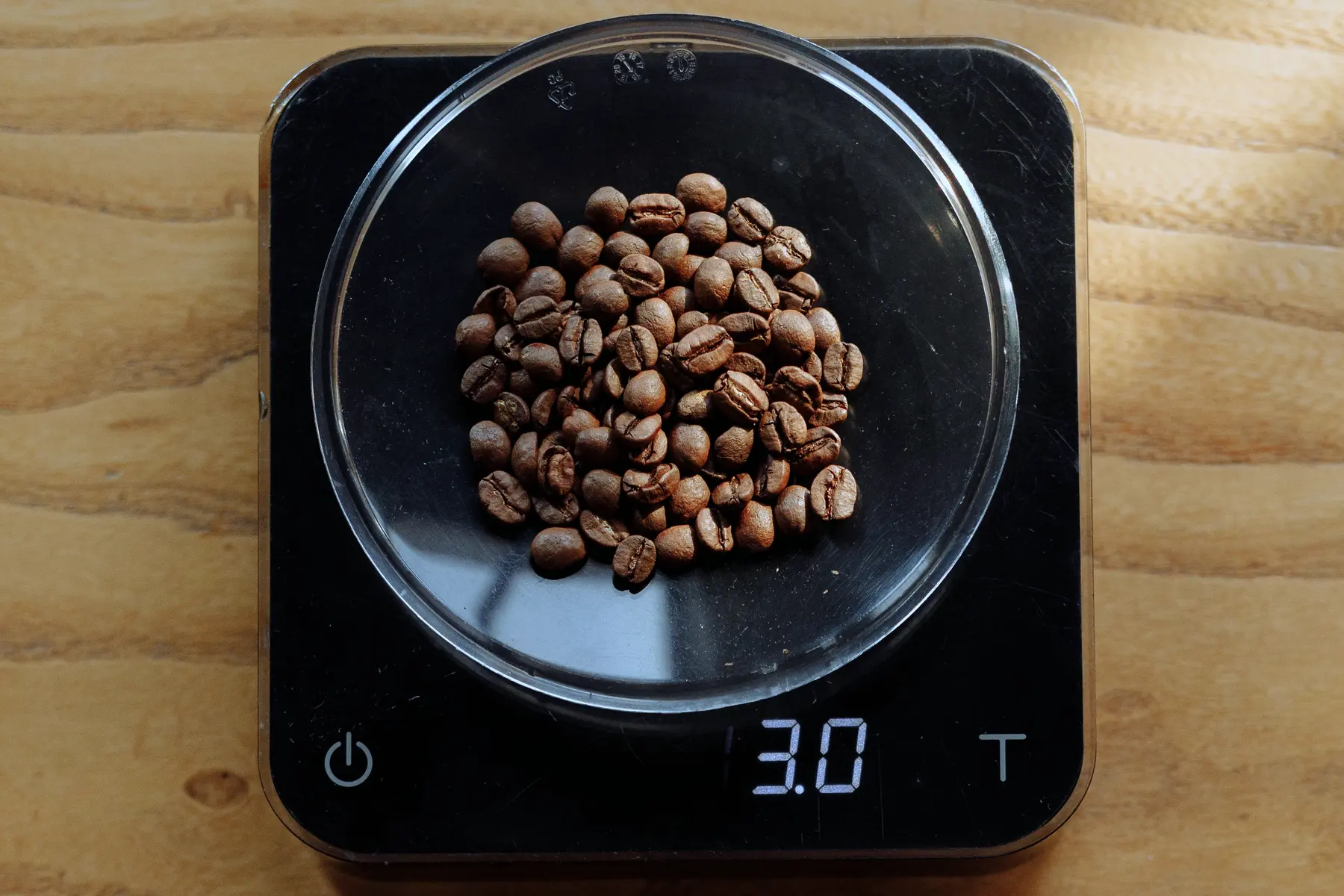
Bean price and dose move the answer most. The calculator below does the sums in your own currency and keeps both figures in view.
The cost of home coffee is not one universal number. It depends mostly on what you pay for the coffee, how many grams you use per cup, and whether you spread the cost of equipment across your cups.
In this guide we split the cost into layers, so you can see which one matters most, and give a calculator that does the sums with your own numbers. A worked example shows the formula, clearly labelled as an example.
The cost layers
- Bean cost per cup = bag price ÷ bag weight in grams × coffee dose in grams.
- Marginal cost per cup = bean cost + milk + filter + other consumables + expected waste.
- All-in cost per cup = marginal cost + equipment cost spread across the cups you expect it to make.
- Difference from a café = your café price − your all-in home cost.
Keep the marginal and all-in figures side by side. Beans are used in every brew; equipment is a choice with an uncertain life. If your bag weight is in ounces, one ounce is about 28.35 g; the calculator uses the full 28.349523125 g.
Work out your number
The calculator starts with the worked example below so you can see how it fills in; clear it and enter what you actually pay and use. It works in this page only: nothing you type is saved or sent.
What does your coffee cost per cup?
Enter what you actually pay and use. The calculator separates beans and consumables from optional equipment cost, so the assumptions stay visible.
Your cost per cup
- Beans
- Consumables and expected waste
- Marginal home cost
- Equipment allocation
- All-in home cost
- Difference from your café price
- A year at your cups per day
- Equipment pays for itself after
Worked example
A dated price benchmark
For a reference point, the U.S. Bureau of Labor Statistics average price for 100% ground roast coffee, all sizes, in the U.S. city average was $9.332 per pound in September 2026 (series APU0000717311). That works out, by our arithmetic, to about $0.31 of coffee for a 15 g dose, $0.37 for 18 g and $0.41 for 20 g.
That figure is an average retail price for ground roast coffee, not a specialty-coffee average, and prices change every month. Use it as a dated example, then put your own bag price in the calculator.
The same series month by month shows how much that price moves. Ground coffee in US stores roughly doubled in price over the decade shown, so a cost per cup worked out a year ago may already be out of date.
The calculator above can start from the latest month of this series: choose Use the US average price to fill in the price for a one-pound bag, then change anything that differs from what you pay.
Recurring costs versus setup costs
Recurring costs rise with every cup you brew: the coffee, paper filters or pods, milk or creamer, syrups, and bottled water if you use it. Setup costs are bought less often: the brewer, grinder, kettle, scale and storage container.
You can leave setup costs out, or spread them over an assumed number of cups. Both are valid as long as you say which you are doing. The cups figure is your assumption about how long the equipment lasts, not a fact about it.
Electricity and water are real costs too, but one universal figure is not useful without your local rates and how much energy your kettle or machine uses. Add your own estimate as another cost per cup if it matters to you.
A claim like “home coffee saves you $X a year” needs a café, a drink, a size, a price and your own home costs. That is why the calculator asks for your café price instead of assuming one.
Questions the formula can answer
- Whether a larger bag saves money once you allow for the coffee you expect to waste.
- How a 15 g dose compares with an 18 g dose.
- How many cups it would take a grinder to pay for itself against your café habit, under your assumptions.
- Whether milk and disposable filters change the result much.
Frequently asked questions
How do I work out coffee cost per cup?
Divide the bag price by the bag weight in grams, then multiply by the grams you use per cup. That is the bean cost; add milk, filters and expected waste for the marginal cost.
Should I count my grinder or brewer in the cost per cup?
You can, as a separate all-in figure: divide the price by the number of cups you expect it to make. That number is your assumption, not a promise of how long it lasts.
How much do I save compared with a café?
It depends on your café price, your drink and your own costs, so there is no universal figure. Enter your café price in the calculator to see the difference per cup.
Do electricity and water matter?
They are real costs, but they depend on local rates and your equipment. Add your own estimate as another cost per cup if it matters to you.
- Bean cost per cup = bag price ÷ bag weight in grams × your dose.
- The marginal cost adds milk, filters and expected waste; it is what each extra cup costs.
- Keep equipment separate in an all-in figure, so a grinder does not hide the day-to-day cost.
- Any café comparison depends on your café price; there is no universal saving.
Sources
Pages used for the figures above.
- U.S. Bureau of Labor Statistics via FRED, Average Price: Coffee, 100%, Ground Roast, All Sizes (Cost per Pound/453.6 Grams) in U.S. City Average, series APU0000717311, September 2026 observation.
- National Institute of Standards and Technology, NIST Guide to the SI, Appendix B.9: factors for units listed by kind of quantity (ounce to grams).
Published Updated
See sourcesReport a correction — fixes are logged in the Updated date.