
Article
How Long Should Coffee Beans Rest?
Edited and reviewed by Coffee Made Clear TeamUpdated 5 min read
Freshly roasted coffee is full of carbon dioxide from the roast.
It escapes over the following days, a process called degassing. Brewed too soon, the gas can make extraction uneven, and the coffee can taste sour or inconsistent.
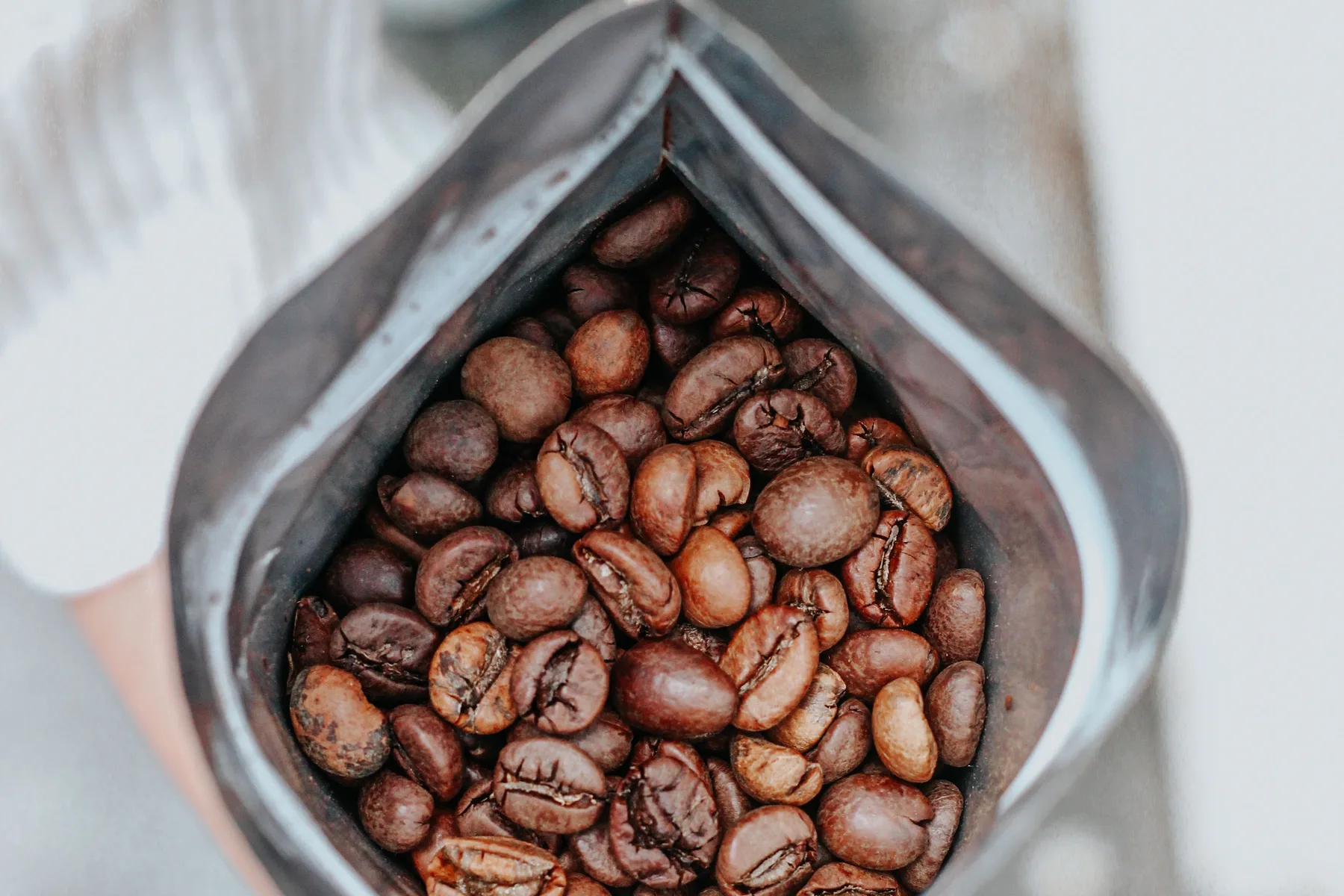
Roasters suggest a short rest. Methodical Coffee gives about 5–14 days after the roast date for pour-over, 5–12 days for drip and 7–21 days for espresso. 49th Parallel suggests at least 7 days, depending on the roast. Lighter roasts usually need longer; darker roasts degas faster. Store the beans somewhere cool and dry while they rest, and let taste have the last word.
Coffee is at its best a little while after roasting, not straight out of the roaster. The reason is gas.
In this guide we explain what degassing is, how long roasters suggest resting beans for filter and espresso, and how to tell when coffee is too fresh. For keeping beans at their best once they are ready, see our guide to storing coffee beans.
What degassing is
Roasting forms gases, mostly carbon dioxide. A 2018 study of degassing explains that part of this gas leaves during roasting, part stays trapped in the porous beans, and the rest is released steadily during storage, or more suddenly during grinding and brewing.
Methodical Coffee defines degassing as the gradual release of carbon dioxide from roasted coffee. 49th Parallel explains why it matters: freshly ground coffee releases gas fast, which can make the water flow unevenly and the extraction uneven.
How long to rest coffee
Roasters give ranges, not one number:
- Methodical Coffee: about 5–14 days after the roast date for pour-over, 5–12 days for drip, and 7–21 days for espresso.
- 49th Parallel: at least 7 days after roasting, depending on the roast level.
- Seattle Coffee Gear: if a coffee tastes sour because it is too fresh, let it rest for a few more days.
Light and dark roasts
Lighter roasts usually need longer. Methodical Coffee explains that a lighter roast keeps more of the bean’s structure, which can trap the gas more tightly, while a darker roast is more porous. 49th Parallel agrees that darker roasts typically degas faster.
How the coffee was roasted matters too: in a 2014 study, coffee roasted hotter and faster degassed faster than coffee taken to the same roast level more slowly.
Signs your coffee is too fresh
- A very lively, uneven bloom when water first hits the grounds.
- A sour or thin taste, which Methodical Coffee puts down to acids showing before sweetness.
- Inconsistent results from cup to cup, as 49th Parallel notes.
- For espresso, thick crema that can make a shot look richer than it tastes.
What you need
- A bag of coffee with a roast date on it.
- A cool, dry, dark place to keep it at room temperature.
- Your usual brewer.
Resting roasted coffee
- Pour-over
- about 5–14 days after the roast date; drip 5–12 (Methodical Coffee)
- Espresso
- about 7–21 days after the roast date (Methodical Coffee)
- Light roasts
- usually need longer
- Dark roasts
- usually degas faster
- Store
- cool, dry, dark, room temperature; keep it sealed
These are ranges from roasters, not rules. Taste has the last word.
Step 1: Find the roast date
Look for it on the bag. Our coffee bag guide shows where it usually is.
Step 2: Store it while it rests
Keep the beans sealed in a cool, dry, dark place at room temperature. Methodical Coffee suggests leaving them in their original valved bag for the first several days.
The rest windows here and the about 1 to 3 weeks in our storage guide answer different questions. Resting counts from the roast date and asks when the coffee is ready; part of it can pass with the bag still sealed. The storage figure, from the National Coffee Association, is for whole beans after the bag is opened, kept airtight at room temperature, and asks how long they stay at their best. So a sealed bag rested 7–21 days for espresso has not used up that window, but taste is still the final check.
Step 3: Wait a few days
Start filter coffee after about 5 days, or 7 as 49th Parallel suggests, and espresso after about 7, then taste.
Step 4: Taste and adjust
If it tastes sour or the bloom is wild, give it a few more days.
Step 5: Note when it peaks
Write down which day tasted best, so you know for the next bag.
Troubleshooting
I need to brew a very fresh bag now
49th Parallel suggests adjusting the grind, brew time and temperature to make up for it.
The coffee tastes flat after a few weeks
It may be past its best. Oxygen, heat, light and moisture speed staling, Methodical Coffee says; buy smaller bags and store them well.
Espresso is sour even after a week
Light-roast espresso can need longer. Methodical Coffee suggests up to about 21 days.
Frequently asked questions
Why does coffee need to rest after roasting?
Roasting forms carbon dioxide, and some of it stays in the beans. A 2018 study notes that this gas is released steadily during storage, and more suddenly during grinding and brewing. Too much of it can make extraction uneven.
Does espresso need more rest than filter coffee?
Methodical Coffee says so. It suggests about 7–21 days for espresso, against about 5–14 days for pour-over.
How can I tell if my coffee is too fresh?
A very lively, uneven bloom, a sour or thin taste, and, for espresso, thick crema that hides the flavor, Methodical Coffee says. 49th Parallel adds that results can be inconsistent.
Can coffee rest too long?
Yes. It slowly loses flavor. Methodical Coffee says that eventually, oxidation outweighs any benefit of the rest. Our storage guide covers how to keep beans fresh.
- Roasting leaves carbon dioxide trapped in the beans; it escapes over the following days, called degassing.
- Too much gas can make extraction uneven, so very fresh coffee can taste sour or inconsistent.
- Methodical Coffee suggests about 5–14 days for pour-over, 5–12 for drip and 7–21 days for espresso.
- Lighter roasts usually need longer; darker roasts usually degas faster.
Sources
Pages and studies used for the claims above.
- Methodical Coffee, Freshly Roasted Coffee, Explained: Degassing, Rest, and Flavor.
- 49th Parallel Coffee Roasters, Coffee degassing and its influence on extraction.
- Seattle Coffee Gear, Why Does My Espresso Taste Sour or Bitter?
- Smrke et al., Time-Resolved Gravimetric Method To Assess Degassing of Roasted Coffee, Journal of Agricultural and Food Chemistry (2018) (abstract).
- Wang and Lim, Effect of roasting conditions on carbon dioxide degassing behavior in coffee, Food Research International (2014) (abstract).
Published Updated
See sourcesReport a correction — fixes are logged in the Updated date.