
Article
How to Make Coffee for a Crowd
Edited and reviewed by Coffee Made Clear TeamUpdated 5 min read
For a full 12-cup carafe, use about 111 g of ground coffee, about 22 level tablespoons, at 1:16.
A coffee maker's "cup" is smaller than a mug: De'Longhi bases its cups on 5 fl oz, so a 12-cup carafe takes about 60 fl oz of water. The grounds keep back about 220 ml of water, so the pot pours about six 8 fl oz mugs.
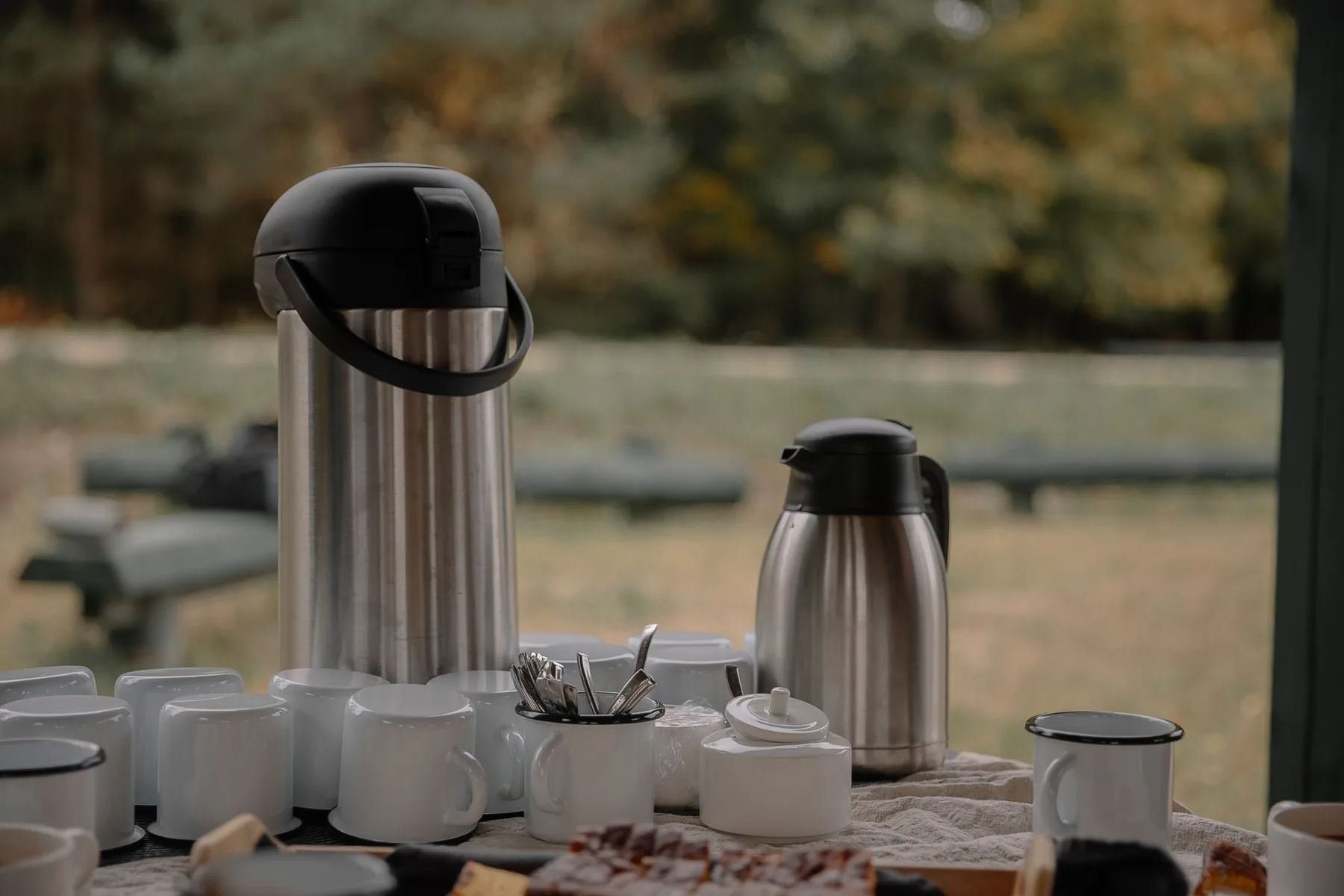
Coffee can wait in its carafe for a while. In one study of coffee held up to 3 hours, light and medium roasts tasted more sour, and the researchers suggest the main loss may be aroma. But a panel of coffee professionals did not prefer fresh coffee over held.
Making coffee for a group is mostly arithmetic: how much your coffee maker holds, how much coffee to use, and how to keep it good until everyone has a cup.
In this guide we work out the amounts for a full carafe, show how to scale them, and explain what one study found about keeping brewed coffee hot. For the brewing itself, see our guides to drip coffee and French press coffee.
How big is a coffee maker cup?
Smaller than you might think. De’Longhi says its cups “are based on 5 fl oz per coffee”. So its 10-cup carafe holds about 50 fl oz, its 12-cup carafe about 60 fl oz, and its 14-cup carafe about 70 fl oz.
The National Coffee Association’s brewing guide counts in 6-ounce cups instead. Either way, your mugs may well hold more.
The pot also pours less than the water you put in. KitchenAid says dry coffee grounds absorb twice their weight in water, and that water stays in the filter. For 111 g of coffee, that is about 220 ml (7½ fl oz). So a 12-cup carafe of about 60 fl oz pours about 52 fl oz: about six 8 fl oz mugs, with a little over, by our arithmetic.
How much coffee to use
By weight, our ratio guide starts at 1:16: 1 g of coffee for every 16 g of water. A milliliter of water weighs about a gram, so a full 12-cup carafe of about 60 fl oz (1.8 liters) takes about 111 g of coffee.
If you measure by volume, a level tablespoon of ground coffee weighs roughly 4 to 5 g. At about 5 g, 111 g is about 22 level tablespoons. Spoons and coffees vary: Trade Coffee measured about 4 g per level tablespoon of a medium roast, which would make it closer to 28. A scale is more reliable.
The National Coffee Association’s volume guide, 1 to 2 tablespoons per 6 ounces of water, is a range from weaker to stronger. At about 5 g a tablespoon, even its top end is a little weaker than 1:16.
| Carafe | At 1:16 | Tablespoons |
|---|---|---|
| 10 cups (50 fl oz) | 92 g | about 18 |
| 12 cups (60 fl oz) | 111 g | about 22 |
| 14 cups (70 fl oz) | 129 g | about 26 |
These are our arithmetic, rounded to whole grams and level tablespoons of about 5 g. The association recommends a medium grind for drip coffee, like kosher salt. For any other amount, our coffee ratio calculator does the sums.
Keeping it hot
A 2023 study held drip coffee for up to 3 hours in three kinds of carafe: glass on a hot plate, a carafe with an insulated jacket, and a vacuum-insulated carafe. Trained tasters checked light, medium and dark roasts at times from 15 minutes to 3 hours.
- Light and medium roasts tasted more sour over time, as the coffee became more acidic.
- A dark roast also became more acidic, but the tasters did not find it more sour.
- Coffee professionals, 93 of them, tasted coffee held 30 minutes and 3 hours without knowing which was which. They showed no preference for the fresher coffee.
The researchers suggest the main loss while coffee waits may be aroma. So a carafe of coffee can wait a while; brew a fresh one if it has been sitting for hours.
If your coffee maker has a hot plate, the National Coffee Association suggests wiping off any spilled coffee once it has cooled.
What you need
- A drip coffee maker and its carafe.
- Ground coffee, medium grind.
- A scale or a tablespoon measure.
- Enough mugs for everyone.
| Fill | water to the 12-cup mark |
|---|---|
| Coffee by weight | about 111 g, at 1:16 |
| Coffee by volume | about 22 level tablespoons (about 5 g each) |
| Grind | medium, like kosher salt |
| Pours | about 60 fl oz of water in; the grounds keep about 220 ml, so about six 8 fl oz mugs |
De'Longhi's coffee maker cup is 5 fl oz. Spoons vary, so a scale is more reliable. Our ratio calculator does the sums for other amounts.
Step 1: Count the mugs
Work out how many mugs you need and how big they are. With 5 fl oz cups, a 12-cup carafe pours about six 8 fl oz mugs, after the grounds keep some water back.
Step 2: Measure the coffee
For a full 12-cup carafe, use about 111 g at 1:16, about 22 level tablespoons. For other amounts, use our ratio calculator or the table above.
Step 3: Fill the water and brew
Fill the water to the 12-cup mark, add the coffee, ground medium, and brew as usual.
Step 4: Brew a second batch if needed
If you need more than one carafe holds, start the next batch as soon as the first is done.
Step 5: Serve within a few hours
Keep the coffee in its carafe and serve it. If it has been waiting for hours, brew a fresh batch.
Troubleshooting
There was not enough to go round
Mugs are bigger than coffee maker cups. Count on about six 8 fl oz mugs from a 12-cup carafe, and brew a second batch.
It tastes weak
Use a little more coffee. Our ratio guide suggests 1:15 for a stronger cup.
It tastes sour after a while
In the study, light and medium roasts tasted more sour the longer they were held, while a dark roast did not. Brew closer to serving time.
Frequently asked questions
How many mugs does a 12-cup coffee maker fill?
About six 8 fl oz mugs. De’Longhi bases its carafe cups on 5 fl oz, so its 12-cup carafe takes about 60 fl oz of water, and the grounds keep back about 220 ml of it.
How much coffee do I need for 12 cups?
About 111 g of ground coffee for a full 12-cup carafe at 1:16, by our arithmetic: about 22 level tablespoons at about 5 g each. Spoons vary, so a scale is more reliable.
How long does brewed coffee stay good?
In one study of coffee held for up to 3 hours, light and medium roasts tasted more sour over time, and the researchers suggest the main loss may be aroma. Yet a panel of coffee professionals showed no preference for fresh over held coffee.
Is an insulated carafe better than a hot plate?
The study compared a glass carafe on a hot plate with two kinds of insulated carafe. It found some differences between the insulated carafes for light and dark roasts, and few for a medium roast, and its summary does not name a best carafe.
- In De'Longhi's measure, a coffee maker cup is 5 fl oz, so a 12-cup carafe takes about 60 fl oz of water and pours about six 8 fl oz mugs.
- For a full 12-cup carafe, use about 111 g of coffee at 1:16, about 22 level tablespoons.
- Use our ratio calculator to scale up or down, and brew a second batch if you need more.
- In one study, coffee professionals did not prefer fresh coffee over coffee held for 3 hours; the researchers suggest the main loss may be aroma.
Sources
Pages and studies used for the claims above.
- National Coffee Association, Drip coffee.
- KitchenAid, Coffee Output is Less than Expected - Pour Over Coffee Maker.
- Trade Coffee, How Many Tablespoons of Coffee Per Cup?
- De’Longhi, How many fluid ounces does my drip coffee maker carafe yield?
- Batali et al., The effect of post-brew holding time and carafe type on the sensory properties of drip brew coffee, Journal of the Science of Food and Agriculture (2023).
Published Updated
See sourcesReport a correction — fixes are logged in the Updated date.