
Article
Arabica vs Robusta Coffee Explained
Edited and reviewed by Coffee Made Clear TeamUpdated 6 min read
Arabica and Robusta are two different coffee species.
Arabica makes up about 60% of the world's coffee and grows best in cooler, higher places. Robusta makes up about 40%, handles heat better and is common in instant coffee.
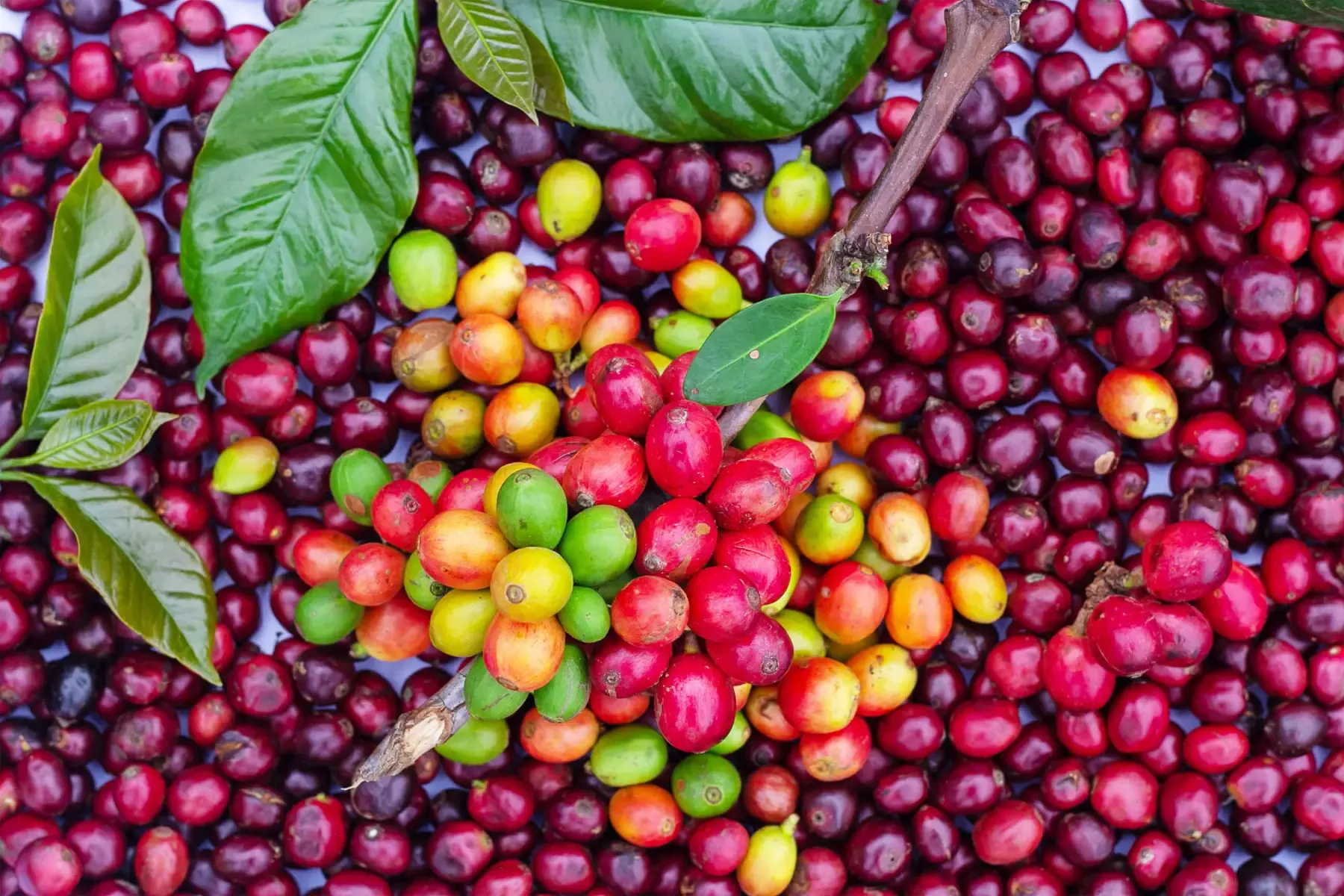
In the bean, Robusta has roughly twice the caffeine, and less oil. In the cup it tends to taste more bitter, with less sweetness and acidity. Neither is good or bad by species alone, so let your own taste decide.
Almost every coffee you buy comes from one of two plants: Arabica or Robusta. The names show up on bags, café menus and instant coffee jars. They are two species of coffee plant, and they grow, taste and behave differently.
In this guide we explain what each one is, what is different inside the beans, and what that tends to mean in your cup. Then we show a simple way to taste the difference yourself.
Two plants, two species
Arabica (Coffea arabica) is native to Ethiopia, where most of its wild diversity still grows. Its genes come from a cross between two older coffee species, and it mostly pollinates itself. That is one reason the species has very little genetic variety. It grows best at higher elevations, at about 15 to 24 °C.
Robusta (Coffea canephora) comes from the humid forests of central and western Africa. In the wild it grows from about 50 to 1,500 m above sea level. Unlike Arabica, it must cross-pollinate, and its genetic variety is vast. It is much more heat tolerant than Arabica.
Arabica makes up about 60% of the world’s coffee, and Robusta about 40%. Robusta’s share has grown since the early 1990s. Vietnam is the largest Robusta producer.
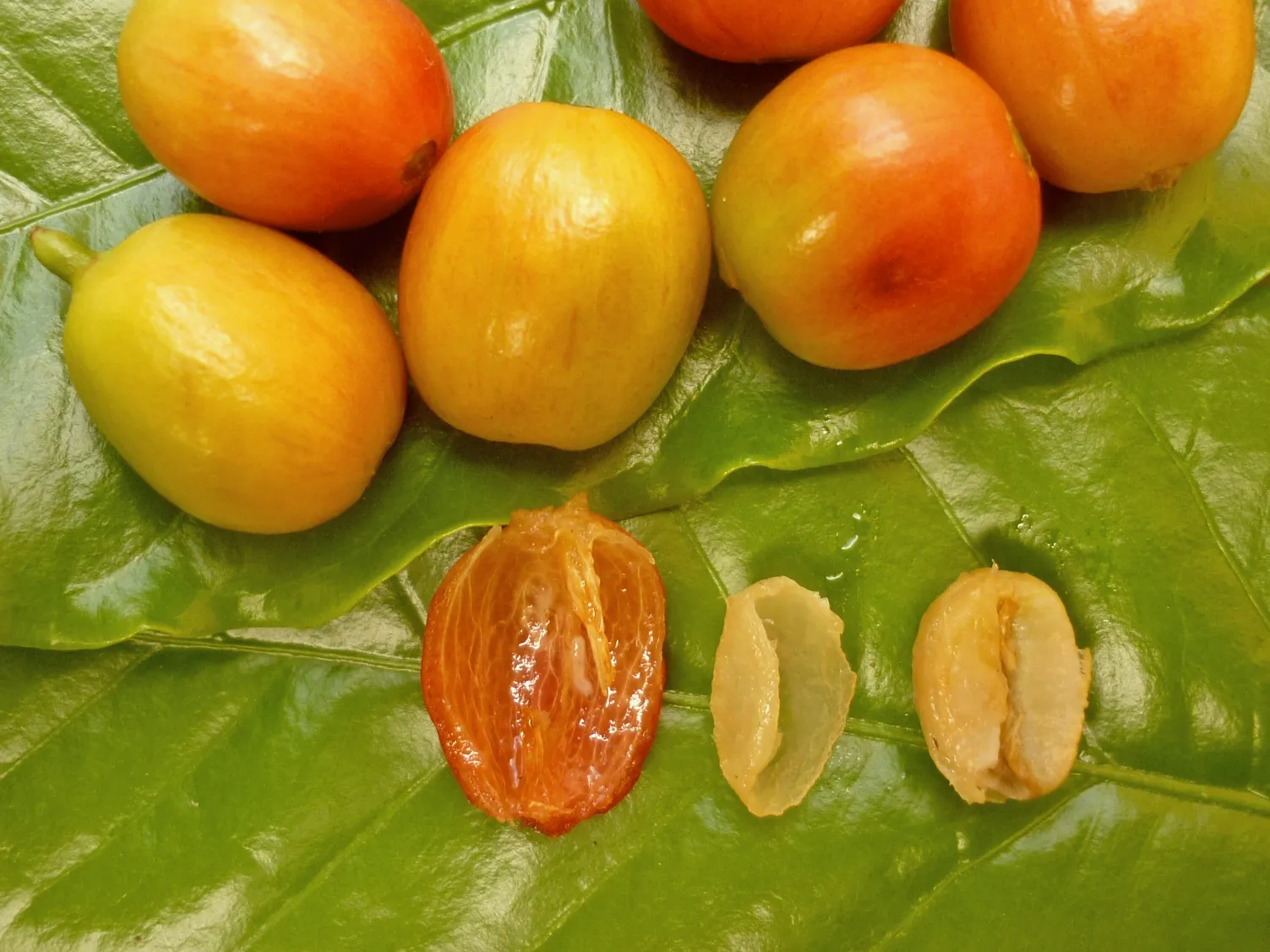

What is different inside the beans
Researchers measure what is in green (unroasted) beans. A 2021 review gives these typical ranges, by dry weight:
| In green beans | Arabica | Robusta |
|---|---|---|
| Caffeine | 0.9–1.2% | 1.6–2.4% |
| Lipids (oil) | 12–18% | 9–13% |
| Chlorogenic acids | 5.5–8% | 7–10% |
| Trigonelline | 1–1.2% | 0.6–0.8% |
The same review gives wider caffeine ranges in another section, but the pattern holds: Robusta has roughly twice the caffeine.
Roasting changes most of these compounds. Caffeine is fairly heat stable, though some is lost in the roaster.
How it shows up in the cup
Robusta is commonly described as tasting more bitter, with less sweetness and acidity. The table above lists more caffeine and chlorogenic acids, but it does not measure taste, so treat the cup differences as a tendency, not a rule.
These are tendencies, not rules. Roast level, freshness and brewing all change the cup. World Coffee Research lists Robusta varieties with high cup quality. As our guide to choosing coffee beans puts it, “Arabica good, Robusta bad” is too simple.
What you need
- A small bag of a 100% Arabica coffee and a small bag of a coffee that contains Robusta, as named on each bag.
- Two similar roasts if you can, so roast does not hide the difference.
- Your usual brewer, scale and recipe.
Step 1: Brew both the same way
Use the same dose, water, grind and brew time for each. Change only the coffee.
Step 2: Taste them side by side
Let both cool a little. Sip one, then the other.
Step 3: Note bitterness and sweetness
Ask which is more bitter, and which tastes sweeter. Write it down.
Step 4: Note acidity and body
Ask which tastes brighter, and which feels heavier or more drying in your mouth.
Step 5: Decide what you like
Choose by taste. Keep a note of the species and the roast you preferred, so you can find similar coffees.
Troubleshooting
Both coffees taste much the same
A dark roast adds its own bitterness, which can cover the differences. Try two lighter roasts.
The Robusta tastes too harsh
Bitterness is a common Robusta trait. Try a blend with less Robusta, or follow our guide to bitter coffee to rule out the brew.
I want less caffeine
Arabica has less caffeine on average. Using less coffee per cup or choosing decaf lowers it more. See the coffee-to-water ratio guide.
Frequently asked questions
Does Robusta have more caffeine than Arabica?
Yes, roughly twice as much. A 2021 review gives 0.9 to 1.2% caffeine for green Arabica beans and 1.6 to 2.4% for green Robusta, by dry weight. How much coffee you use per cup matters too.
Is Arabica better than Robusta?
Not automatically. Arabica tends to taste sweeter and more acidic, and Robusta more bitter. But World Coffee Research lists Robusta varieties with high cup quality, so judge the coffee, not the species.
Is Robusta used in instant coffee?
Yes, widely. A 2025 study says Robusta makes up about 40% of world production, in large part because of its use in instant coffee.
Can a coffee be a mix of both?
Yes. A blend can combine Arabica and Robusta. Researchers have even designed blends of the two to reach a target, such as less caffeine. Check the bag for the species it names.
- Arabica and Robusta are two species of coffee plant, not two roasts or two brands.
- Green Robusta beans carry roughly twice the caffeine of Arabica, and less oil.
- Robusta tends to taste more bitter and less sweet and acidic, but quality varies within each species.
- Judge the coffee in your cup, not the species name on the bag.
Sources
Studies and pages used for the claims above.
- World Coffee Research, Arabica and Robusta variety catalogs.
- Olechno, Puścion-Jakubik, Zujko and Socha, Influence of Various Factors on Caffeine Content in Coffee Brews, Foods (2021).
- Šeremet et al., Antioxidant and Sensory Assessment of Innovative Coffee Blends of Reduced Caffeine Content, Molecules (2022).
- Holler and Kawuki, The Roots of Robusta: Cultivating Growth for a Species Once Overlooked, Specialty Coffee Association 25 magazine, republished by World Coffee Research.
- Scalabrin et al., A single polyploidization event at the origin of the tetraploid genome of Coffea arabica, Scientific Reports (2020).
- Vi et al., Out of Africa: The genomic footprints of Vietnamese Robusta coffee, PLoS One (2025).
- Chandrasekhar, Graham and Viglione, Commodity Profile: Coffee, Carbon Brief (2023).
Published Updated
See sourcesReport a correction — fixes are logged in the Updated date.