
Article
Washed, Natural and Honey Processing
Edited and reviewed by Coffee Made Clear TeamUpdated 6 min read
Processing is how the coffee seed is taken out of its cherry and dried. A natural coffee dries inside the whole cherry.
A washed coffee has the fruit removed before drying. A honey coffee has the outer fruit removed but keeps some of the sticky layer underneath while it dries.
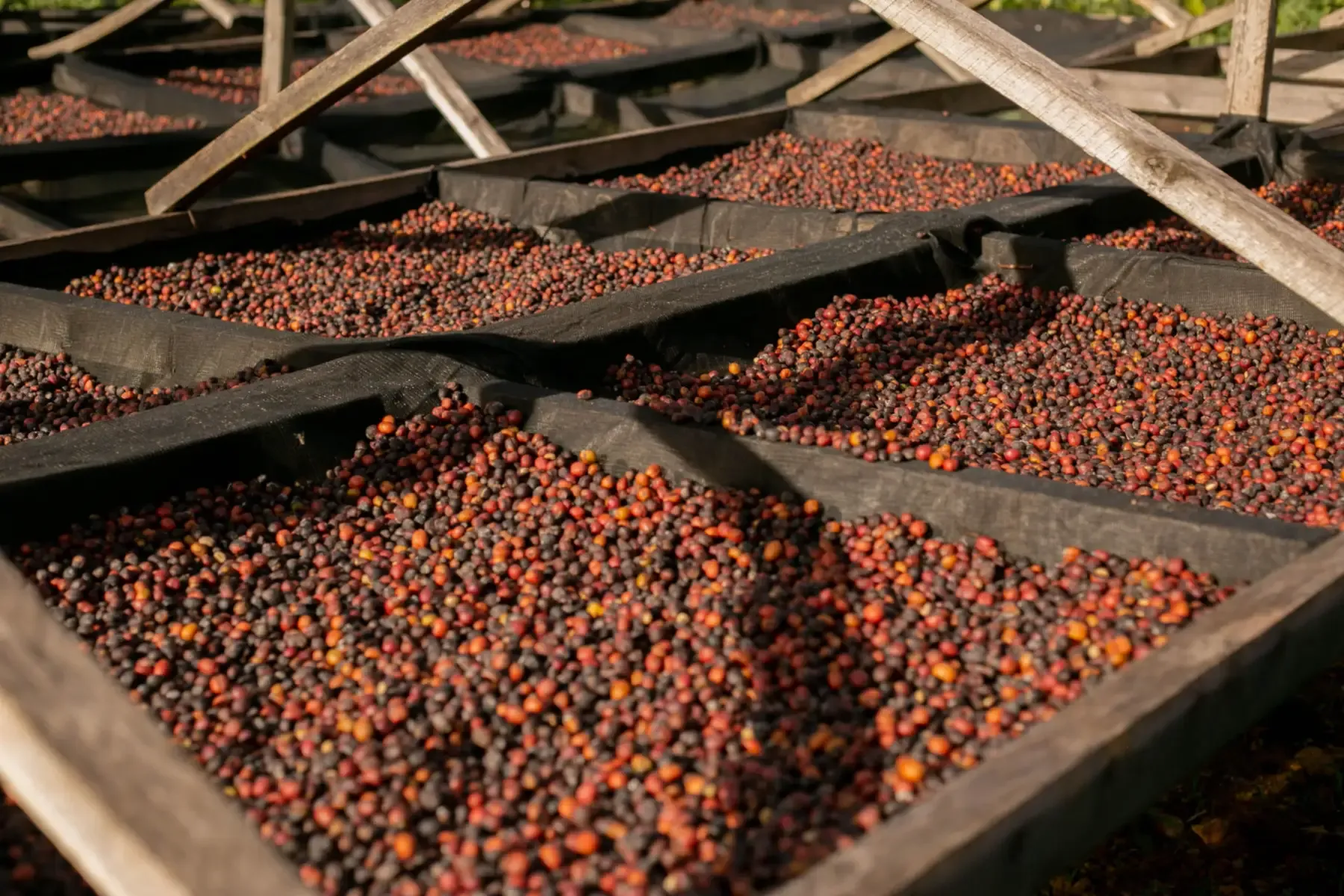
Naturals often taste fuller and fruitier. Washed coffees are often described as clean, with floral or citrus notes. Honey coffees tend to taste sweeter the more of that layer is left on. These are tendencies, so use the label as a clue.
A coffee bean is the seed of a fruit, the coffee cherry. Before it can be roasted, the seed has to come out of the fruit and dry. How that happens is called processing, and it is often printed on the bag as “washed”, “natural” or “honey”.
In this guide we explain what each process does, how it tends to change the taste, and how much weight to give the label when you buy.
Inside a coffee cherry
Under the skin of a coffee cherry is a soft pulp. Below that sits a sticky, sugary layer called mucilage. Then comes the parchment, a thin shell around the seed. The seed inside is the green coffee bean.
The three processes differ in how much of the fruit and mucilage is removed before the seed dries.
The three processes
Natural (dry) process
The whole cherry is spread out to dry in the sun. Workers rake and turn it, and cover it at night or in rain. Drying can take several weeks, depending on the weather. Then the dried husk is removed in one step.
Washed (wet) process
The pulp is removed first. Then the mucilage is broken down, often by natural fermentation, which takes about 12 to 48 hours. The beans are washed and dried, to about 11% moisture. Some mills remove the mucilage by machine instead of fermenting it.
Honey process
The pulp is removed, but at least some of the mucilage stays on the bean while it dries. The National Coffee Association says the sugary mucilage caramelizes as it dries, preserving some sweetness. Producers can leave more or less of it on.
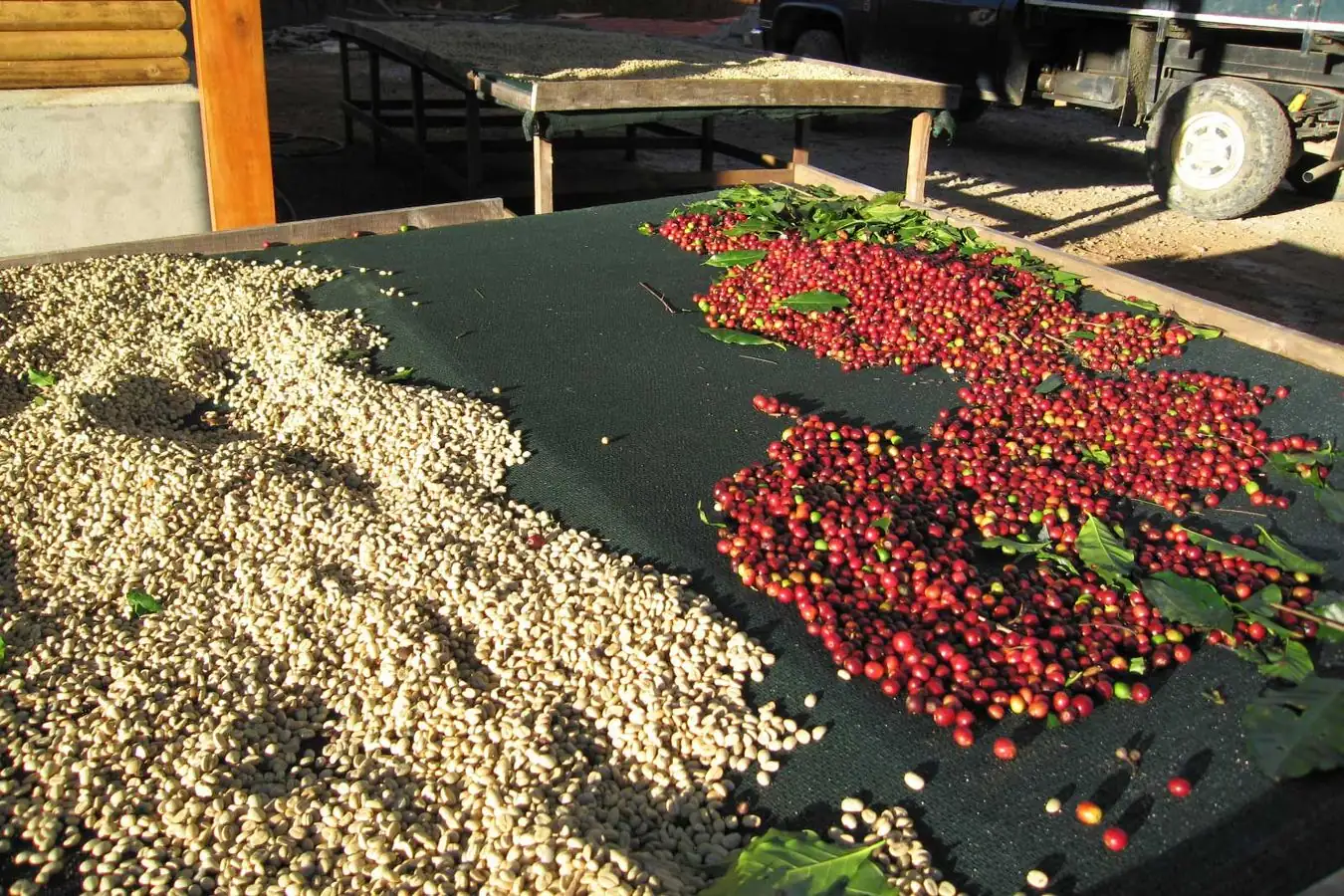

How processing shows up in the cup
The trade has clear tendencies for each process:
| Process | Steps and drying | Defect risk | Cup tendencies |
|---|---|---|---|
| Natural (dry) | Whole cherry sun-dried, raked and turned; it can take several weeks to reach about 11% moisture | Higher than washed: the long drying gives mold, fermentation or rot more chances | Can give a fuller body, sweet and fruity (NCA); the fruitiest and heaviest (Coffee Review) |
| Washed (wet) | Pulped; mucilage broken down in 12 to 48 hours; washed; dried to about 11% | A delay in removing the fruit can give a sweet ferment taint | Often “clean”, with floral, sour or citrus notes; brighter and drier (Coffee Review) |
| Honey | Pulped; some mucilage left on while drying; the NCA gives no drying time | Sweet residue left on the bean while drying can give a ferment taste | Sweeter, the more mucilage is left on |
The steps and drying come from the National Coffee Association, and the defect risks from Coffee Review, which says that much more can go wrong in dry processing than in wet processing.
Research adds a caution. In a Brazilian study of 26 coffee genotypes, good handling kept quality high whatever the process, though wet processing gave high sweetness more often. In one small Ethiopian study of a single variety, washed, semi-washed and dry processing did not differ significantly in cup quality; honey was not tested. So a process label is a clue, not a promise. Newer methods, such as anaerobic fermentation, also vary with the coffee and the method.
What you need
- Two coffees with different processes, ideally a washed and a natural from the same country and roast level.
- Your usual brewer and recipe.
- A notebook or phone note.
The three processes
- Natural
- the whole cherry dries in the sun, then the dried husk is removed
- Washed
- the pulp is removed, then the mucilage, before the bean dries
- Honey
- the pulp is removed, but some mucilage stays on while the bean dries
- Natural taste
- fuller body, sweet and fruity
- Washed taste
- clean, with floral, sour or citrus notes
- Honey taste
- sweeter, the more mucilage is left on
These are tendencies, so use the label as a clue.
Step 1: Read the process on each bag
Look for words like washed, natural, dry, honey or pulped natural.
Step 2: Brew both the same way
Use the same dose, water, grind and time, so only the coffee changes.
Step 3: Taste for body
Notice which feels fuller or heavier in your mouth.
Step 4: Taste for fruit and brightness
Notice which tastes fruitier, and which tastes cleaner or brighter.
Step 5: Note what you liked
Write down the process, origin and roast. Use it as a clue next time you buy.
Troubleshooting
The natural tastes too fruity for me
Fruit is a typical natural trait. Try a washed coffee, or a honey process for something in between.
I cannot taste any difference
That can happen. In one small Ethiopian study of a single variety, washed, semi-washed and dry processing did not differ significantly in cup quality; honey was not tested. Try coffees from the same region with a lighter roast, so the roast does not cover the difference.
The bag does not name a process
Then use roast, flavor notes and origin instead, as our guide to choosing coffee beans explains.
Frequently asked questions
Is honey-processed coffee made with honey?
No. The National Coffee Association says the name comes from the sticky, honey-like texture of the mucilage, a sugary layer around the bean. Some of it is left on while the bean dries.
Which process is best?
In one small Ethiopian study of a single variety, washed, semi-washed and dry processing did not differ significantly in cup quality; honey was not tested. Pick the taste you enjoy.
What does natural process taste like?
The National Coffee Association says natural coffees can have a fuller body and a sweet, fruity flavor. Coffee Review says dry-processed coffees tend to be the fruitiest and heaviest in body.
What are anaerobic and other new processes?
Newer methods change how the coffee ferments. A 2023 review found their effects depend on the coffee and the method, so treat these labels as a clue too.
- Processing is how the coffee seed is taken out of its fruit and dried.
- Natural dries the whole cherry. Washed removes the fruit first. Honey leaves some of the sticky layer on.
- Naturals tend toward fuller body and fruit; washed coffees toward a clean, bright cup; honey sits in between.
- Use the process label as a clue to explore, not a guarantee of taste.
Sources
Studies and pages used for the claims above.
- National Coffee Association, Processes.
- Coffee Review, Processing: Flavor and Processing Method.
- Nadaleti et al., Influence of postharvest processing on the quality and sensory profile of groups of arabica coffee genotypes, Journal of the Science of Food and Agriculture (2022).
- Banti, Atlaw, Rao et al., Effect of processing methods on physicochemical and cup quality of coffee at Jimma, Ethiopia, Heliyon (2024).
- Febrianto and Zhu, Coffee bean processing: Emerging methods and their effects on chemical, biological and sensory properties, Food Chemistry (2023).
Published Updated
See sourcesReport a correction — fixes are logged in the Updated date.