
Article
How to Use a Moka Pot
Edited and reviewed by Coffee Made Clear TeamUpdated 15 min read
Fill the lower chamber with cold water to just below the safety valve, fill the funnel loosely with medium-fine coffee, never pressed down, heat on low to medium, and take it off the heat as soon as the top chamber is full.
Stir, then pour.
This is a beginner baseline, not a scientifically proven optimum.
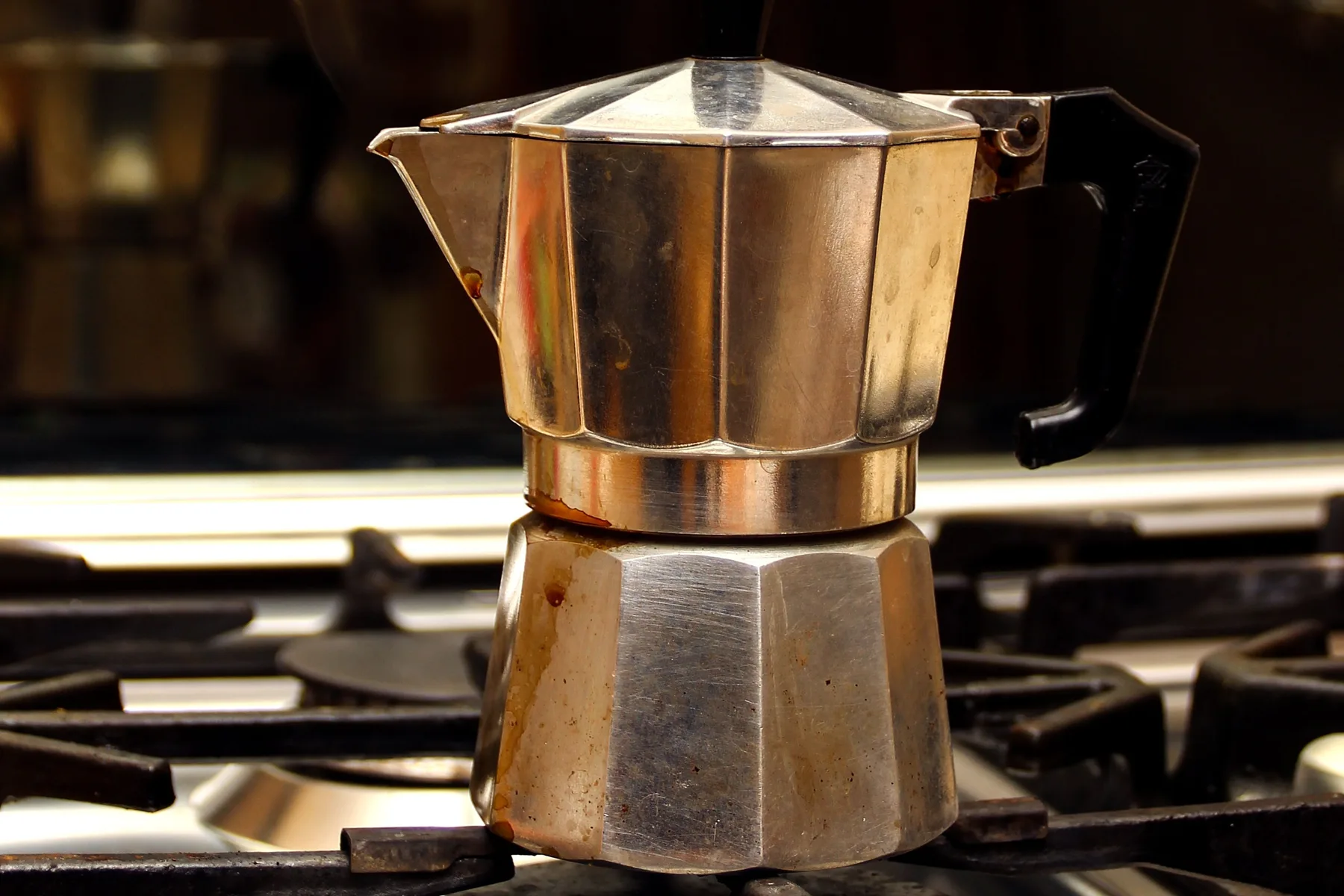
Bialetti's instructions do not use a weighed ratio: the pot sets the amounts. Keep any gas flame under the base, and use the same pot, the same fill levels and the same heat every time.
A moka pot is a small stovetop coffee maker in three parts: a lower chamber for water, a funnel for ground coffee, and an upper chamber that collects the finished coffee. As the pot heats, pressure builds in the lower chamber and pushes water up through the coffee into the top.
Because it uses heat and pressure, a moka pot needs a little more care than a French press. Bialetti’s instructions for its Moka Express warn that not following them can cause burns or make the pot burst. This guide gives you one clear method and a short list of safety habits, built on those instructions.
What you need
You need:
- a moka pot with all of its parts
- coffee ground for a moka pot
- cold water
- a stove that suits your pot
- a spoon
If you grind at home, a grinder helps you keep the grind consistent. A scale is optional here, because the pot itself sets the amounts.
- Knob
- Lid
- Upper chambercollects the finished coffee
- Handle
- Filter plate
- Rubber gasket
- Funnelfor ground coffee
- Safety valve
- Lower chamberfor water
Before your first brew
Remove all the packaging, including any leaflet or warning tucked inside the pot. Bialetti says to wash a new pot thoroughly with water, then make at least three pots of coffee and throw them away before you drink any. Do this once, when the pot is new.
Coffee Made Clear Moka Pot Baseline
- Water
- cold, filled to just below the safety valve
- Coffee
- funnel filled loosely, never pressed down
- Grind
- medium-fine: gritty, not powdery
- Heat
- low to medium; a gas flame stays under the base
- Finish
- off the heat when the top chamber is full; stir, then pour
- Safety
- valve faces away from you; let the pot cool before opening
This is a beginner baseline, not a scientifically proven optimum. Change one variable at a time.
Step 1: Check the pot
Before each use, Bialetti says to check that the pot is undamaged and complete, and that the safety valve, funnel, gasket and filter plate are intact and in place.
This takes a few seconds. Do not use a pot with a missing or damaged part.
Step 2: Fill with water to just below the valve
Fill the lower chamber with cold water up to the lower edge of the safety valve. Never fill above it.
The fill level is the part that matters most. Bialetti says too much water can make the coffee watery, and a wrong level can leave it too cold or too hot.
Never heat the pot without water in it.
Step 3: Fill the funnel loosely, do not tamp
Put the funnel into the lower chamber. Fill the funnel loosely with ground coffee, without pressing it down. Wipe any loose coffee off the rim so the pot can seal.
Bialetti’s New Zealand site recommends a medium-fine grind that feels gritty when rubbed between your fingers, not powdery. Bialetti’s instruction leaflet warns against fine coffee, including coffee ground for espresso machines. Our Coffee Grind Size Chart also starts the moka pot at medium-fine.
America’s Test Kitchen notes that small grounds can get past the moka pot’s metal filter plate into the upper chamber, so some sediment can reach the cup. A slightly coarser grind, still in the gritty medium-fine range, lets fewer through.
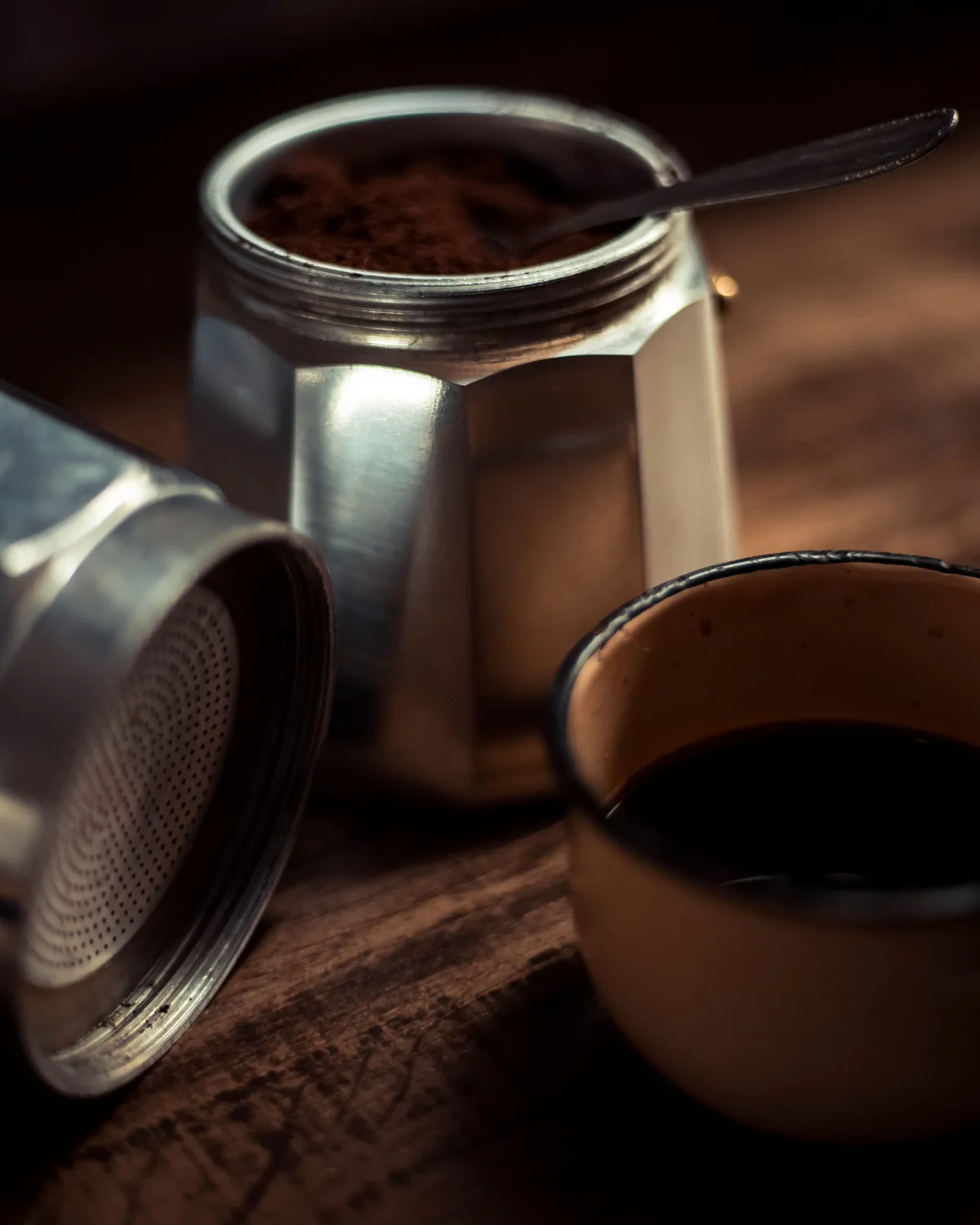
A moka pot is not an espresso machine. Do not tamp the coffee as you would for espresso.
Fill with water to just below the valve
- Safety valve
- Cold waterFill the lower chamber with cold water up to the lower edge of the safety valve.
- Lower edge of the safety valve
- Above the valve's lower edgeNever fill above it.
Fill the funnel loosely
- Funnel
- CoffeeFill the funnel loosely with ground coffee, without pressing it down.
Step 4: Screw the top on firmly
Screw the upper chamber onto the base and tighten it well. Bialetti says not to over-tighten and not to force it by the handle.
Turn the pot so the safety valve faces away from you.
Step 5: Heat gently
Put the pot on the stove with the lid closed.
- On a gas stove, adjust the flame so it stays beneath the pot and does not extend up its sides.
- On an electric or ceramic stovetop, use a medium setting, never the highest.
Flame under the base
- Gas flame
- Outer edge of the pot's base
AvoidFlame up the pot's sides
- Flame up the pot's sides
- Outer edge of the pot's base
Bialetti’s product pages lean even gentler: they suggest low heat and warn that full heat can give the coffee a burnt taste.
Stay with the pot while it brews. Bialetti says not to leave it unattended.
Step 6: Take it off the heat when the top is full
Coffee will start to rise into the upper chamber. When the upper chamber is full, take the pot off the heat. Bialetti’s New Zealand site says not to let the coffee boil.
Lift the pot by its handle and knob only. The rest of the pot gets hot.
Step 7: Stir, pour and taste
Bialetti says to stir the coffee in the top chamber before you pour it. Then pour and taste.
Ask:
- Is the strength where I want it?
- Does it taste burnt or harsh?
- Did the brew behave normally, with no hissing from the valve and no leaks?
- What one thing should I test next?
Step 8: Let it cool, then clean it
Let the pot cool completely before you open it. The base stays hot for a while, so set it down on a heat-safe surface.
Bialetti’s cleaning advice for its classic pot:
- rinse with warm water after each use, without detergent or scouring pads
- not in the dishwasher
- dry every part and store the pot unassembled
Moka pot safety notes
Does the water have to boil?
No. A common belief is that the water must reach its normal boiling point before it can be pushed up. Researchers who measured what happens inside a moka pot found otherwise: coffee starts to come up at fairly low temperatures. That depends partly on how much air is in the lower chamber at the start. Bialetti’s New Zealand site, for its part, says not to let the coffee boil.
Where sources disagreeMoka pot starting water
The question
Should the water in a moka pot's base start cold or hot?
CMC verdict
Start with the water your pot's manual names. For a Bialetti Moka Express, that is cold water up to the lower edge of the valve. Treat preheated water as an optional comparison for experienced users, not as a correction to the maker. If you try it, the base will be hot: hold it with a dry towel or oven mitt while you screw the pot together, and keep your hands clear of the safety valve.
Try it yourself
Use the same pot, coffee, grind, dose, fill level and burner setting. Change only the starting water temperature. Note the time to first flow, the total brew time and the taste. Handle a hot base with a dry towel or oven mitt, and keep your hands clear of the safety valve.
See the sources
Source A
Bialetti
Its Moka Express leaflet says to fill the base with cold water up to the lower edge of the safety valve. Its product page says room-temperature water.
Source B
Wogan Coffee (UK specialty roaster)
Its brew-bar baristas start with hot water in the base because they find it makes better-tasting coffee.
Why they differ
The maker gives a simple, repeatable method that lets you put the pot together while it is cool. Hot water shortens the heating stage, but it also makes the base hot enough to need a towel or mitt. A physics study found that when the water starts at room temperature, about half of the coffee comes through below 70°C (158°F), and that preheating the water gives hotter extraction. It measured temperature, not taste, so it does not show that one method tastes better.
The Coffee Made Clear one-change rule
A moka pot has fewer controls than most brewers, but they are real:
- grind
- how full the funnel is
- the water level
- the heat
- when you take it off the heat
Change one thing. Brew again. Compare.
Never use pressing the coffee or overfilling the water as an adjustment. Those are safety rules, not variables.
If it tastes burnt or harsh
A useful first test is lower heat, then taking the pot off the heat as soon as the top is full. For a wider checklist, see Why Does My Coffee Taste Bitter?.
If it tastes weak or watery
Check the basics first. Is the water level below the valve? Bialetti says too much water can make the coffee watery. Is the funnel properly full? Bialetti’s product page says to fill it generously, without pressing.
If both are right, test a slightly finer grind next. Stay in the gritty, medium-fine range, not espresso-fine.
If it tastes too strong
Moka coffee does not have to be drunk as it comes out. Adding a little hot water or milk to your cup is a simple way to make it lighter. It changes nothing about how the pot brews. The coffee-to-water ratio guide explains why strength and brewing are different questions.
If coffee won’t come up, or the pot leaks
Bialetti’s own checks:
- Nothing comes out: make sure every part is in place and the pot is screwed together properly, with no leaks.
- Water leaks out: check the tightening, check the gasket for wear, and wipe any coffee off the rim of the lower chamber.
- The valve releases steam: see the safety notes above. If it keeps happening, stop using the pot.
Frequently asked questions
How full should I fill a moka pot with water?
Fill the lower chamber with cold water up to the lower edge of the safety valve, and never above it.
Should I tamp the coffee in a moka pot?
No. Fill the funnel loosely with ground coffee, without pressing it down.
Why does steam come out of the moka pot safety valve?
Check that the coffee is not too fine, that it was not pressed down, and that the water is not above the valve. If it keeps happening, Bialetti says to stop using the pot and contact the seller or maker.
Can I use a moka pot on an induction stove?
Bialetti's product page says its classic Moka Express works on induction cooktops only with Bialetti's induction plate. Other models differ, so check yours.
Bottom line
A good moka pot routine is simple and careful: follow the steps above, keep to the safety notes, and let the pot cool before you open it. Then change one thing if you want a different result.
- Fill with water to just below the valve. Fill the funnel loosely, without pressing.
- Heat gently, valve facing away. Take it off the heat when the top is full.
- Let it cool before you open it.
- Change one thing. Brew again. Compare.
- Never use pressing the coffee or overfilling the water as an adjustment. Those are safety rules, not variables.
Sources
Studies and pages used for the claims above.
- Bialetti, Moka Express instructions for use (PDF, English section).
- America’s Test Kitchen (Valerie Sizhe Li), This Hack Changed the Way I Make Moka Pot Coffee (2023).
- Bialetti, Moka Express product page.
- Bialetti New Zealand, Moka Express product page.
- U.S. Consumer Product Safety Commission, Bodum Recalls Stove Top Espresso Makers Due to Fire and Burn Hazards (2019).
- Wogan Coffee, The Moka Stovetop Pot - Why We Recommend Using Hot Water (2025).
- King, The physics of a stove-top espresso machine, American Journal of Physics (2008).
- Navarini et al., Experimental investigation of steam pressure coffee extraction in a stove-top coffee maker, Applied Thermal Engineering (2009).
Published Updated
See sourcesReport a correction — fixes are logged in the Updated date.