
Article
How Is Decaf Coffee Made?
Edited and reviewed by Coffee Made Clear TeamUpdated 5 min read
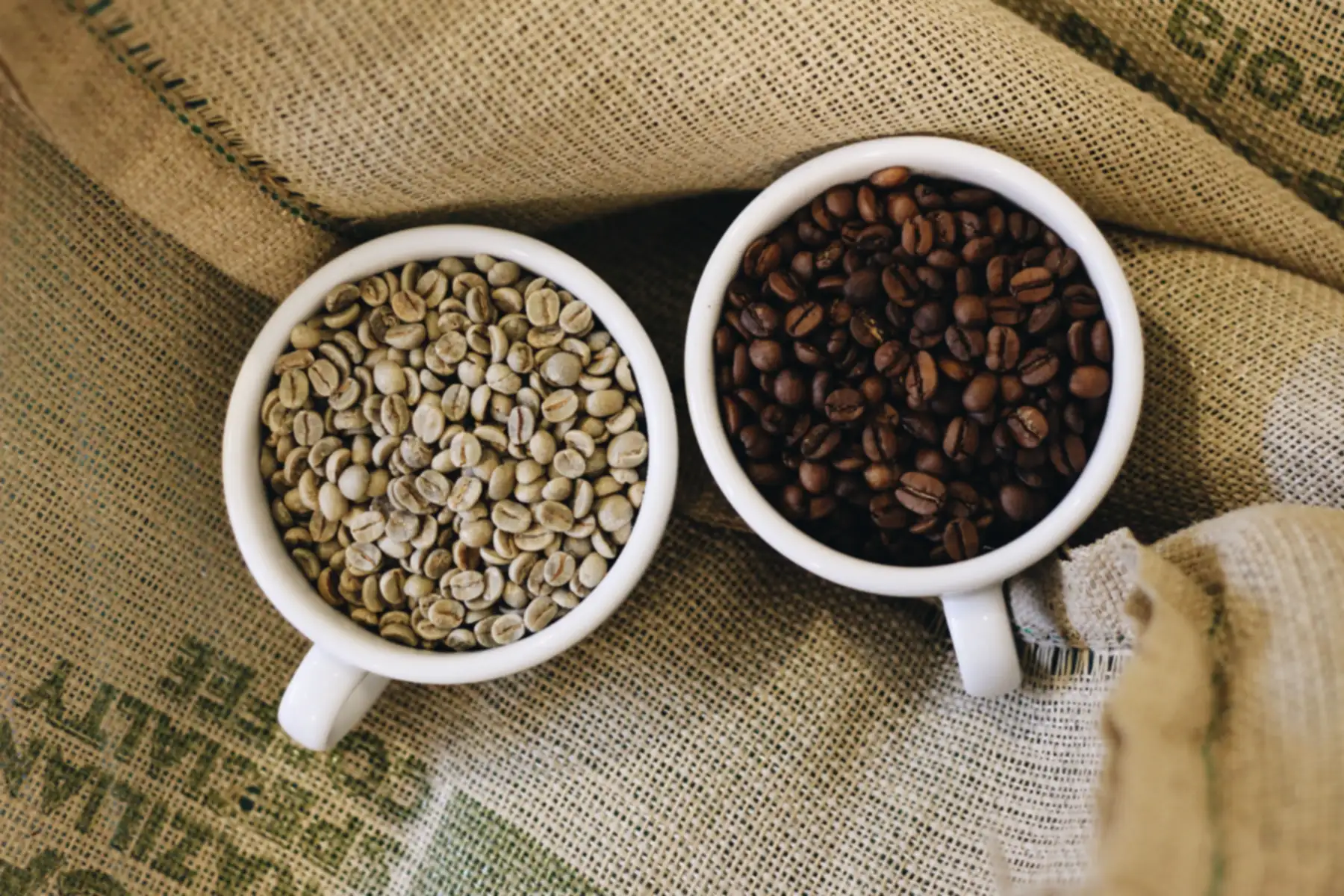
Decaf starts as green, unroasted coffee.
The beans are soaked or steamed so the caffeine can come out, the caffeine is removed with a solvent, water or carbon dioxide, and then the beans are dried and roasted like any other coffee.
The National Coffee Association says the process typically removes around 97% of the caffeine, leaving about 2–15 mg in a cup.
The four main methods use methylene chloride, ethyl acetate, water (the Swiss Water process) or carbon dioxide. US rules allow methylene chloride residue of no more than 10 parts per million in decaf coffee. If you would rather avoid methylene chloride and ethyl acetate, look for Swiss Water or carbon dioxide on the bag.
Decaf tastes like coffee because it is coffee: the same beans, with most of the caffeine taken out before roasting.
In this guide we explain when and how caffeine is removed, compare the four main methods, and show what is left in your cup. For how much caffeine regular coffee has, see our guide to caffeine in coffee.
How decaf is made
All coffee starts as green, unroasted beans, and that is when the caffeine comes out. The National Coffee Association describes the most common route, which it calls the European Method, in five steps:
- The beans are steamed to open their pores and make the caffeine easier to reach.
- They are rinsed with a solvent that bonds to the caffeine and removes it.
- The liquid, now carrying the caffeine, is drained off.
- Nearly all of the rinsing liquid is captured and reused.
- The beans are dried and roasted, just like regular coffee.
The association adds that the beans are washed, steamed and roasted at temperatures that evaporate any liquid used in the process.
Four methods
The National Coffee Association says there are four ways to do it, all of them FDA compliant. A 1999 review groups them by what does the work: organic solvents, water or supercritical carbon dioxide. The table draws on the association, the FDA’s rules, Swiss Water’s own description and a peer-reviewed study. Seattle Coffee Gear’s notes are support only.
| Method | How the caffeine comes out | Methylene chloride or ethyl acetate? | What the sources add |
|---|---|---|---|
| Methylene chloride | The green beans are steamed, then rinsed with a solvent that bonds to the caffeine (National Coffee Association) | Yes | The FDA allows up to 10 parts per million left in decaf roasted coffee. Seattle Coffee Gear says residues are far below that limit. |
| Ethyl acetate (sometimes called the “sugarcane process”) | The same solvent route, with ethyl acetate as the solvent | Yes | The FDA lists ethyl acetate as a decaffeination solvent for coffee and tea. Seattle Coffee Gear says it tends to keep good body and sweetness. |
| Swiss Water | A caffeine-free green coffee extract surrounds the beans, caffeine moves into it, and carbon filters trap the caffeine so the extract can be reused | No | Swiss Water says it uses no esters or solvents. |
| Carbon dioxide | Carbon dioxide under high pressure (supercritical) | No | In one study, it cut caffeine sharply while the chlorogenic acids stayed largely unchanged (Honda et al., 2022). |
How much caffeine is left
The National Coffee Association says decaffeination typically removes around 97% of the caffeine, leaving about 2–15 mg in a cup. The FDA gives the same 2–15 mg for an 8 fl oz cup of decaf, and notes that decaf still contains some caffeine. A regular cup has about 95 mg, in the association’s figures.
The rules on solvents
In the US, the federal rules on methylene chloride allow no more than 10 parts per million (0.001 percent) in decaffeinated roasted coffee and in decaffeinated instant coffee. If you would rather avoid methylene chloride and ethyl acetate, choose a Swiss Water or carbon dioxide decaf.
What you need
- A bag of decaf, and the label on it.
- Your usual brewer and recipe.
Step 1: Read the label
Look for the decaf method on the bag. Our coffee bag guide shows what else the label can tell you.
Step 2: Choose a method you are happy with
If you would rather avoid methylene chloride and ethyl acetate, look for Swiss Water or carbon dioxide.
Step 3: Brew it like regular coffee
Use your usual recipe and grind as a starting point.
Step 4: Taste and adjust
Change the grind or the amount of coffee, one thing at a time, as you would for any coffee.
Troubleshooting
The bag does not say how it was decaffeinated
Ask the roaster, or choose a bag that names a Swiss Water or carbon dioxide method.
I am sensitive to caffeine
Decaf is not caffeine-free: the FDA gives 2–15 mg for an 8 fl oz cup. The FDA says that if you react strongly to caffeine in a negative way, you may want to avoid these drinks altogether.
My decaf tastes flat
Try a different decaf method or roaster. Seattle Coffee Gear says ethyl acetate decaf tends to keep good body and sweetness, and carbon dioxide decaf keeps flavor very well.
Frequently asked questions
Is decaf coffee caffeine-free?
No. The FDA says decaf still contains some caffeine, and gives 2–15 mg for an 8 fl oz cup, compared with about 95 mg for regular coffee in the NCA’s figures.
When is the caffeine removed?
Before roasting. The National Coffee Association says green coffee beans are warmed and soaked, the caffeine is removed, and then the beans are dried and roasted.
What is the Swiss Water process?
A method that uses water instead of a solvent. Seattle Coffee Gear says hot water draws out caffeine and flavor, carbon filters remove the caffeine, and the flavor-rich water is reused on new beans.
What are the rules on methylene chloride in decaf?
US rules limit what may remain: no more than 10 parts per million in decaf roasted and instant coffee. If you would rather avoid methylene chloride and ethyl acetate, choose a Swiss Water or carbon dioxide decaf.
- Decaf is made from green, unroasted beans: the caffeine comes out first, then the beans are roasted like any coffee.
- There are four main methods: two solvents, water (the Swiss Water process) and carbon dioxide.
- Decaffeination typically removes around 97% of the caffeine; a cup of decaf still has about 2–15 mg.
- In the US, the solvent methylene chloride may leave no more than 10 parts per million in decaf coffee.
Sources
Pages and rules used for the claims above. It is not medical advice.
- National Coffee Association, Decaf Coffee.
- U.S. Food and Drug Administration, Spilling the Beans: How Much Caffeine is Too Much?
- 21 CFR 173.255, Methylene chloride, via Legal Information Institute.
- 21 CFR 173.228, Ethyl acetate, via Legal Information Institute.
- Swiss Water, Coffee decaffeination process.
- Honda et al., Effect of Roasting Degree on Major Coffee Compounds: A Comparative Study between Coffee Beans with and without Supercritical CO2 Decaffeination Treatment, Journal of Oleo Science (2022).
- Ramalakshmi and Raghavan, Caffeine in coffee: its removal. Why and how?, Critical Reviews in Food Science and Nutrition (1999). A review of the solvent, water and supercritical carbon dioxide methods.
- Seattle Coffee Gear, How Coffee Is Decaffeinated.
Published Updated
See sourcesReport a correction — fixes are logged in the Updated date.