
Article
How to Brew With a Kalita Wave
Edited and reviewed by Coffee Made Clear TeamUpdated 5 min read
Start with 20 g of coffee, ground medium, and 320 g of hot water, a 1:16 ratio.
Bloom with 40 g, then pour to 200 g at 45 s and to 320 g at 1 min 30 s.
Pouring ends around 2 min, and it finishes dripping around 3 min 30 s.
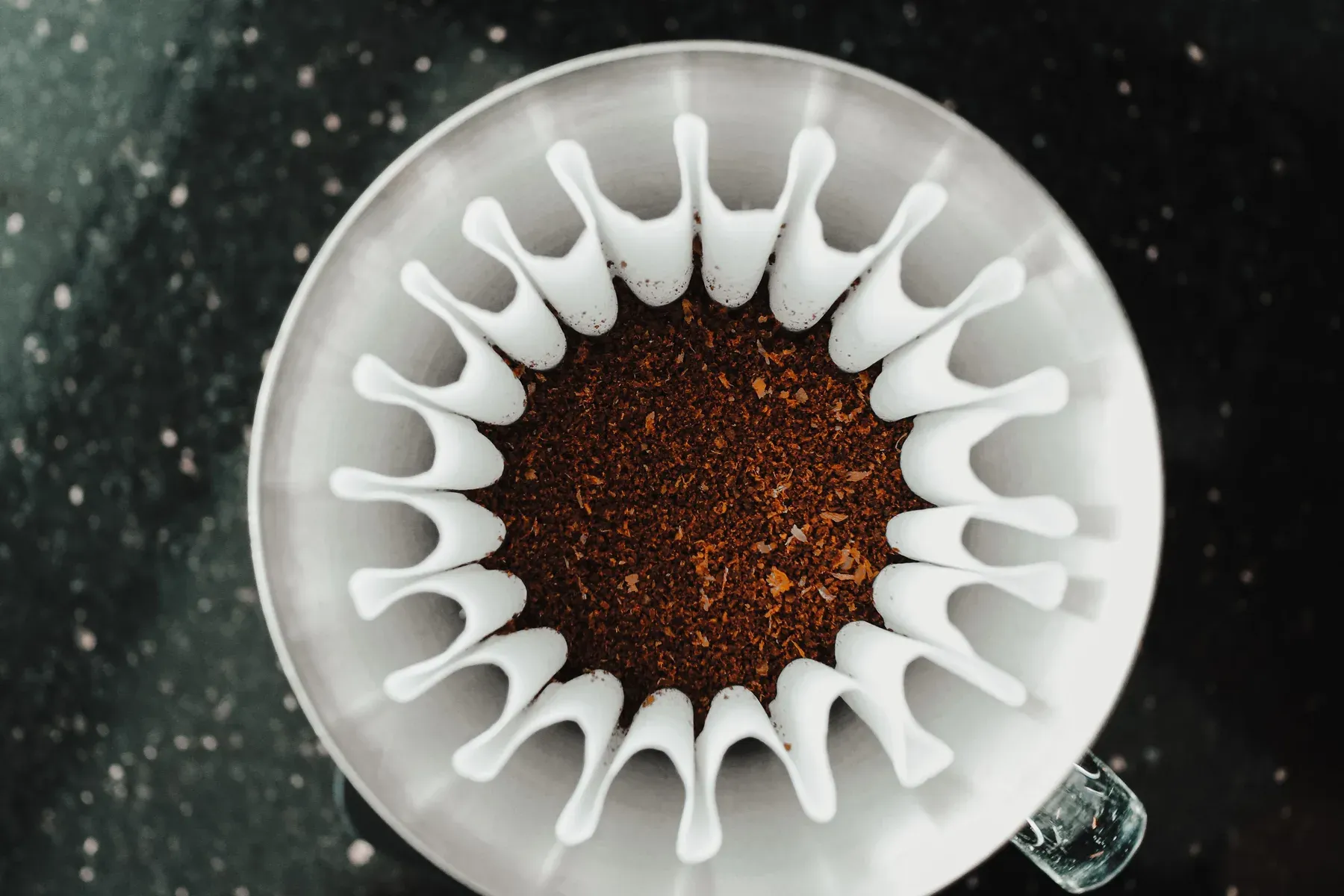
The amounts are the same 20 g to 320 g as our pour-over and V60 guides, and the two pours after the bloom follow our pour-over guide. Prima Coffee and Seattle Coffee Gear use 17–20 g and finish in 3 to 4 minutes. The Kalita Wave is a flat-bottomed dripper with three small holes and a wave-shaped paper filter; Seattle Coffee Gear says the holes limit drainage speed, so it is less sensitive to pour technique than a cone dripper.
The Kalita Wave is a pour-over dripper with a flat bottom instead of a cone. Its paper filter has a wavy, pleated edge, and it is less sensitive to pouring technique than a cone.
In this guide we give our baseline, explain what the flat bed, three holes and wave filter do, and compare three published recipes. We could not find an official brewing guide from the maker in English, so the design details and published recipes below come from two retailers, Seattle Coffee Gear and Prima Coffee, and two roasters, Verve Coffee Roasters and Stumptown Coffee Roasters. For pour-over in general, see our pour-over guide.
The flat bed and the wave filter
Seattle Coffee Gear, a retailer, describes the design: a flat-bottom basket with three small drain holes. It says the holes limit drainage speed, so the brew is less sensitive to pour technique than in a cone dripper. It adds that the wave filter prevents uneven contact between the paper and the basket.
Prima Coffee, another retailer, calls it one of the best-known flat-bottom brewers, and Verve Coffee Roasters says the wave-shaped brewer is built for even extraction.
It comes in two sizes, the 155 and the 185. Stumptown suggests the 155 for smaller batches and the 185 for larger ones, and says to use the filter size that matches your dripper. The recipes below do not all say which size they were written for, so scale the amounts to yours rather than moving a recipe from one size to the other.
Our baseline and three recipes compared
Our baseline: 20 g of coffee, ground medium, to 320 g of water, 1:16. It is the same starting recipe as our pour-over guide, and the house filter ratio across the site. Published recipes sit around it:
- Prima Coffee: 17 g of coffee, ground medium, 250 g of water at 210 °F, finishing between 3 and 4 minutes.
- Verve Coffee Roasters: 20 g, ground medium, 320 g of water; pouring ends around 2 min 30 s, then it drips for about another minute. These are our amounts too, but our steps pour differently: a bloom and two pours, the pattern of our pour-over guide, where Verve pours three times after its bloom.
- Seattle Coffee Gear: 20 g with 300–340 ml of water, between 1:15 and 1:17, in 3 to 4 minutes.
By our arithmetic, Prima’s is about 1:15 and Verve’s is 1:16.
In our dataset of published recipes, the 10 published Kalita Wave recipes center on 1:16.7, 3:30 and 4 pours. Our baseline is a little stronger, at 1:16.0, in the same time, with one pour fewer.
What you need
- A Kalita Wave dripper and a wave filter.
- A mug or server.
- A kettle and a scale.
- 20 g of coffee, ground medium.
| Coffee | 20 g |
|---|---|
| Water | 320 g, hot |
| Ratio | 1:16 |
| Grind | medium |
| Bloom | 40 g of water, then wait until 45 s |
| Pours | to 200 g at 45 s, then to 320 g at 1 min 30 s |
| Finish | pouring ends around 2 min; it finishes dripping around 3 min 30 s |
A bloom and two pours, the pattern of our pour-over guide. Prima Coffee and Seattle Coffee Gear finish in 3 to 4 minutes.
Step 1: Rinse the filter
Rinse the filter in the dripper with hot water to warm it, and pour that water away.
Step 2: Add the coffee
Add 20 g of coffee and tap the dripper gently so the bed is level.
Step 3: Bloom
Start a timer and slowly pour 40 g of water to wet all the coffee. Wait until 45 s.
Step 4: Pour in stages
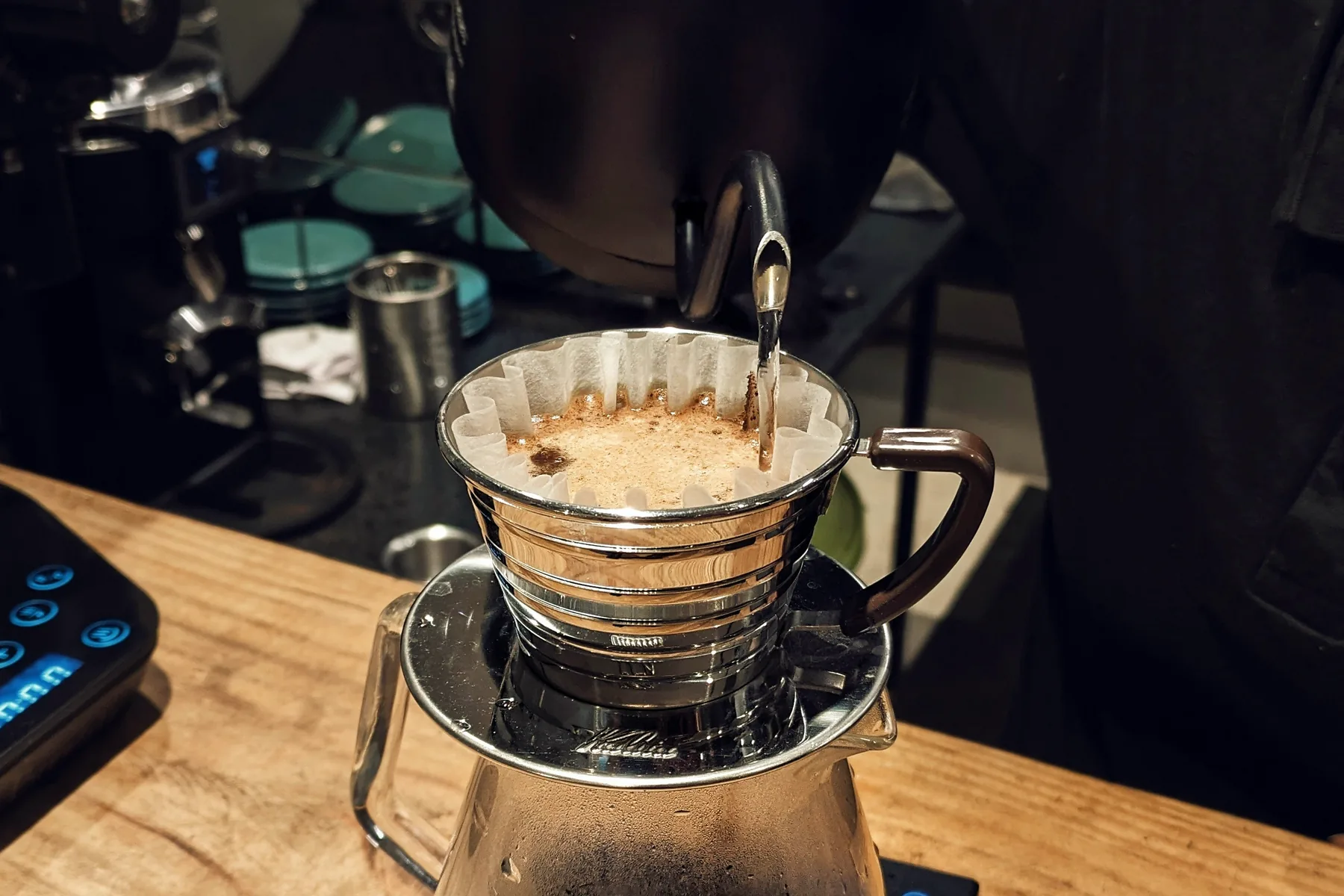
At 45 s, pour steadily up to 200 g, finishing by about 1 min 15 s. Let the level drop a little. At 1 min 30 s, pour up to 320 g.
Step 5: Let it drip
Pouring ends around 2 min. Aim for it to finish dripping around 3 min 30 s, inside the 3 to 4 minutes Prima Coffee and Seattle Coffee Gear give; if it runs much longer or shorter, see the troubleshooting below.
Safety. Hot water can scald, so pour away from your hands and body and let a full brewer settle before you move it. If your dripper is glass, do not put it through sudden temperature changes, and follow the maker’s guidance for your model.
Where recipes differKalita Wave recipes
The question
Is there one right Kalita Wave recipe?
CMC verdict
Match the recipe to your brewer size, keep the filter’s shape, and tell a stalled brew (a filter or drainage problem) apart from a slow one before you change the grind.
Try it yourself
If a brew stalls, look at how the dry filter sits before the next brew, correct it, and repeat once with no recipe change. Only then adjust the grind.
See the sources
Source A
Stumptown Coffee Roasters
21 g of coffee to 345 g of water at about 205 °F, ground medium-fine. A 60 g bloom, a slow spiral to 200 g by 1 min, then 25–50 g pulses to 345 g by 2 min, finishing at about 2 min 45 s to 3 min.
Source B
Prima Coffee’s comparison of seven recipes
Seven published recipes ran from 1:13 to 1:19 and from 2 min 45 s to 3 min 50 s, with different blooms, pulse counts and stirring. Prima says some coffees shine with different recipes.
Why the numbers differ
The recipes come from different roasters and baristas, for different coffees and, where they say, different brewer sizes. Each is tuned to its own setup, so there is no single industry recipe.
Sources for this section
Troubleshooting
Water pools and barely drains
Check the brewer before the coffee. Make sure the filter is the size made for your dripper, seated without its pleats squashed, and that nothing blocks the holes in the base. Then repeat the same recipe once.
It runs slow and tastes bitter
Grind coarser next time.
It runs fast and tastes sour or thin
Grind finer next time. Our sour coffee guide has more fixes.
It tastes weak
Use a little more coffee for the same water, closer to 1:15. Our ratio guide shows how.
Frequently asked questions
What does the flat bottom do?
The flat basket and three small holes limit how fast it drains, which makes the Kalita Wave less sensitive to pour technique than a cone dripper.
Why is the filter wavy?
The waves stop the paper touching the basket unevenly.
What grind should I use?
Medium for our baseline, as Verve Coffee Roasters and Prima Coffee use. Grind coarser if it runs slow and tastes bitter; grind finer if it runs fast and tastes sour or thin.
Which Kalita Wave size do I have?
The Wave comes in a 155 and a 185. Stumptown suggests the 155 for smaller batches and the 185 for larger ones, and says to match the filter size to the dripper. Scale a recipe to your size rather than copying one written for the other.
How long should a Kalita Wave take?
About 3 to 4 minutes in the Prima Coffee and Seattle Coffee Gear recipes. With our baseline, pouring ends around 2 min and it finishes dripping around 3 min 30 s.
- The Kalita Wave has a flat bed with three small holes and a wave-shaped filter.
- Seattle Coffee Gear says the holes limit drainage speed, which makes it less sensitive to your pouring than a cone.
- Our baseline: 20 g of coffee to 320 g of water (1:16), poured in stages.
- Most recipes finish in 3 to 4 minutes; grind coarser if it runs slow and bitter.
Sources
Pages used for the claims above.
- Seattle Coffee Gear, Kalita Wave Glass Dripper product guide.
- Prima Coffee, Kalita Wave brewing guide.
- Verve Coffee Roasters, How to brew at home: Kalita Wave.
- Stumptown Coffee Roasters, Brew guide: Kalita Wave.
- Prima Coffee, Comparing Kalita Wave recipes.
Published Updated
See sourcesReport a correction — fixes are logged in the Updated date.