
Article
How to Clean and Backflush an Espresso Machine
Edited and reviewed by Coffee Made Clear TeamUpdated 6 min read
After every session, rinse the basket and portafilter and wipe the group head and steam wand.
If your manual says your machine can be backflushed, run water through a blind basket: 10 seconds on, 10 off, 5 times.
Makers differ on how often: Breville, for its Barista Express Impress, says a water backflush after every session; Seattle Coffee Gear, a retailer, suggests water weekly and detergent monthly.
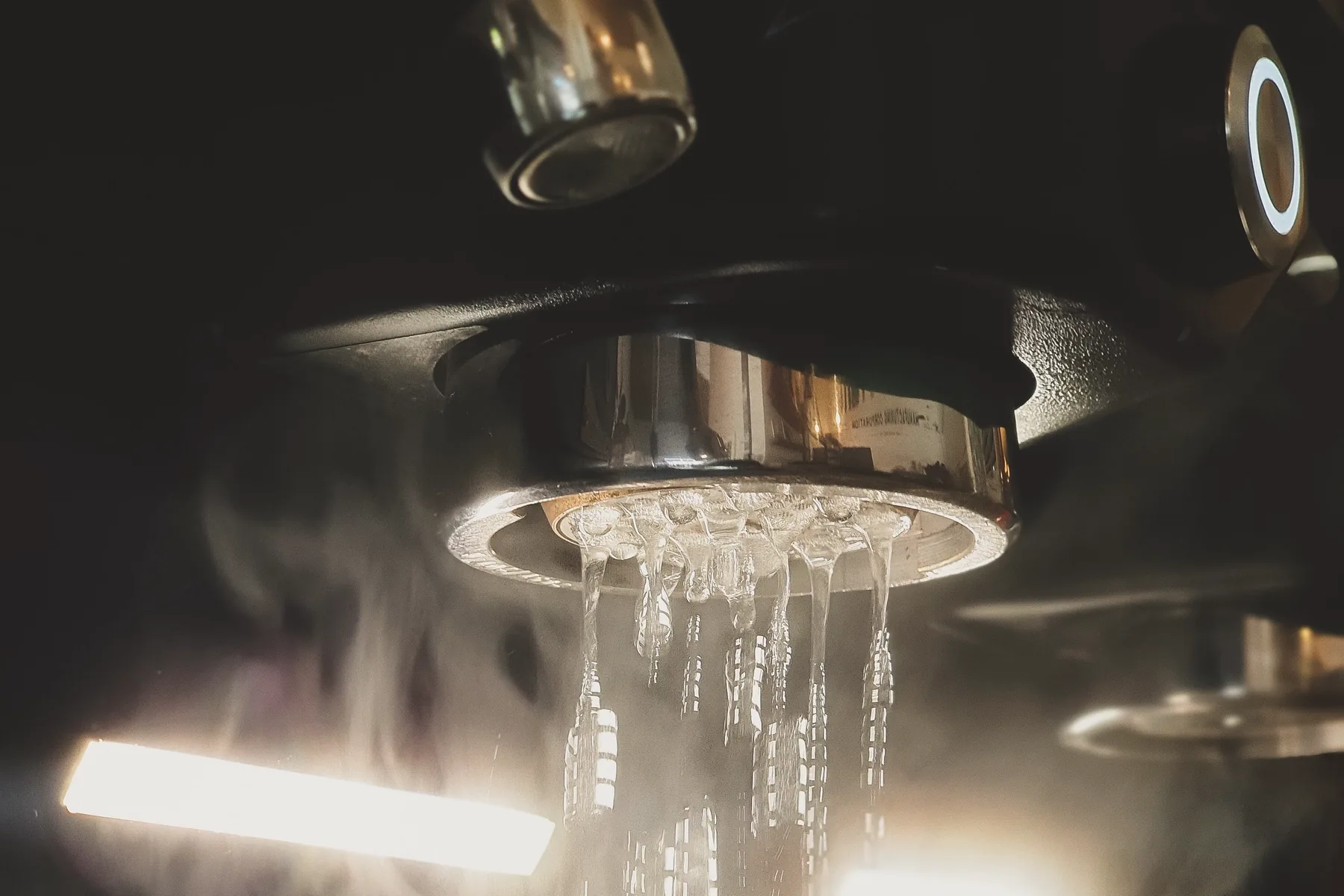
Every espresso shot leaves coffee oil and fine grounds behind, on the basket, in the portafilter and up inside the group head. Left there, the oils go stale and the grounds can block the shower screen. La Marzocco warns that built-up coffee oils can make coffee taste rancid and old.
In this guide we cover the cleaning every machine needs, how to tell whether yours can be backflushed, how to backflush with water and with cleaner, and how often makers say to do it. Mineral scale is a different problem with its own fix: see our descaling guide.
Every machine: after each session
These steps come from Breville’s Bambino manual, a machine that is not backflushed, and suit any espresso machine:
- Rinse the basket and portafilter under hot water straight after use, to remove the coffee oils.
- Wipe the group head and shower screen with a damp cloth to remove loose grounds.
- Run hot water through the group now and then, with the empty basket and portafilter in place.
- Wipe the steam wand with a damp cloth after every use. If the holes in its tip block, steaming gets weaker, Breville says: purge the wand to clear them.
- Empty and wash the drip tray.
Can your machine be backflushed?
Backflushing sends water back up through the group head and out through a valve into the drip tray. Seattle Coffee Gear, a retailer, says only machines with a three-way solenoid valve can be backflushed. It gives three ways to tell:
- At the end of a shot, you hear a short hiss and a little water drains into the drip tray.
- A blind basket, a basket with no holes, came with the machine.
- The manual has a backflush or cleaning-cycle section.
Backflush only if your manual says your machine can. Seattle Coffee Gear lists machines that generally cannot: Breville’s Bambino models, most entry-level De’Longhi and Saeco machines, superautomatic machines and manual lever machines. Breville’s Bambino manual has no backflush step: it relies on the daily cleaning above and a clean-and-descale cycle when the machine asks for one.
What you need
- A blind basket, or the silicone cleaning disc your machine came with.
- Espresso machine cleaner, powder or tablets. Not descaler: that is a different product.
- A cup or jug and a cloth.
Cleaning an espresso machine
- After each session
- rinse the basket and portafilter, wipe the group head and steam wand
- Backflush
- only if your manual says your machine can
- Water backflush
- blind basket, 10 seconds on and 10 off, 5 times
- Detergent backflush
- up to ½ teaspoon (3 g) of powder, or as your cleaner’s label says, then a water rinse cycle
- Soak
- baskets and screens, 6 g of powder per liter, 30 minutes (Urnex)
Your machine’s manual comes first; descaling is a separate job.
Step 1: Fit the blind basket
Swap the normal basket in the portafilter for the blind basket, or put the cleaning disc in the basket, as your manual describes.
Step 2: Run a water backflush
Lock the portafilter in and run the brew cycle for 10 seconds, then stop for 10 seconds. Repeat 5 times.
Step 3: Add cleaner for a detergent backflush
When it is time for a deeper clean, add espresso machine cleaner to the blind basket. Urnex, a cleaner maker, says up to ½ teaspoon (3 g) of its Cafiza powder; Seattle Coffee Gear says one cleaning tablet also works. Otherwise, follow your cleaner’s label. Run the same cycle: 10 seconds on, 10 off, 5 times.
Step 4: Rinse the portafilter and run water only
Take the portafilter out, run the brew cycle and rinse the portafilter in the stream from the group head. Then lock it back in without cleaner and run 10 seconds on, 10 off, 5 more times.
Step 5: Pull a shot and throw it away
Put the normal basket back and pull one shot, to clear any trace of cleaner. Urnex says to discard it, not drink it.
Step 6: Soak the baskets now and then
Parts that come off can be soaked. Urnex’s directions for Cafiza: 6 g of powder per liter of hot water, soak for 30 minutes, then rinse with fresh water. If you soak a portafilter, keep the handle out of the solution. Check your manual before you remove the shower screen.
Safety. Hot water, steam and the group head cause burns and scalds. Let parts cool before you handle them, point the steam wand away from you, and release the pressure as your manual describes before you unlock the portafilter, because hot water and grounds can spray out. For cleaner powder or tablets, follow the product label and its safety data sheet, wear gloves or eye protection if the label says so, and never mix cleaning products. Keep cleaner away from food and from children, and rinse every part thoroughly. Follow the cleaning steps in your machine’s own manual.
How often to clean
The makers below write for different machines and different amounts of use, so their schedules differ.
| Source | Who it is for | Water backflush | With cleaner |
|---|---|---|---|
| Breville (Barista Express Impress) | The Barista Express Impress | After every coffee session | A cleaning cycle with a tablet when the maintenance light flashes |
| Seattle Coffee Gear (retailer) | Home machines with a three-way valve | Weekly | Monthly, about ¼ teaspoon of cleaner |
| La Marzocco | Café machines | Every two to four hours and at the end of the day | One cycle with cleaner, then one with water only |
| Breville (Bambino) | A machine without backflush | None: rinse and wipe after use | A clean-and-descale cycle when the machine asks |
Where sources disagreeHow often to backflush
The question
How often should a home machine be backflushed?
CMC verdict
Follow your machine’s manual. If it gives no schedule, a water backflush after each session or each week, and a detergent backflush about once a month, sits inside what these sources say. Clean more often if you pull many shots.
Try it yourself
Keep a note of each backflush. If shots taste flat or stale just before one and better just after, shorten the gap.
See the sources
Source A
Breville (Barista Express Impress tutorials)
A clear water backflush with the cleaning disc after every coffee session; a cleaning cycle with a tablet when the maintenance light flashes.
Source B
Seattle Coffee Gear (retailer)
For home machines with a three-way valve, a water-only backflush weekly and a detergent backflush monthly.
Source C
La Marzocco (for café machines)
Every two to four hours and at the end of the day; backflushing does not harm a machine built for it, so it is better to do more than less.
Why they differ
They write for different machines and different volumes. A café machine pulls far more shots than a home one, and every shot leaves oil behind.
Troubleshooting
Water does not come back into the drip tray
Your machine may not have a three-way valve, so it cannot be backflushed. Stop, and check the manual.
Espresso flows slowly or unevenly after weeks of use
Grounds may be blocking the shower screen. Wipe it, backflush if your machine allows, and soak the basket. If the machine is also slow to heat or the flow is weak with no coffee in it, it may need descaling.
Frequently asked questions
What does backflushing an espresso machine do?
It sends water back up through the group head and out through the machine’s valve into the drip tray, clearing coffee oils and fine grounds from parts you cannot reach. With espresso machine cleaner, it also dissolves the oils.
Can every espresso machine be backflushed?
No. Seattle Coffee Gear says only machines with a three-way solenoid valve can be. Its signs: a short hiss and a little water into the drip tray when a shot stops, and a blind basket in the box. Your manual is the final word.
How often should I backflush?
Follow your manual. For its Barista Express Impress, Breville says a clear water backflush after every coffee session; Seattle Coffee Gear suggests water weekly and detergent monthly at home.
Is backflushing the same as descaling?
No. Backflushing clears coffee oils and grounds from the group head. Descaling dissolves mineral scale from hard water inside the machine, with a descaler and the cycle in your manual.
Can I drink the first shot after cleaning?
No. Urnex says to pull a shot after the rinse cycle to remove any traces of cleaner, and to throw that shot away.
- Rinse the basket and portafilter and wipe the group head after every session, whatever machine you have.
- Backflushing pushes water back through the group head into the drip tray. Only machines with a three-way valve can do it; check your manual.
- A detergent backflush follows the cleaner maker’s cycle: 10 seconds on, 10 off, 5 times, then the same again with water only.
- Makers differ on how often: from after every session to about once a month at home. Follow your manual, and clean more often the more you brew.
- Backflushing removes coffee oils; descaling removes mineral scale. They are different jobs.
Sources
Pages used for the claims above.
- Breville, The Bambino instruction book (BES450): care and cleaning.
- Breville, How to perform a clear water backflush and How to perform a cleaning cycle (the Barista Express Impress).
- Urnex, Cafiza espresso machine cleaning powder: directions for backflushing and soaking.
- Seattle Coffee Gear, How to Backflush Your Espresso Machine.
- La Marzocco, The definitive way to backflush your espresso machine.
Published Updated
See sourcesReport a correction — fixes are logged in the Updated date.