
Article
Espresso Machine Types Explained
Edited and reviewed by Coffee Made Clear TeamUpdated 5 min read
Espresso machines heat with a single boiler, heat exchanger, dual boiler or fast heater.
Each heats water for brewing and steaming: a single boiler does one job at a time, a heat exchanger and a dual boiler do both at once, and a fast heater is ready in seconds. Our suggestion: choose by how many milk drinks you make in a row.
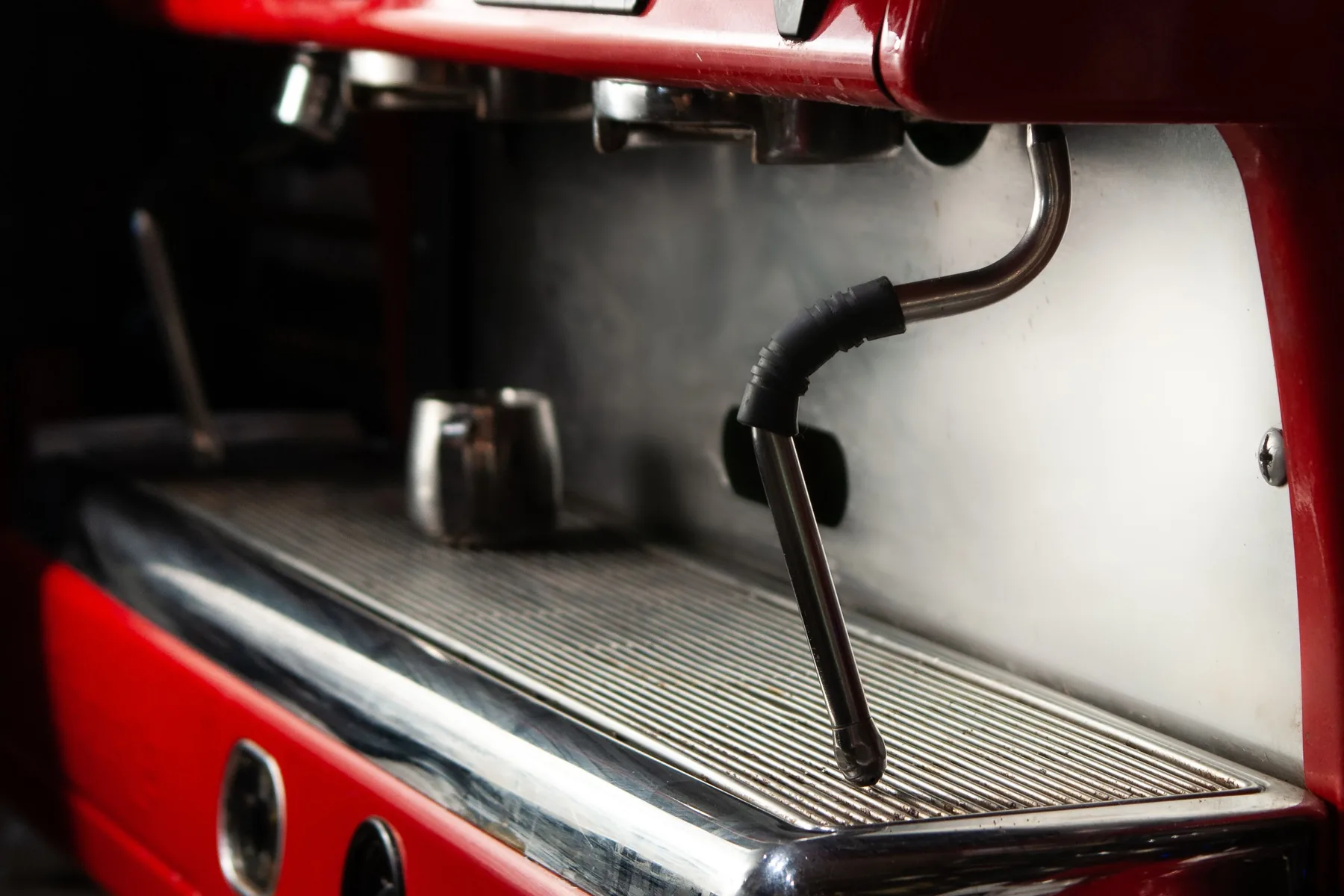
Espresso machine listings talk about boilers, heat exchangers and heating systems as if you already know what they mean. The idea behind them is simple: a machine needs water at one temperature to brew and at a much higher one to make steam.
In this guide we explain the four common designs, what each one asks of you, and how to choose between them. We do not pick models here.
Four ways to heat the water
- Single boiler
- one boiler: brew, then wait for it to heat up to steam
- Heat exchanger
- one steam-hot boiler; brew water runs through a tube inside it
- Dual boiler
- two boilers, so you can brew and steam at once
- Fast heater
- a small, quick heater instead of a boiler kept hot; ready in seconds
The design changes your routine more than the taste. Check the manual for your machine.
Two temperatures, one machine
Seattle Coffee Gear, a retailer, puts brewing water at about 90–96°C (195–205°F), and says steaming needs water more than 22°C (40°F) hotter. Every design below is a different answer to that gap: one boiler that switches, one boiler with a tube through it, two boilers, or a small heater that is ready in seconds.
The four designs
Single boiler
A single boiler machine has one boiler for both jobs. It holds the water at brewing temperature for the shot, then heats up further for steam. Seattle Coffee Gear says you have to wait for the temperature to change between brewing and steaming, and after steaming the boiler is too hot to brew until it cools down again.
That suits a routine of one drink at a time: shot first, then milk. Making several milk drinks in a row means waiting at each switch.
Heat exchanger
A heat exchanger machine keeps one boiler hot enough to steam. Brew water does not sit in that boiler: Seattle Coffee Gear describes it as pulled through a copper pipe that runs through the boiler, picking up heat on the way to the group. Steam comes straight from the boiler, so you can brew and steam at the same time.
The catch is the water left sitting in the pipe between shots, which gets hotter than brewing temperature. Whole Latte Love, a retailer, says these machines need a cooling flush before a shot: run water through the group until the flow is steady, keep going for 5 to 6 seconds, then give the new water 30 to 45 seconds to recover. How long to flush depends on how long the machine has been idle. Seattle Coffee Gear adds that a heat exchanger can fall behind in very high-volume use. La Marzocco, an espresso machine maker, describes the same design (one boiler held at steam temperature, with brew water drawn through a tube running through it) and also says it needs a cooling flush to settle before each shot.
Dual boiler
A dual boiler machine has two boilers, one for brewing and one for steaming, so each stays ready at its own temperature and you can do both at once. La Marzocco says separating the two boilers gives more predictable brewing temperatures and shorter recovery times. Seattle Coffee Gear lists the costs: a higher price, more parts that can fail, and a larger machine.
Fast heaters
Some machines use a small, fast heater instead of a boiler kept hot. Breville’s Bambino manual says its ThermoJet heating system reaches extraction temperature in 3 seconds, and Breville describes the heater in another of its machines as an “instantaneous boiler”: a printed heating circuit fused to a thin stainless steel plate. Makers use their own names for these heaters; the manual for your machine says how it handles steaming.
Side by side
| Design | How it heats | Brew and steam at once? | What to know |
|---|---|---|---|
| Single boiler | One boiler, at brewing or at steaming temperature | No | Wait for the boiler to heat up after the shot, and to cool down before the next one. |
| Heat exchanger | One boiler at steaming temperature; brew water through a pipe | Yes | Usually needs a cooling flush before a shot; can fall behind at very high volume. |
| Dual boiler | A brew boiler and a steam boiler | Yes | Each boiler holds its own temperature; a higher price, more parts and a larger machine. |
| Fast heater | A small, fast heater instead of a boiler kept hot | Check the manual | Ready in seconds: Breville says 3 seconds for its ThermoJet. |
Which suits you
This is our reading of the sources.
- Mostly espresso or Americanos: the steam side matters little, so any design works. A single boiler or a fast heater keeps it simple.
- One milk drink at a time: a single boiler works if you do not mind waiting between the shot and the milk.
- Several milk drinks in a row: a heat exchanger or a dual boiler lets you brew and steam at once. A heat exchanger asks for a cooling flush; a dual boiler asks for more money and space.
Safety. Steam, the steam wand, the group head, the portafilter and flushed hot water can all scald. Keep your hands clear of them while the machine is on, point the wand into a jug or cloth when you purge it, and let the parts cool before you clean them. Follow your machine’s manual, including for the cooling flush on a heat exchanger.
Whatever you choose, the machine needs the same care: see how to clean and backflush an espresso machine.
Frequently asked questions
What is the difference between a heat exchanger and a dual boiler?
Both let you brew and steam at the same time. A heat exchanger heats brew water in a tube that runs through its one steam boiler; a dual boiler has a separate boiler for brewing and for steaming, each held at its own temperature.
What is a cooling flush?
On a heat exchanger, water left sitting in the tube gets hotter than brewing temperature. Running some water through the group before the shot clears it. Whole Latte Love says to keep flushing for 5 to 6 seconds after the flow turns steady, then wait 30 to 45 seconds before the shot.
Can a single boiler machine make milk drinks?
Yes, one step at a time. Pull the shot first, then let the boiler heat up to steaming temperature. Before the next shot, the boiler has to cool back down to brewing temperature.
Is a dual boiler worth it?
In our reading, it depends on your routine. If you make several milk drinks in a row, brewing and steaming at once saves time. If you mostly drink espresso or Americanos, the steam side matters less.
- Brewing and steaming need different temperatures, more than 22°C (40°F) apart, and each machine type deals with that differently.
- A single boiler does one job at a time: brew first, then wait for it to heat up to steam.
- A heat exchanger brews and steams at once, but usually needs a short cooling flush before a shot.
- A dual boiler keeps a boiler for each job, each at its own temperature; it costs more, has more parts and takes more space.
- A fast heater is ready in seconds: Breville says its ThermoJet heating system reaches extraction temperature in 3 seconds.
Sources
Pages used for the claims above.
- Seattle Coffee Gear, Heat Exchangers Vs. Dual Boilers (2020).
- Seattle Coffee Gear, Tech Tips: Temperature Surfing on the Rancilio Silvia (2014): brewing temperature.
- Whole Latte Love, Temperature Stability On A Heat Exchanger Espresso Machine (updated 2020).
- La Marzocco, The importance of dual boilers (2026): heat exchanger and dual boiler.
- Breville, The Bambino instruction book (BES450): the ThermoJet heating system.
- Breville, Oracle Jet: the instantaneous boiler.
Published Updated
See sourcesReport a correction — fixes are logged in the Updated date.