
Article
How to Dial In Espresso
Edited and reviewed by Coffee Made Clear TeamUpdated 5 min read
To dial in espresso, keep a recipe such as 18 g in and 36 g out fixed. Pull a shot, time it and taste it.
Fast and sour: grind a little finer. Slow and bitter: grind a little coarser.
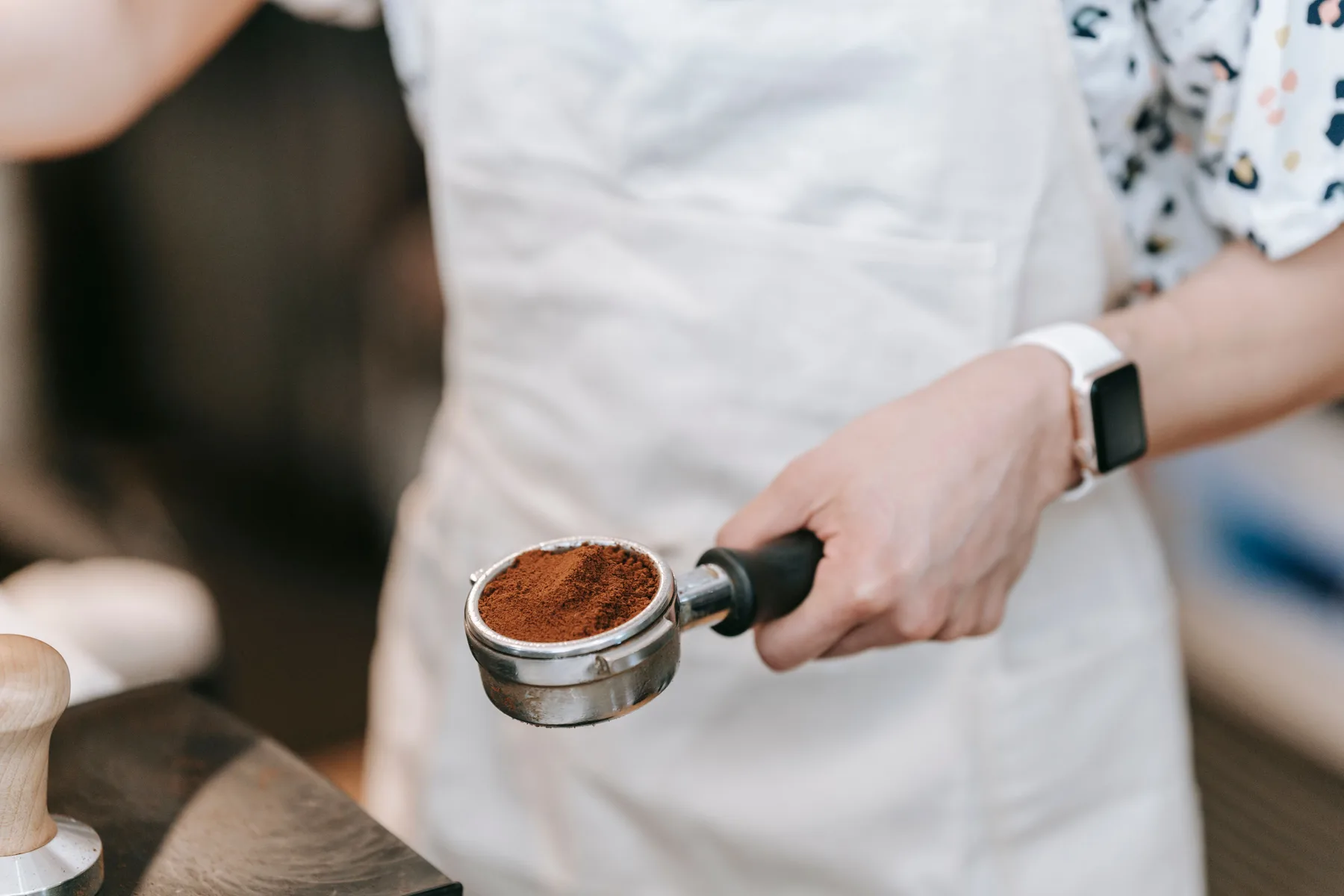
Change only the grind, a click or two at a time.
When the time is in range, about 25–30 seconds for most recipes, let taste decide. Seattle Coffee Gear suggests a slightly shorter yield if the shot is still bitter; La Marzocco Home uses a longer one, such as 1:3, to balance high acidity. Repeat the process whenever you change coffee.
Every coffee behaves a little differently in an espresso machine. Dialing in means finding the grind, and sometimes the yield, that makes it taste good.
In this guide we show a simple method: hold the recipe steady, change the grind in small steps, then fine-tune by taste. If the dose, yield and time are new to you, start with our espresso basics.
Hold the recipe, change the grind
Methodical Coffee keeps the dose, yield and time fixed and adjusts the grind. If the shot reaches its yield well before its time, it says, the coffee is ground too coarse; if it runs well past its time, too fine.
The grind changes the time because it changes how hard it is for water to get through. In a 2020 study in the journal Matter, Cameron and colleagues explain that a finer grind makes the bed less permeable and slows the flow; in their experiments, a coarser grind setting gave a shorter shot. Barista Hustle adds a limit: grinding finer and finer does not keep raising extraction or always taste better, and a lot of the time the result is the opposite. If a finer step stops helping, look at how evenly you prepare the coffee before going finer again.
Change one thing at a time. Seattle Coffee Gear calls this very important, so you can tell what each change did, and keeps the steps small: a click or two on a stepped grinder, or a millimeter or two on a stepless one. Our guide to stepped and stepless grinders explains the difference.
Read the time, then the taste
Seattle Coffee Gear’s grind guide aims for 25–30 seconds and gives both edges:
- Fast and sour: a shot under about 20 seconds, much faster than the target, that tastes thin and sour needs a finer grind.
- Slow and bitter: a shot taking 35–40 seconds or more needs a coarser grind.
When the time is on target but the shot is not right, let taste decide. If it is still bitter, Seattle Coffee Gear’s troubleshooting guide suggests a slightly shorter yield. La Marzocco Home goes the other way for high acidity, with a longer yield, such as 1:3, called a lungo.
The Specialty Coffee Association’s heritage definition of espresso gives 20–30 seconds, and about half the baristas (51%) in a 2017 Barista Guild of America survey usually pulled their shots in 25–30 seconds. Barista Hustle’s Espresso Compass explains what the yield does: a longer yield makes the shot weaker and more extracted, and a shorter one makes it stronger and less extracted.
| What the shot did | First change |
|---|---|
| Faster than about 25 seconds (under about 20 s is often thin and sour) | Grind finer, a click or two |
| Over about 35 seconds, often bitter | Grind coarser, a click or two |
| On time, still bitter | Pull a slightly shorter yield |
| On time, still sour, high acidity | Pull a longer yield, such as 1:3, a lungo |
| Times swing at a fine setting | Keep the routine the same, then try a step coarser |
| A new coffee | Start again from 18 g in and 36 g out |
Stir the espresso before you taste it. Methodical Coffee says stirring mixes the crema with the coffee underneath, for a more balanced flavor. James Hoffmann goes further and skims the crema off to reduce bitterness, Barista Magazine reports. Whichever you choose, taste every shot the same way.
An example
Here is how a dial-in might go. These shots are an illustration, not results from a source:
What you need
- An espresso machine and a grinder you can adjust in small steps.
- A scale that reads to 0.1 g, and a timer.
- A notebook or phone for notes.
- Enough coffee for several shots.
Safety. Espresso machines hold hot, pressurized water and steam, which can burn and scald. Keep your hands clear of the group head and the portafilter while the machine is on, because both stay hot after use. Do not force a portafilter that will not release; follow your machine’s manual.
Dialing in, one change at a time
- Hold
- 18 g in and 36 g out (1:2)
- Change
- the grind only, a click or two at a time
- Too fast
- faster than about 25 seconds: grind finer (under about 20 s is often sour)
- Too slow
- over about 35 seconds, often bitter: grind coarser
- Then
- fine-tune the yield: shorter if still bitter, longer if still sour
A new coffee usually needs a new dial-in.
Step 1: Pick a recipe
Start with 18 g in and 36 g out, a 1:2 ratio, or your basket’s dose and twice its weight out.
Step 2: Pull a shot and note it
Note the dose, yield and time, then stir and taste.
Step 3: Adjust the grind
A fast shot is often sour: grind a click or two finer. A slow one is often bitter: a click or two coarser. Keep the dose and yield the same.
Step 4: Repeat until the time is right
Pull another shot after each change. Most recipes aim for about 25–30 seconds.
Step 5: Fine-tune by taste
Still bitter on time: try a slightly shorter yield. Still sour on time: try a longer one. Write down the setting you like.
Troubleshooting
The time jumps around between shots
Keep your routine the same: the same dose, the same way of leveling and tamping. If the times still swing at a fine setting, try a step coarser: in the Matter study, shots ground too fine flowed unevenly and were hard to repeat.
Nothing tastes right at any grind
Check the basics in our guide to sour or bitter espresso: water temperature, a clean basket, and how fresh the coffee is.
My settings stopped working
A new bag of coffee usually needs a new dial-in. La Marzocco Home says that when you switch coffees, the dialing in starts over.
Frequently asked questions
What does dialing in espresso mean?
Finding the grind setting, and sometimes the yield, that makes a good shot with a particular coffee. La Marzocco Home says that when you switch coffees, the dialing in starts over.
Should I change the grind or the dose?
Start with the grind. Methodical Coffee keeps dose, yield and time fixed and changes the grind. Change only one thing per shot, so you can tell what each change did.
How much should I change the grind each time?
A little: a click or two on a stepped grinder, or a millimeter or two on a stepless one.
How many shots does it take?
It varies. Our example above takes three shots, but a new coffee or grinder can take more. Keep notes so each shot teaches you something.
- Hold the dose and yield steady and change only the grind while you dial in.
- Make small changes: a click or two on a stepped grinder, a millimeter or two on a stepless one.
- Fast and sour means grind finer; slow and bitter means grind coarser.
- Once the time is right, use taste to fine-tune the yield, and start again with each new coffee.
Sources
Pages used for the claims above.
- Specialty Coffee Association, Defining the Ever-Changing Espresso (25 Magazine, issue 3: the heritage definition and the 2017 Barista Guild of America survey).
- Barista Hustle, The Espresso Compass.
- Methodical Coffee, How to pull a shot of espresso.
- Methodical Coffee, How to enjoy espresso.
- Barista Magazine, Stirring Crema: The Great Debate.
- Seattle Coffee Gear, How to Dial in Your Espresso Shot - Grind Size.
- Seattle Coffee Gear, Why Does My Espresso Taste Sour or Bitter?
- Cameron et al., Systematically Improving Espresso: Insights from Mathematical Modeling and Experiment, Matter (2020).
- La Marzocco Home, Dialling In A Modern Espresso.
Published Updated
See sourcesReport a correction — fixes are logged in the Updated date.