
Article
Why Is My Espresso Sour or Bitter?
Edited and reviewed by Coffee Made Clear TeamUpdated 5 min read
Sour espresso is under-extracted, and bitter espresso is over-extracted.
Seattle Coffee Gear’s troubleshooting guide traces sourness most often to a grind that is too coarse, so the shot runs fast, and bitterness to one that is too fine, so it runs slow.
Grind finer for sour and coarser for bitter.
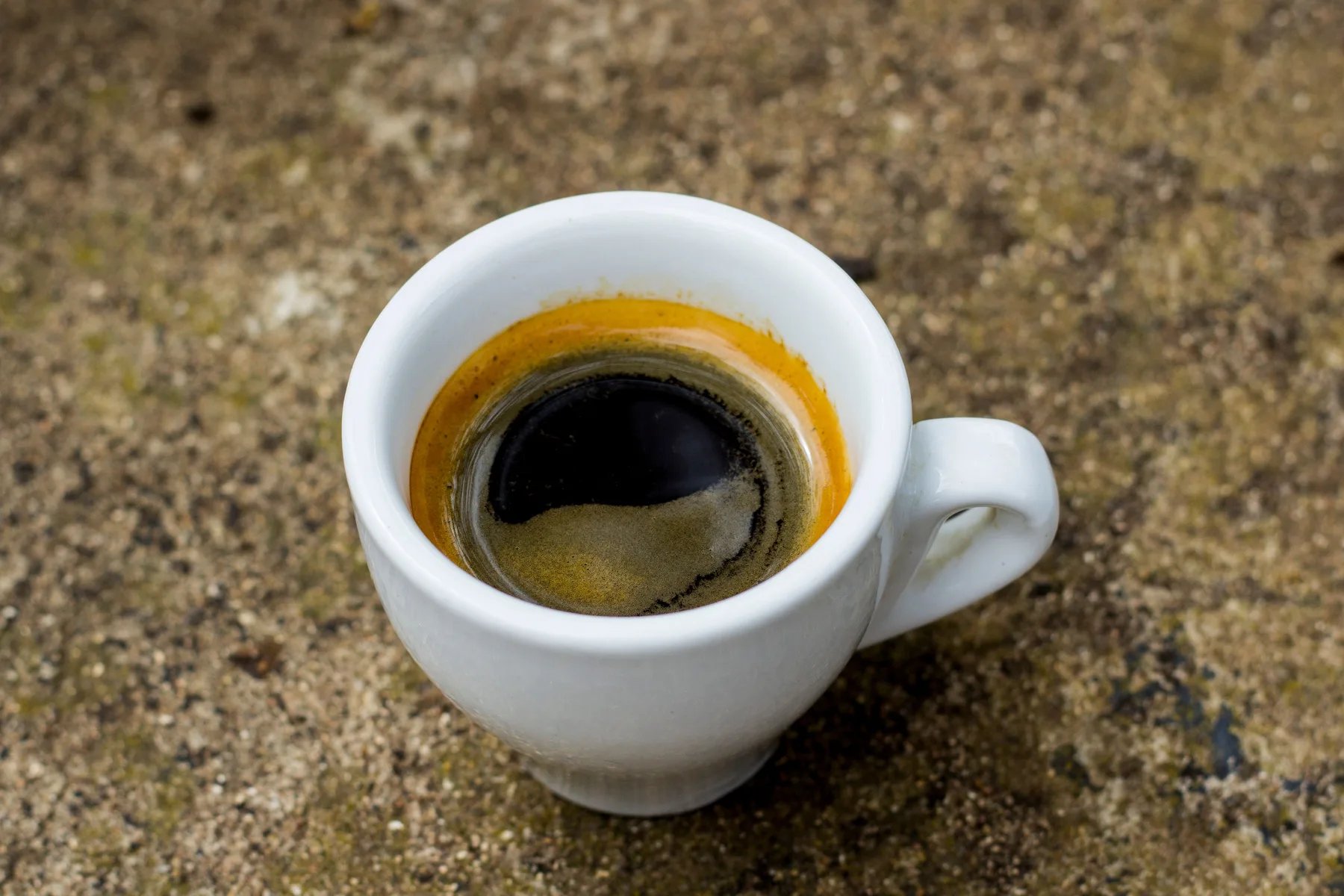
If a shot tastes sour and bitter at once, water probably ran unevenly through the coffee, called channeling. And if no grind setting helps, check the water temperature, the dose, how fresh the coffee is, and whether the basket needs cleaning.
Sour and bitter shots are common espresso problems. The good news is that the taste usually points to the fix.
In this guide we explain what sour and bitter mean in espresso, how the shot time hints at the cause, and what to try first. For the step-by-step method, see our guide to dialing in espresso. For filter coffee, see why coffee tastes sour and why coffee tastes bitter.
Sour and bitter, explained
Brewing dissolves flavor from the ground coffee into the water. Sour espresso is usually under-extracted, with too little dissolved, and bitter espresso over-extracted, with too much.
The grind is the usual cause. A grind that is too coarse lets the water through quickly, so the shot runs fast and tastes sour. A grind that is too fine slows the water down, so the shot runs slow and tastes bitter. Methodical Coffee gives the same fixes: coarsen the grind for bitterness, and grind finer for sourness.
Sour and bitter at once
If a shot tastes both sour and bitter, that is often a sign of channeling: water finding an easy path through the coffee, so some of it is under-extracted and some over-extracted.
Researchers have found the same problem from the other side. In a 2020 study of espresso, Cameron and colleagues linked a drop in extraction at fine grind settings to uneven flow through the coffee, and to shots that were hard to repeat. To limit channeling, level the bed and tamp the same way every shot.
What the shot time tells you
Time is a useful clue. Seattle Coffee Gear says shots that consistently run in under 20 seconds are often sour, and shots that run well past 35 seconds are often bitter. Most recipes aim for about 25–30 seconds, as did about half the baristas (51%) in a 2017 Barista Guild of America survey reported by the Specialty Coffee Association.
Other causes to check
If grind changes do not fix it, Seattle Coffee Gear lists other causes:
- For sour shots: too little coffee for the basket, water below the 195–205 °F range (the range in the Specialty Coffee Association’s heritage definition of espresso), or coffee so fresh off the roast that it is still releasing gas.
- For bitter shots: too much coffee, water that is too hot, or old coffee oil in a dirty portafilter, basket or group head.
What you need
- Your espresso machine, grinder and scale.
- A timer, and a notebook for each shot’s numbers.
- A brush or cloth for cleaning the basket.
Sour or bitter? First fixes
- Sour
- usually under-extracted: grind finer first
- Bitter
- usually over-extracted: grind coarser first
- Both at once
- uneven flow (channeling): level and tamp evenly
- Shot time
- under about 20 seconds often sour; over about 35 seconds often bitter
- Also check
- water temperature, dose, and a clean basket
Change one thing per shot, then taste again.
Step 1: Name the taste
Stir the shot so the crema mixes in, as Methodical Coffee describes, then taste it. Is it sour, bitter, or both?
Step 2: Check the time
Under about 20 seconds points to a grind that is too coarse; well past 35 seconds, too fine.
Step 3: Change the grind
Sour and fast: grind finer. Bitter and slow: grind coarser. Change one thing per shot: only the grind, with the same dose and yield.
Step 4: Fix the flow
Sour and bitter at once: level the coffee in the basket and tamp it evenly.
Step 5: Check the rest
Still not right: check the water temperature and the dose, and clean the portafilter, basket and shower screen.
Where sources disagreeGrinding finer for a sour shot
The question
If a shot is sour, will grinding finer always fix it?
CMC verdict
Grind finer first when a shot runs fast and sour. If a finer step stops helping, or the shots swing between sour and bitter, stop going finer: level and tamp the same way every shot, then try a step coarser with a slightly longer yield.
Try it yourself
Pull two shots at your current grind and two at one step finer, with the same dose and yield. If the finer pair tastes no sweeter and their times differ more, go back a step and lengthen the yield instead.
See the sources
Source A
Seattle Coffee Gear
Sour espresso is under-extracted, and the most common cause is a grind that is too coarse. A fast, sour shot needs a finer grind.
Source B
Barista Hustle (The Espresso Compass)
Grinding finer and finer does not result in a continuous increase in extraction, and it does not always taste better; a lot of the time the result is the exact opposite. Raising extraction only really works together with a more even extraction.
Source C
Cameron and colleagues, Matter (2020)
In their experiments, extraction peaked at a middle grind setting and was lower at both very coarse and fine settings. The authors put the drop at fine settings down to uneven flow, with poor reproducibility.
Why they differ
The retailer describes the usual case: a coarse, fast shot is under-extracted, and a finer grind helps. Barista Hustle and the study describe the limit: past a point, water finds easy paths through a fine bed, so going finer can lower extraction rather than raise it, which can taste sourer.
Sources for this section
Troubleshooting
These fixes follow Seattle Coffee Gear’s troubleshooting guide, except where another source is named.
The time is right but the shot is still bitter
Try a slightly shorter yield, a tighter ratio. Barista Hustle explains why: a shorter yield makes the shot stronger and less extracted. Also check that the machine is not running too hot.
It is still sour after grinding finer
Check the dose and the water temperature: many entry-level machines run slightly cool. Very fresh coffee can also taste sour, so let it rest a few more days.
The bitterness never changes
Clean the portafilter, basket and shower screen. Old, rancid oil can give a flat bitterness that no grind change will fix.
Frequently asked questions
Why does my espresso taste sour?
Usually because it is under-extracted. The most common cause is a grind that is too coarse; others include too little coffee, water below the 195–205 °F range, and coffee that is very fresh off the roast.
Why does my espresso taste bitter?
Usually because it is over-extracted. The most frequent cause is a grind that is too fine; others include too much coffee, water that is too hot, a shot well past 35 seconds, and oily buildup in a dirty basket.
Why is my espresso sour and bitter at the same time?
It is often a sign of channeling: water flowing unevenly through the coffee, so some of it is under-extracted and some over-extracted.
Can old oil in the machine make espresso bitter?
Yes. Old oil in a dirty portafilter, basket or group head can give a flat bitterness that no grind change will fix. Clean them, then taste again.
- Sour espresso is usually under-extracted; the most common cause is a grind that is too coarse.
- Bitter espresso is usually over-extracted; the most common cause is a grind that is too fine.
- Sour and bitter at once often means water ran unevenly through the coffee, called channeling.
- If grind changes do not help, check the water temperature, the dose and a dirty basket.
Sources
Pages and studies used for the claims above.
- Seattle Coffee Gear, Why Does My Espresso Taste Sour or Bitter?
- Methodical Coffee, How to pull a shot of espresso.
- Methodical Coffee, How to enjoy espresso.
- Barista Hustle, The Espresso Compass.
- Specialty Coffee Association, Defining the Ever-Changing Espresso (25 Magazine, issue 3: the heritage definition and the 2017 Barista Guild of America survey).
- Cameron et al., Systematically Improving Espresso: Insights from Mathematical Modeling and Experiment, Matter (2020).
Published Updated
See sourcesReport a correction — fixes are logged in the Updated date.