
Article
How to Make an Americano
Edited and reviewed by Coffee Made Clear TeamUpdated 4 min read
An Americano is espresso topped up with hot water.
De'Longhi suggests starting with about twice as much water as espresso, just under boiling, around 195–205 °F. Use less water for a stronger cup and more for a lighter one.
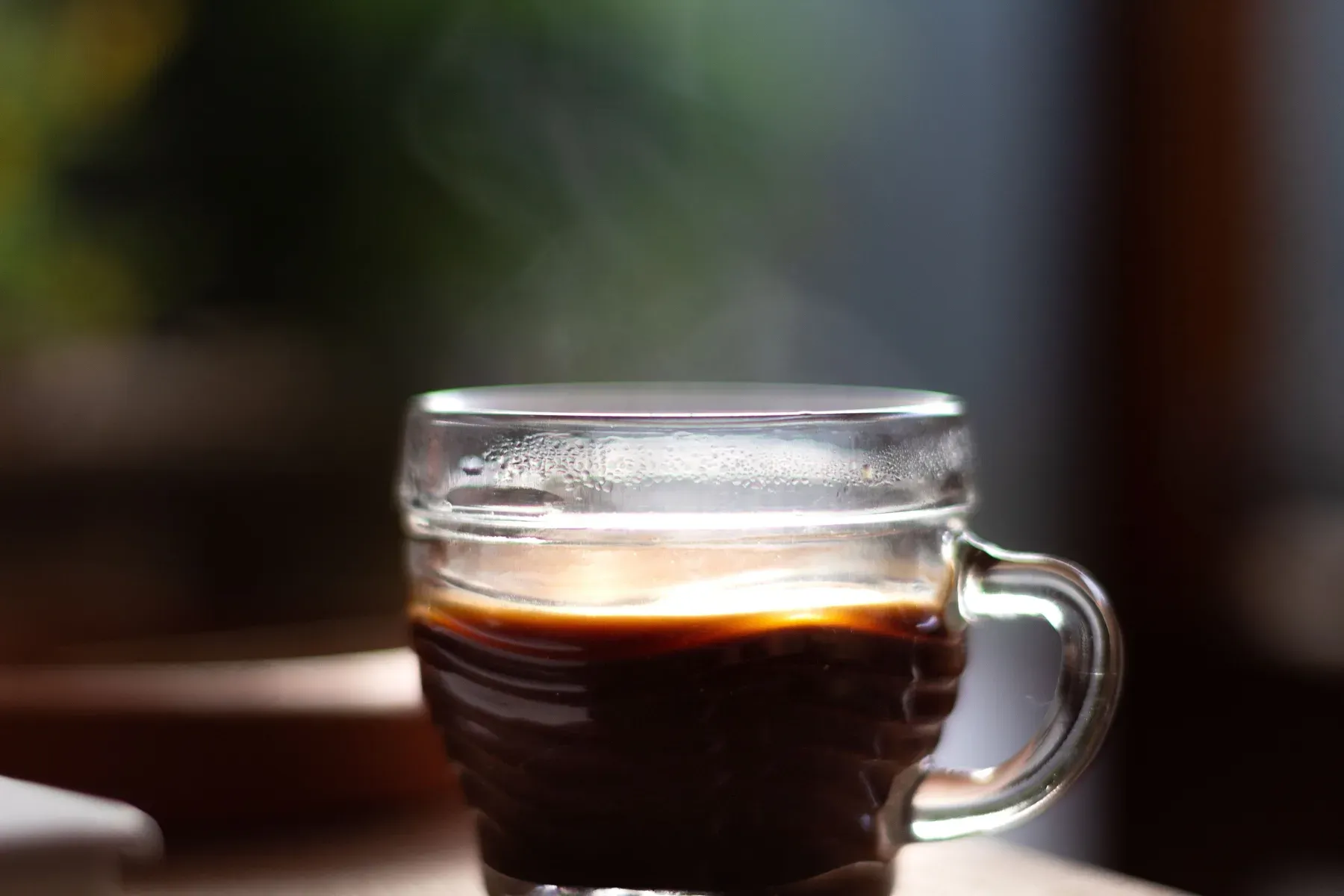
Makers differ. Breville gives a standard ratio of 1:1 for its long black; Nespresso adds 125 ml of hot water to 25 ml of espresso. Pouring the espresso onto the water, rather than the other way round, can help keep more crema on top, De'Longhi says. Breville calls that version a long black.
An Americano is one of the simplest espresso drinks: a shot of espresso and hot water. Change the amount of water and you can make it as strong or as light as you like.
In this guide we show how much water three machine makers use, whether the water or the espresso goes in first, and how to adjust the cup. How to pull the espresso itself depends on your machine, so follow its manual for that part; our espresso basics explain dose, yield and time, and our dial-in guide shows how to get the shot right.
What an Americano is
An Americano is espresso with hot water added after brewing. De’Longhi contrasts it with a long espresso, which runs more water through the coffee grounds and can taste more bitter. An Americano is “brewed first and then combined with hot water”.
The espresso is the base. The National Coffee Association, a trade group, describes it as a concentrated shot made by forcing nearly boiling water through finely ground coffee at high pressure, in about 20–30 seconds.
Crema, the light brown foam on top of an espresso, is the other thing people notice. How you combine the two changes how much of it is left.
How much water to add
Breville, De’Longhi and Nespresso use quite different amounts:
- Breville gives a standard ratio of 1:1, water to espresso, for its long black, and says you can dial it up or down. Its own recipe uses 2:1.
- De’Longhi suggests starting with about twice as much water as espresso: 1 or 2 shots with 3 to 6 oz of hot water. Use less water for a stronger cup and more for a lighter one.
- Nespresso pours 125 ml of hot water onto 25 ml of espresso, about five times as much. Its larger version uses two capsules with 200 ml (7 oz) of hot water.
So start at about twice as much water as espresso, then taste and adjust.
Water first or espresso first?
Makers differ here too, and they use the names differently:
- Breville pours the espresso into a cup of hot water and calls it a long black: “similar to the americano, but made in reverse”.
- De’Longhi also puts the hot water in first for its Americano, then brews the espresso onto it or pours it in gently. It says this can help keep more crema on top.
- Nespresso puts the espresso in the glass first, then adds the hot water.
If you like crema on top, try putting the water in first. If you do not mind, either order works.
What you need
- An espresso machine.
- Fresh, filtered water and a kettle, or your machine’s hot water outlet.
- A cup or glass, warmed with hot water.
| Espresso | a single or double shot |
|---|---|
| Hot water | from equal parts to about five times the espresso; start at about twice |
| Water temperature | just under boiling, about 195–205 °F |
| Order | water first can keep more crema |
| Adjust | less water for stronger, more for lighter |
Makers differ on the ratio and the order. Taste and adjust.
Step 1: Warm the cup
Rinse the cup with hot water and pour that water out.
Step 2: Heat the water
Heat the water to just under boiling, about 195–205 °F. That is the water temperature De’Longhi suggests.
Safety. Near-boiling water can scald. Pour away from your hands, and let the water settle for a moment before you pour. Do not lift a full kettle carelessly.
Step 3: Pour the hot water into the cup
Start with about twice as much water as espresso, for a single or double shot. De’Longhi lists 3 to 6 oz of water for 1 or 2 shots.
Step 4: Add the espresso
Brew the espresso straight onto the water, or pour it in gently. De’Longhi says this can help keep more crema on top.
Step 5: Taste and adjust
Add a little more hot water for a lighter cup. Next time, use less water for a stronger one.
Troubleshooting
My Americano tastes weak or watery
Use less water next time. Makers range from equal parts water and espresso up to about five times as much water.
It tastes too strong or bitter
Add more hot water. If even the espresso on its own tastes bitter, see our guide to bitter coffee.
There is no crema on top
Put the hot water in the cup first and add the espresso to it, as De’Longhi suggests.
Frequently asked questions
What is the difference between an Americano and a long black?
Both are espresso and hot water. Breville describes the long black as an Americano made in reverse: water first, then espresso. De’Longhi puts the water first for its Americano too, so the names overlap.
How much water goes in an Americano?
Makers vary, from equal parts water and espresso to about five times as much water. De’Longhi suggests starting with about twice as much and adjusting to taste.
Is an Americano the same as a long espresso?
No. De’Longhi explains that a long espresso runs more water through the coffee grounds, which can make it more bitter. An Americano is brewed first and then combined with hot water.
Can I add milk?
Yes. De’Longhi suggests serving it black or with milk, cream or sweetener. For drinks built on steamed milk, see our guide to lattes, cappuccinos and flat whites.
- An Americano is espresso topped up with hot water.
- Makers use from equal parts to about five times as much water as espresso; about twice is a common start.
- Putting the water in first can keep more crema; Breville calls that a long black.
- Use water just under boiling, then taste and adjust.
Sources
Pages used for the claims above.
- De’Longhi, How to make an Americano coffee.
- Breville, Long Black.
- National Coffee Association, Espresso.
- Nespresso, Americano by Nespresso and Americano (recipe cards, PDF).
Published Updated
See sourcesReport a correction — fixes are logged in the Updated date.