
Article
How to Make Iced Pour-Over Coffee
Edited and reviewed by Coffee Made Clear TeamUpdated 5 min read
Brew pour-over coffee as usual, but put ice in the carafe first and pour less hot water.
The ice cools the coffee straight away and melts to bring it to drinking strength.
Counter Culture's recipe for a 16 oz iced coffee: 30 g of coffee, ground medium-fine, 335 g of hot water at about 200 °F, and 165 g of ice in the carafe.
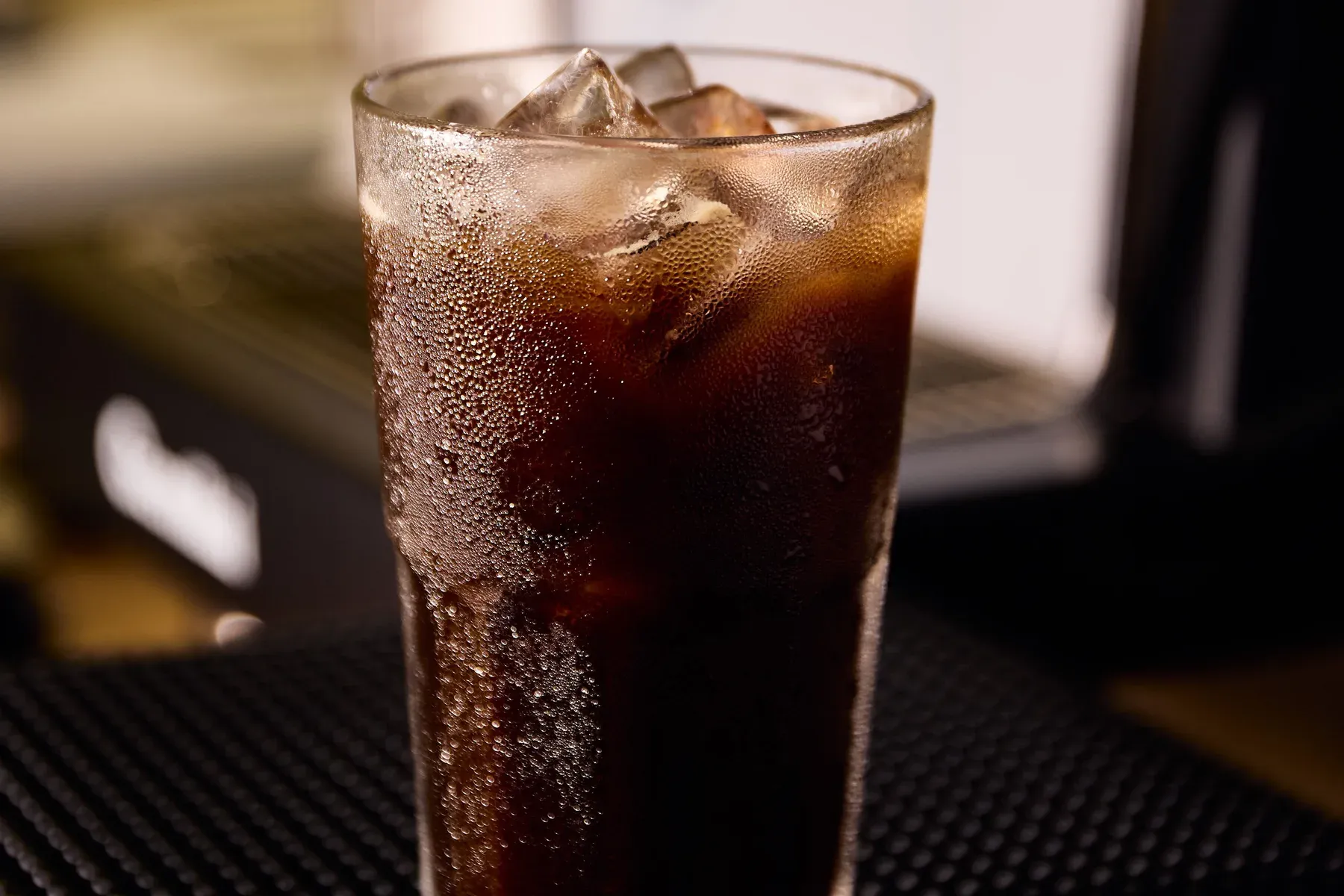
Bloom with 30 g of water, pour the rest in stages, then serve over more ice. Other roasters use 28–40 g of coffee and swap about a third of their water for ice.
If you pour hot coffee over a glass of ice, the melting ice waters it down. Brewing straight onto ice plans for that: you pour less hot water and let the ice make up the difference.
In this guide we show how three roasters do it, how much coffee, hot water and ice they use, and what to change if your iced coffee tastes weak. For the basic technique, see our pour-over guide.
Why brew onto ice
The ice does two jobs. Methodical Coffee puts it simply: the ice cools the coffee while also diluting it to the right coffee-to-water ratio.
That means you pour less hot water than you would for hot coffee. For hot pour-over, the National Coffee Association, a trade group, gives a range of 1:13 to 1:16, coffee to water. Counter Culture brews at 1:11, coffee to hot water, “plus ice for dilution”. Equator Coffees counts the ice as part of the water: 600 g in all, at 1:15, with the ice at roughly 40% of the normal brewing water.
How three roasters set it up
All three put the ice in the carafe or jar first and brew straight onto it:
- Counter Culture: 30 g of coffee, 335 g of hot water and 165 g of ice. Makes one 16 oz iced coffee.
- Methodical Coffee: 28 g of coffee, 280 g of hot water and 170 g of ice, a 1:10:6 ratio of coffee, water and ice.
- Equator Coffees: 40 g of coffee, 350 g of hot water and 250 g of ice.
By our arithmetic, the ice is 33%, 38% and 42% of all the water. So swap about a third of your water for ice to start.
Grind a little finer
With less hot water, the coffee has less time in contact with water. Equator Coffees grinds finer than its usual pour-over for that reason. Counter Culture grinds medium-fine, like table salt, and Methodical Coffee uses a medium grind that feels similar to table salt.
What you need
- A pour-over dripper and a paper filter.
- A carafe or jar big enough for the hot water and the melted ice.
- A scale, a kettle and a timer.
- Ice, and a glass with more ice for serving.
| Coffee | 30 g, ground medium-fine, like table salt |
|---|---|
| Ice in the carafe | 165 g |
| Hot water | 335 g at about 200 °F |
| Bloom | 30 g of water, then wait 30 seconds |
| Pours | up to 100 g, then 200 g, then 335 g |
| Serve | over more ice |
Makes one 16 oz iced coffee. Other roasters use 28–40 g of coffee and swap about a third of the water for ice.
Step 1: Weigh and grind the coffee
Weigh 30 g of coffee and grind it medium-fine, like table salt.
Step 2: Heat the water and rinse the filter
Heat the water to about 200 °F. Rinse the paper filter with hot water, then pour that water away.
Step 3: Put the ice in the carafe
Add 165 g of ice to the carafe. Set the dripper on top and add the coffee.
Step 4: Bloom
Start a timer and pour 30 g of water to wet all the coffee. Wait 30 seconds. The National Coffee Association notes that the bed bubbles up as carbon dioxide escapes.
Step 5: Pour in stages
Pour in slow circles up to 100 g. At about one minute, once the water has drained a little, pour up to 200 g. Keep pouring about every 30 seconds until you reach 335 g.
Step 6: Serve over more ice
Pour the coffee into a glass of more ice.
Safety. Hot water can scald, so pour away from your hands and body. If your carafe is glass, hot water going onto ice is a sudden temperature change, so use a heat-resistant carafe, follow the maker’s guidance, and let a full carafe settle before you move it.
Troubleshooting
My iced coffee tastes weak or watery
Use a little less ice or a little more coffee next time, or grind a little finer, as Equator Coffees does. Our guide to weak coffee has more fixes.
It tastes harsh or bitter
Grind a little coarser next time. Our guide to bitter coffee explains why.
The carafe overflowed
Use a carafe or jar with enough room for the hot water and the melted ice, as Equator Coffees advises.
Frequently asked questions
Why brew onto ice instead of chilling the coffee later?
The ice cools the coffee while it brews and dilutes it to the right strength, Methodical Coffee explains. So you pour less hot water than usual and let the melted ice make up the rest.
How much ice should I use?
The three roaster recipes in this guide use 165 g, 170 g and 250 g of ice. By our arithmetic, that is about a third to two-fifths of all the water. Start with about a third.
Should I grind finer for iced pour-over?
Equator Coffees says yes: with less hot water, a finer grind gives the water enough contact time with the coffee. Counter Culture uses a medium-fine grind, like table salt.
Can I use my usual pour-over recipe?
Keep your usual amount of coffee, but swap part of the hot water for ice. Equator Coffees suggests ice at roughly 40% of your normal brewing water.
- Brew hot onto ice: the ice cools the coffee and brings it to drinking strength as it melts.
- Swap about a third of the water for ice, so you pour less hot water than usual.
- Equator Coffees grinds a little finer, since less hot water passes through the coffee.
- Serve over more ice, and change the coffee or ice next time if it tastes weak.
Sources
Recipes and pages used for the claims above.
- Counter Culture Coffee, Flash Brew.
- Methodical Coffee, How to make an iced pour over.
- National Coffee Association, Pour-over coffee (hot pour-over).
- Equator Coffees, Cold Chemex Recipe.
Published Updated
See sourcesReport a correction — fixes are logged in the Updated date.