
Article
How to Make Turkish Coffee
Edited and reviewed by Coffee Made Clear TeamUpdated 4 min read
Make it in a cezve, a small long-handled pot.
Add cold water (one small coffee cup, about 50 ml, per person), one teaspoon of very finely ground coffee (about 6 g) per cup and any sugar. Heat slowly, stirring, until it starts to foam; lift it off before it boils.
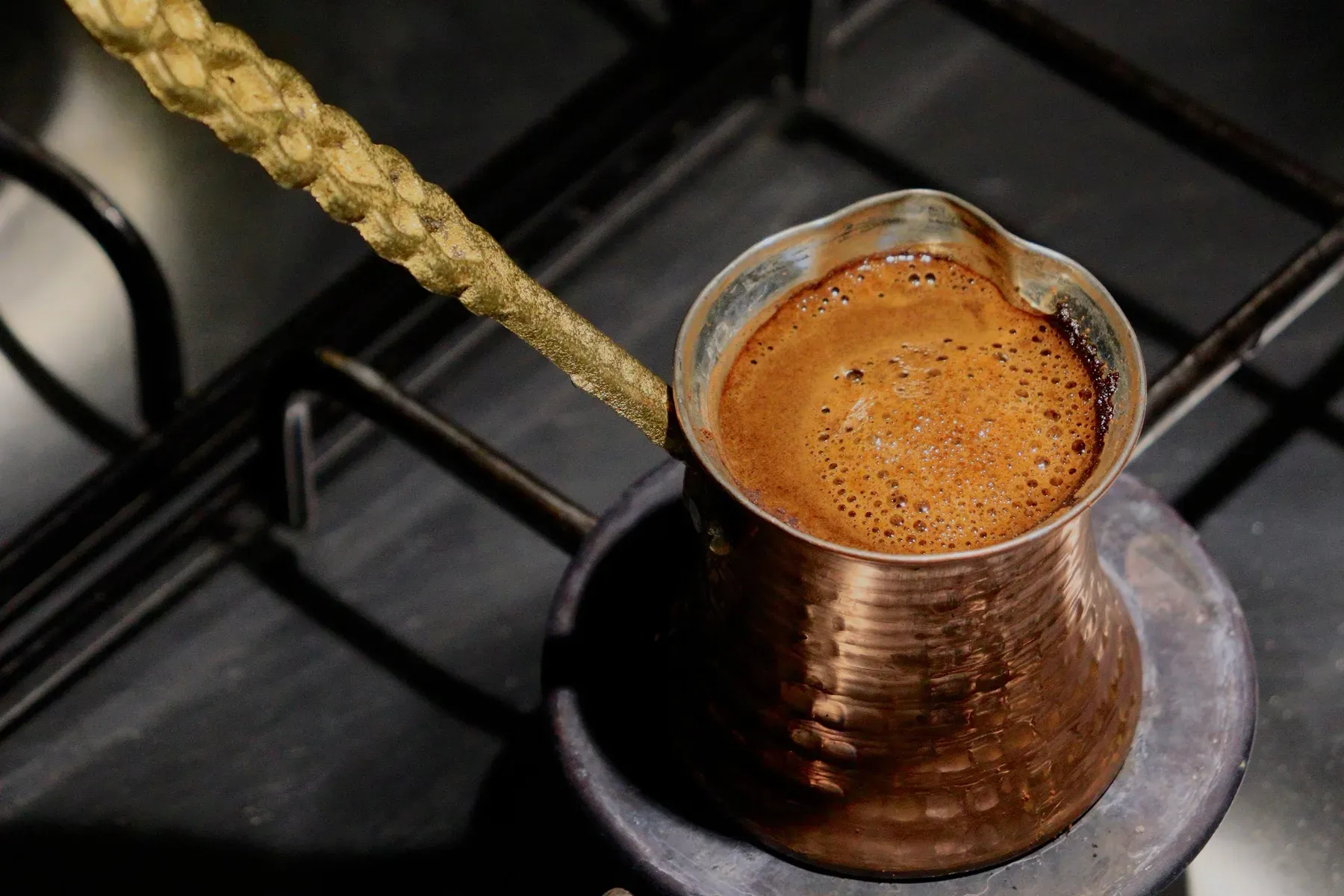
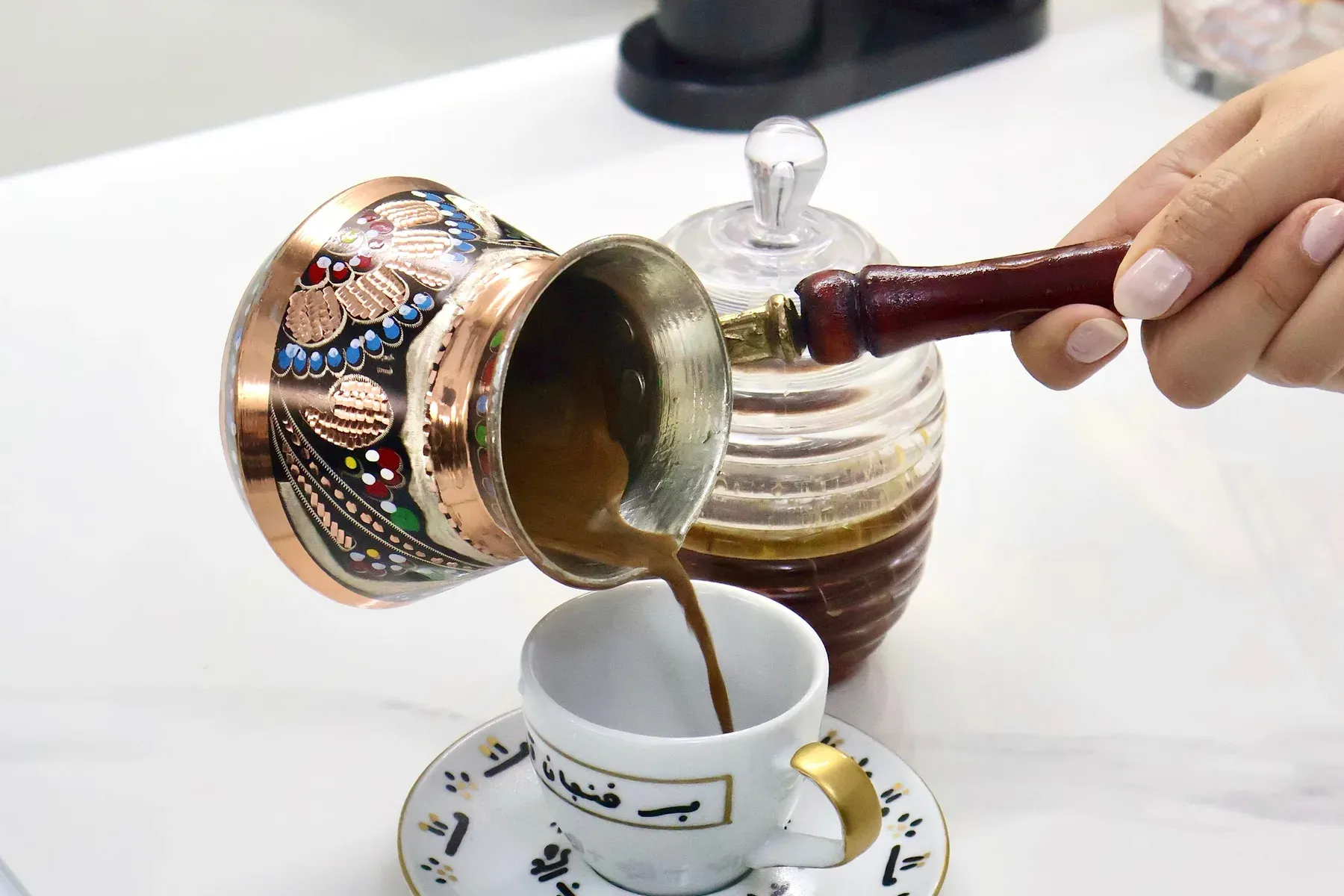
Pour a little foam into each cup, heat the coffee again until it rises, then gently fill the cups. Serve in small cups with a glass of water. The grounds stay in the cup, so let them settle before you drink.
Turkish coffee is brewed in a small pot called a cezve, with the coffee ground to a powder and left in the cup. It is served with a layer of foam on top.
In this guide we follow the tradition as UNESCO describes it, give the method of Kurukahveci Mehmet Efendi, a Turkish roaster, step by step, and note what one study found about roast and flavor.
What Turkish coffee is
In 2013 UNESCO added Turkish coffee culture and tradition to its list of intangible cultural heritage. Its description sets out the basics: freshly roasted beans are ground to a fine powder; the ground coffee, cold water and sugar go into a coffee pot; and it is brewed slowly on a stove to produce the desired foam. It is served in small cups, with a glass of water.
Because it is not filtered, the grounds settle at the bottom of the cup.
A UNESCO article adds two things worth knowing. “Turkish coffee” names a way of making coffee rather than a type of bean. And it is a social ritual as much as a drink: a symbol of friendship, hospitality and refinement, served in a small cup called a fincan with a glass of water. Households make it in their own ways, so treat our numbers as a way in, not as the one correct version.
Roast and flavor
One study had trained panels of 10 Turkish and 10 Brazilian tasters taste light, medium and dark roasts, brewed in a cezve, by machine and as espresso. Both the roast and the brewing method changed the flavor. Darker roasts brewed in a cezve read as more roasted, bitter and burnt to the Brazilian panel.
The two panels also described the same light roasts differently, and the researchers note that familiarity with Turkish coffee shaped what people tasted. So start with the roast you enjoy.
What you need
- A cezve, or another small pot with a spout.
- Coffee ground to a fine powder.
- Cold drinking water and a coffee cup to measure it.
- Sugar, if you take it.
- Small cups and a glass of water to serve.
Choose a cezve that suits the number of cups you are making. Roaster Lab’s cezve guide warns that in a cezve that is too big, the foam spreads thin, which also makes the rising foam harder to watch.
| Water | one small coffee cup (about 50 ml) of cold drinking water |
|---|---|
| Coffee | one teaspoon (about 6 g), ground to a fine powder |
| Sugar | optional; add it with the coffee |
| Heat | slowly, stirring, until it starts to foam; do not let it boil |
| Foam | pour a little into each cup, then heat again and fill |
| Serve | in small cups, with a glass of water |
Stay with the pot. The foam rises quickly as it nears the boil, so lift it off the heat before it boils. Turkish coffee is not filtered; let the grounds settle before you drink.
Step 1: Measure the water
Use one of your coffee cups to measure cold drinking water, one cup per person, and pour it into the cezve. Turkish coffee cups are small: Caffè Vergnano allows about 50 ml of water per person.
Step 2: Add the coffee and sugar
Add one teaspoon of coffee (about 6 g) per cup, and sugar if you like.
Step 3: Heat slowly until it foams
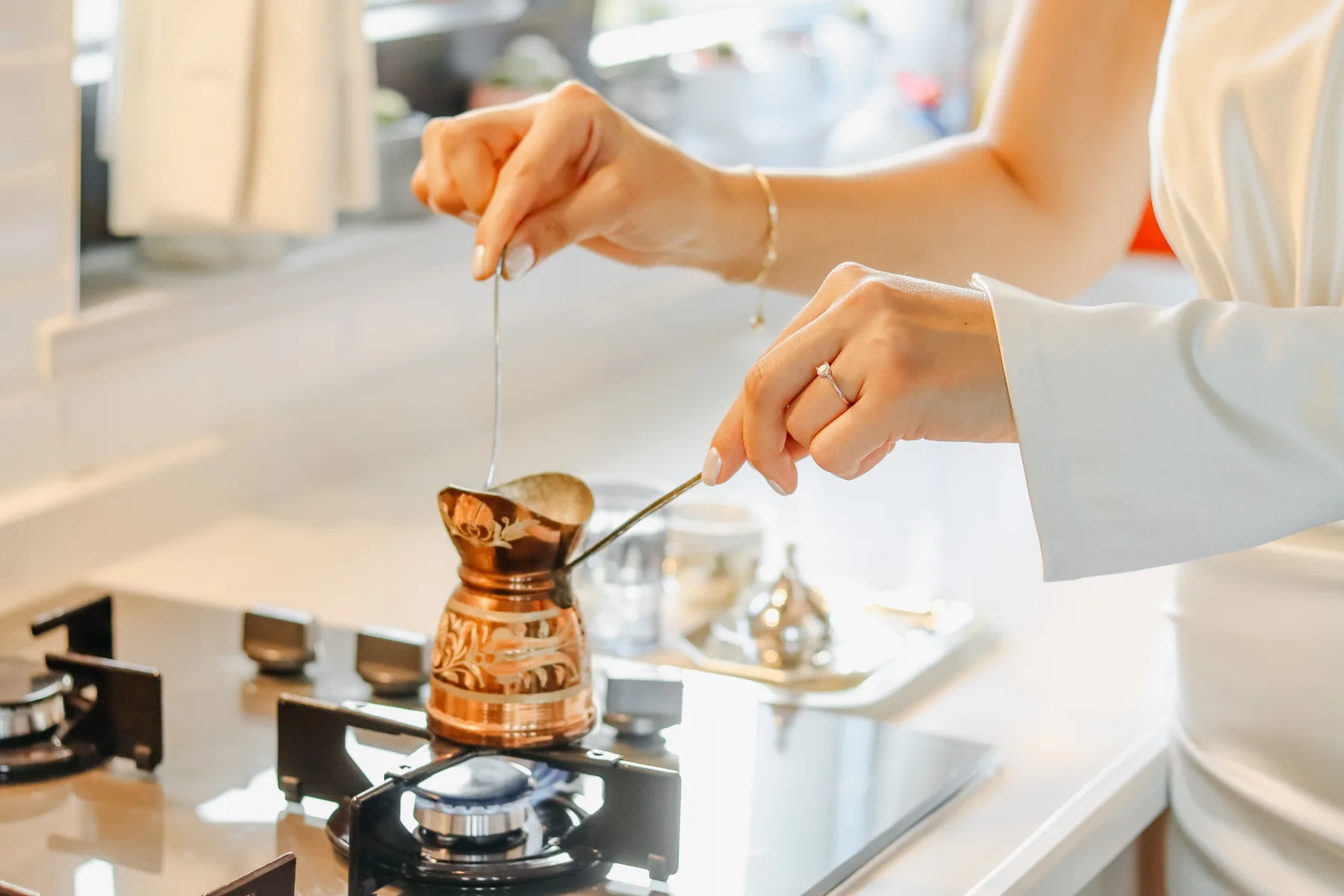
Heat slowly, stirring well, until the coffee starts to foam. Stay with the pot: the foam rises quickly as it nears the boil and can spill over. Caffè Vergnano says never to let it boil, and to take the cezve off the heat when it is about to.
Step 4: Pour a little foam
Gently pour a little of the foam into each cup.
Step 5: Heat again and fill
Heat it again until it rises, taking it off the heat before it boils, then gently fill each cup.
Step 6: Serve with water
Serve with a glass of water. Let the grounds settle before you drink.
Where recipes differHow much coffee for Turkish coffee
The question
How much coffee goes in each cup?
CMC verdict
Start with our baseline and the foam cue, and treat the ratio as a starting point rather than the authentic number. If you want it lighter or stronger, change the coffee a little; that is a preference, not a mistake.
Try it yourself
Keep the coffee, water, cezve and heat the same. Change only when you lift the cezve off the heat, once, and note how the foam, bitterness and sediment compare.
See the sources
Source A
Our baseline (Kurukahveci Mehmet Efendi and Caffè Vergnano)
One teaspoon of very finely ground coffee, about 6 g, for each small cup of water, about 50 ml.
Source B
Roaster Lab (Türkiye)
About 7 g of coffee to 70 ml of cold water per cup, which it gives as 1:10, with the sugar added at the start.
Source C
UNESCO’s description of the tradition
Finely ground coffee, cold water and sugar brewed slowly to produce foam, with no gram measurements at all.
Why the numbers differ
Turkish coffee is a living, shared tradition rather than one recipe. Households and roasters vary the ratio, the roast, the sugar, the stirring and the size of the cup.
Sources for this section
Troubleshooting
It boiled over
The heat was too high or the pot was left too long. Use low heat, stay with the cezve, and lift it off as soon as the foam starts to climb.
The foam rose and collapsed, and it tastes harsh
Lift the cezve off the heat a little earlier next time, as soon as the foam starts to climb.
There is no foam
Heat more slowly, and pour a little foam into the cups before the second heating.
It is gritty
That is normal for an unfiltered coffee. Let the cup sit for a moment so the grounds settle before you drink.
It is too strong for you
Use a little less coffee, or a slightly bigger cup of water. How strong you like it is your choice.
It tastes very bitter
Try a lighter roast. In one study, a Brazilian tasting panel found dark roasts brewed in a cezve more bitter and burnt.
Frequently asked questions
What is a cezve?
A small pot, usually with a long handle, used to brew Turkish coffee on the stove. The coffee, cold water and sugar go in together.
How fine should the coffee be for Turkish coffee?
Very fine: UNESCO’s description says the beans are ground to a fine powder.
Is there one authentic ratio?
No single ratio defines the tradition. UNESCO’s description gives no measurements, and recipes vary. Our one teaspoon per small cup is a starting point; adjust it to taste.
When do I add the sugar?
With the coffee and cold water, before heating, as UNESCO and Kurukahveci Mehmet Efendi describe it. Sugar is optional.
Why is it served with a glass of water?
It is part of the tradition UNESCO describes: small cups, accompanied by a glass of water. Kurukahveci Mehmet Efendi says it is customary.
- Turkish coffee is finely ground coffee, cold water and sugar heated slowly in a small pot called a cezve.
- The foam on top is part of the drink: pour a little into each cup before filling it.
- Kurukahveci Mehmet Efendi uses one teaspoon of coffee (about 6 g) per cup of water.
- It is served in small cups with a glass of water, a tradition UNESCO lists as cultural heritage.
Sources
Pages and studies used for the claims above.
- UNESCO Intangible Cultural Heritage, Turkish coffee culture and tradition.
- UNESCO, Turkish coffee: not just a drink, a culture.
- Roaster Lab, Cezve brew guide.
- Caffè Vergnano, The rules for a perfect Turkish Coffee.
- Kurukahveci Mehmet Efendi, Turkish coffee with a cezve.
- Elmaci, Gok and Tokusoglu, Impact of roasting degree on sensory profile of Turkish coffee and espresso assessed by Turkish and Brazilian panelists, Journal of Food Processing and Preservation (2022).
Published Updated
See sourcesReport a correction — fixes are logged in the Updated date.