
Article
Tap, Filtered or Bottled Water
Edited and reviewed by Coffee Made Clear TeamUpdated 6 min read
Start with your tap water. If it tastes and smells clean, it can make good coffee.
Your water supplier's annual report tells you where it comes from and which regulated contaminants were found. Your supplier can also tell you how hard it is.
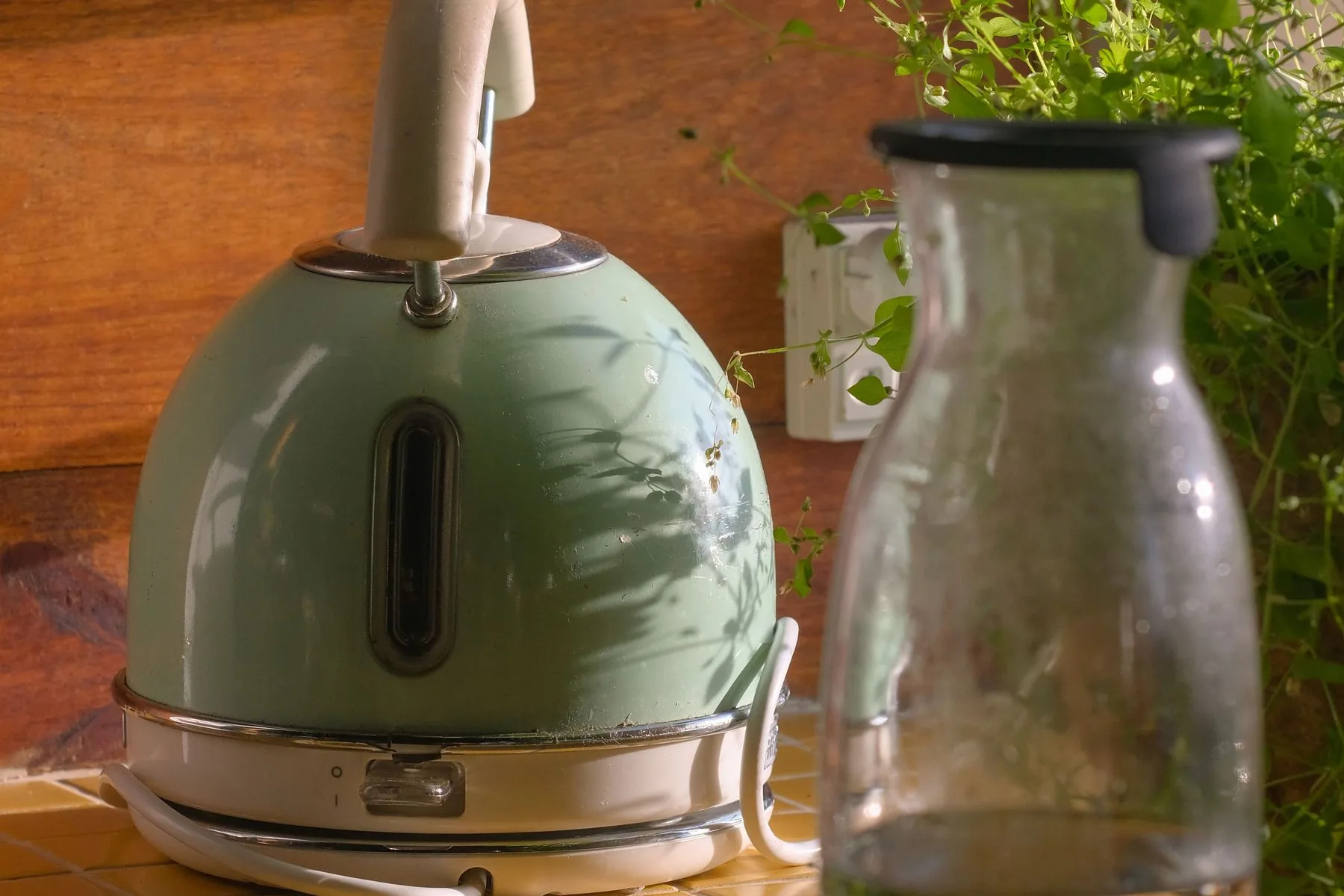
Taste does not show safety: follow any boil-water notice, and if you use a private well, test it. If it tastes off, a filter can help: one certified to NSF/ANSI 42 targets taste, smell and look; NSF/ANSI 53 targets health contaminants. On bottled water, "mineral" means at least 250 ppm of dissolved minerals, while "purified" means distilled, deionized or made by reverse osmosis. For taste, brew with two waters and keep the one you prefer.
Coffee is mostly water, so the water you brew with matters. But “tap, filtered or bottled?” has no single answer. It depends on what is in your water and how it tastes.
In this guide we show how to find out what is in your tap water, what a filter’s certification does and does not cover, and what the words on a water bottle mean. How minerals change the taste of coffee is in our coffee water guide.
Tap water: read your water report
In the U.S., community water suppliers must send customers a water quality report each year by July 1. It names the water’s source, such as a lake, river or aquifer, and the regulated contaminants found. If you did not get one, call your supplier or use the EPA’s search tool.
The report may also give hardness: the calcium and magnesium in the water, in mg/L as calcium carbonate. The U.S. Geological Survey calls 0–60 soft, 61–120 moderately hard, 121–180 hard and more than 180 very hard. Hard water also leaves scale in your coffee maker; see how to descale a coffee maker.
Filtered water: what the certification covers
Home filters are certified to different standards, and each covers different things. A water utility guide explains the common ones:
- NSF/ANSI 42: reduces non-health-related contaminants and changes the aesthetics of the water (how it looks, tastes and smells).
- NSF/ANSI 53: reduces contaminants that are harmful to health.
- NSF/ANSI 58: covers reverse osmosis systems.
The same guide says to make sure the packaging names the contaminant you want to reduce. It also says to replace the cartridge as the maker advises. A filter left too long may stop working and can harbor bacteria.
Bottled water: what the label means
U.S. rules define the common bottled-water names:
- Spring water comes from an underground source that flows naturally to the surface.
- Mineral water has at least 250 parts per million (ppm) of total dissolved solids, and no minerals may be added.
- Purified or demineralized water is made by distillation, deionization, reverse osmosis or a similar process.
- Bottled water from a public supply must say “from a municipal source” or “from a community water system”, unless it was treated to the purified or sterile standard.
The National Coffee Association advises avoiding distilled or softened water, as our coffee water guide also explains. Purified water can be distilled, so check the label before you brew with it.
What you need
- Your water supplier’s annual report, or the label of the water you use.
- Two waters to compare, such as tap and filtered.
- Your usual coffee, brewer and recipe.
Water report, filter and bottle label
- Water report
- from your supplier each year by July 1 (U.S.)
- Hard water
- above 120 mg/L as calcium carbonate
- NSF/ANSI 42 filter
- non-health-related contaminants; how water looks, tastes and smells
- NSF/ANSI 53 filter
- contaminants that are harmful to health
- Mineral water
- at least 250 ppm dissolved solids, no minerals added
- Purified water
- distilled, deionized or reverse osmosis
- Municipal source
- from a public water system, unless purified
For taste, brew with two waters side by side and keep the one you prefer.
Step 1: Read the report or label
Note your water’s source from the annual report, or the type of bottled water. Ask your supplier for the hardness if the report does not give it.
Step 2: Check a filter’s certification
For taste, look for NSF/ANSI 42. For a health contaminant, look for NSF/ANSI 53 and that contaminant on the package.
Step 3: Compare two waters
Use the side-by-side taste test in our coffee water guide, changing only the water, and keep the one you prefer.
Step 4: Replace filter cartridges on time
Follow the maker’s schedule; a filter left too long may stop working.
Troubleshooting
My coffee tastes flat with bottled water
Check whether it is purified water, which can be distilled. The National Coffee Association advises avoiding distilled or softened water. Try spring or clean-tasting tap water instead.
My tap water tastes of chlorine
Try a filter certified to NSF/ANSI 42, which targets the aesthetics of water, and check that its package names chlorine.
My filter seems to have stopped working
Replace the cartridge. A filter not replaced on schedule may stop working.
Frequently asked questions
Is tap water fine for coffee?
Taste does not show safety, so follow any boil-water notice and test a private well. If it tastes and smells clean, it can be good for coffee. Our coffee water guide suggests brewing with tap and filtered water side by side and keeping the one you prefer.
Does a water filter make better coffee?
It can if your tap water tastes off. A filter certified to NSF/ANSI 42 targets the look, taste and smell of water. Replace the cartridge as the maker says, or it can stop working.
What is the difference between spring, mineral and purified water?
Under U.S. rules, spring water comes from an underground source that flows naturally to the surface. Mineral water has at least 250 ppm of dissolved solids. Purified water is distilled, deionized or made by reverse osmosis.
How do I find out how hard my water is?
Ask your water supplier; its annual water report may list hardness too. In the U.S., the EPA has a search tool for finding your report.
- Your water supplier's annual report names your tap water's source and the regulated contaminants found; your supplier can also tell you its hardness.
- A filter certified to NSF/ANSI 42 targets the look, taste and smell of water; NSF/ANSI 53 targets health contaminants.
- On a bottle, mineral water has at least 250 ppm of dissolved solids, and purified water is distilled, deionized or made by reverse osmosis.
- For taste, brew with two waters side by side and keep the one you prefer.
Sources
Pages used for the claims above.
- U.S. Environmental Protection Agency, CCR Information for Consumers.
- U.S. Geological Survey, Water Science School, Hardness of Water.
- U.S. Food and Drug Administration, 21 CFR 165.110, Bottled water (copy at Cornell Law School’s Legal Information Institute).
- National Coffee Association, Drip coffee.
- Portland Water Bureau, Filtering or treating drinking water at home.
Published Updated
See sourcesReport a correction — fixes are logged in the Updated date.