
Article
How to Steam and Froth Milk at Home
Edited and reviewed by Coffee Made Clear TeamUpdated 6 min read
Pour cold milk into a small pitcher, about half a cup.
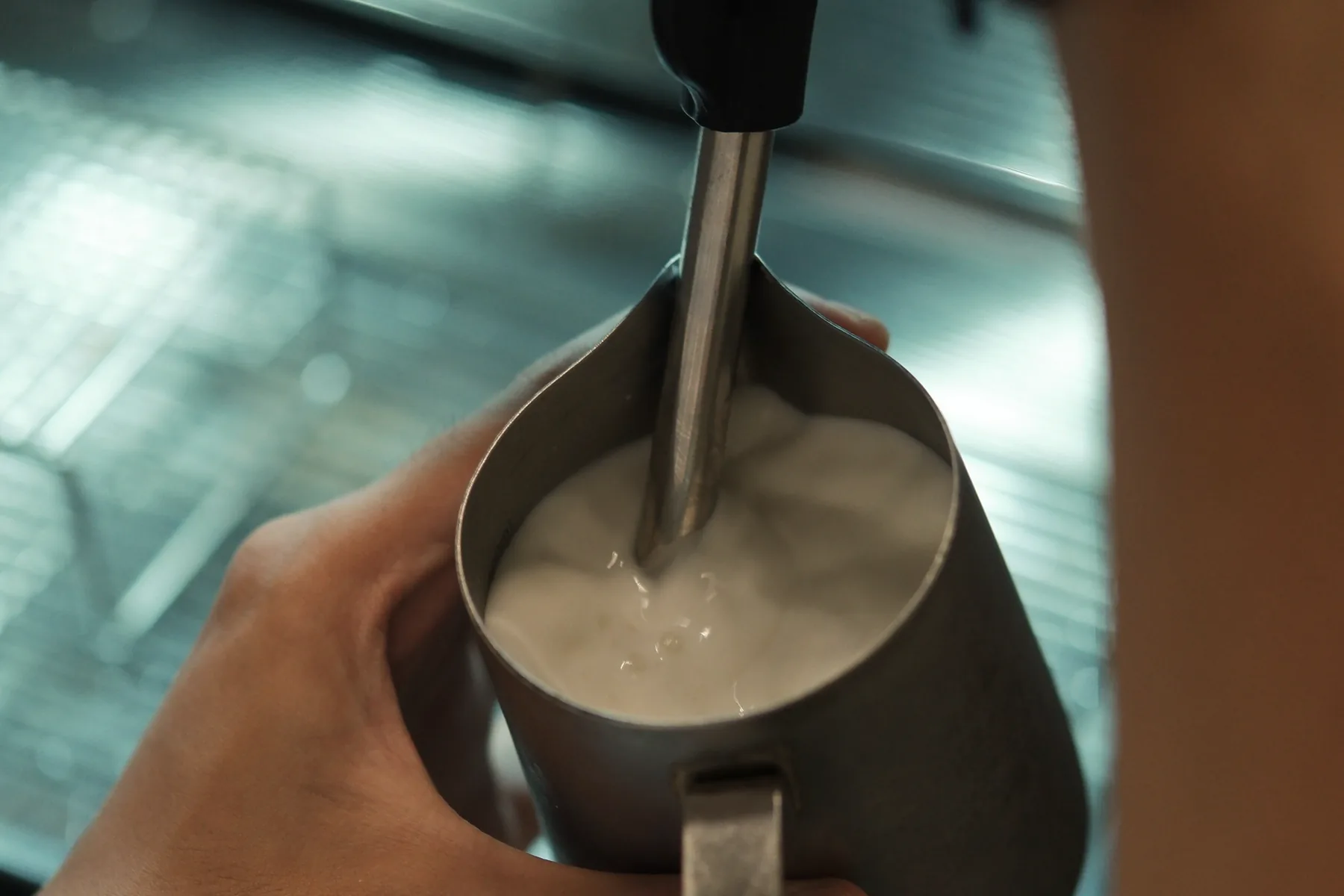
Put the steam wand's tip just below the surface, tipped to one side, and turn on the steam. Let it add air for about 5 to 10 seconds, with a gentle paper-tearing sound.
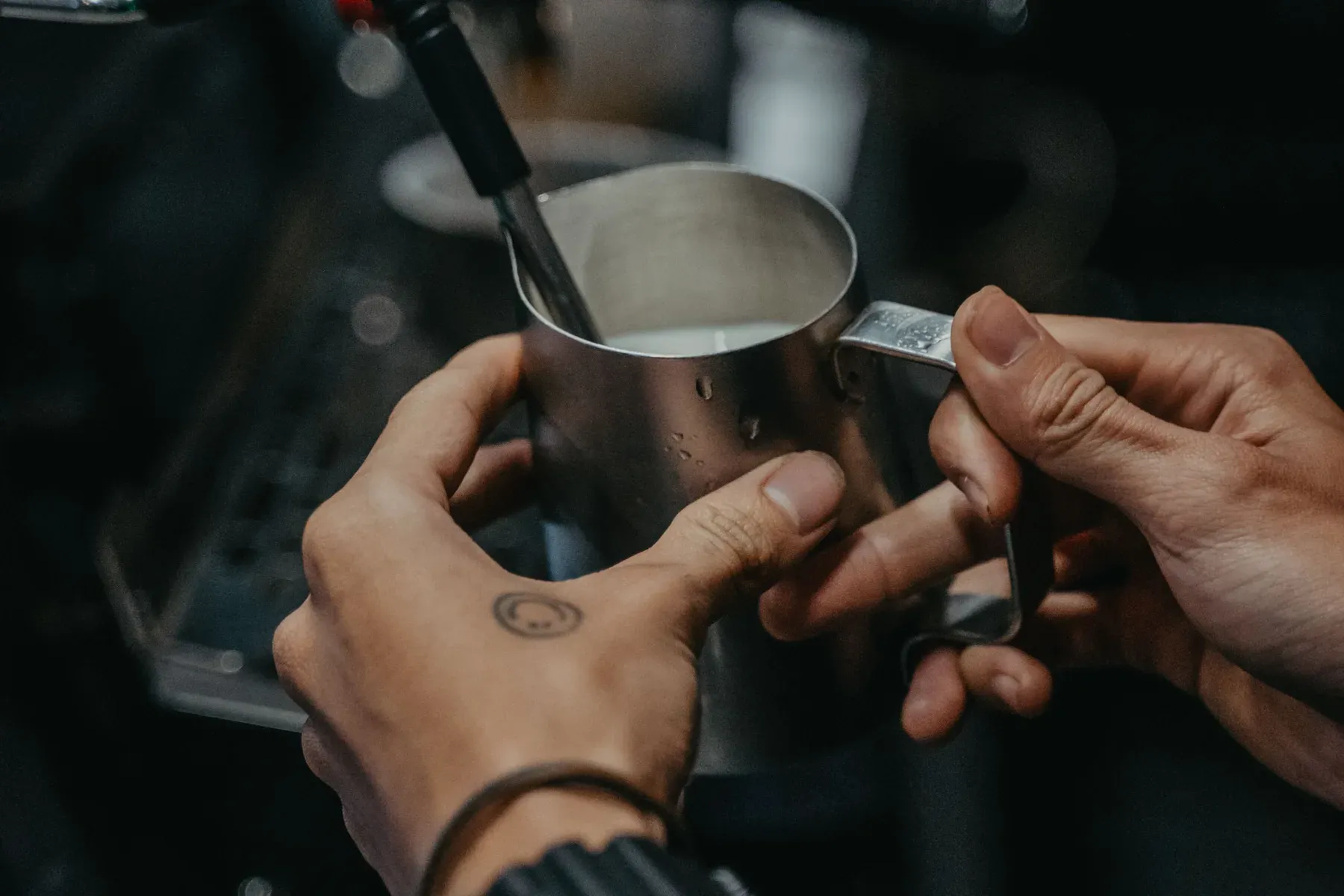
Then lower the tip a little so the milk spins in a whirlpool, and heat it to about 135–145 °F (57–63 °C). Breville says milk over about 145 °F will burn, so stop there. Hot milk can scald.
Tap out big bubbles, swirl until the surface looks glossy, and pour. Wipe the wand with a damp cloth and purge it. No steam wand? A handheld or electric frother, or even a whisk, can froth milk too.
Steamed milk turns espresso into a latte, cappuccino or flat white. A steam wand does two jobs at once: it adds air to make foam, and it heats the milk. For the espresso itself, see our espresso basics and dial-in guide.
In this guide we walk through steaming with a wand, step by step, and explain what makes foam last. We also cover what to do if you have no steam wand.
How steaming works
Steaming happens in two phases. First you stretch the milk: with the wand’s tip just below the surface, the steam pulls in air and makes foam. You hear a gentle hiss, like paper tearing. Breville says this lasts about 5 to 10 seconds.
Then you spin the milk: with the tip a little deeper, the milk churns in a whirlpool while it heats. Afterwards, a swirl of the pitcher mixes the foam and milk until the surface looks glossy.
What makes foam last
Temperature and the milk itself both matter. In a study of milk steamed with an espresso machine’s wand, foam from pasteurized whole milk tended to be more stable than foam from UHT milk, and the best final temperature was 50–60 °C. Machine guidance runs a little higher: Breville says most baristas aim for 140–145 °F (60–63 °C). So we suggest about 135–145 °F (57–63 °C), which is our own compromise between the two.
Breville also says that milk heated over about 145 °F will burn, so we do not suggest going past that. A 2024 review of milk heating reports that milk’s main whey proteins change shape from about 65 °C (alpha-lactalbumin) and 75–80 °C (beta-lactoglobulin).
Fresh milk may help too: a review of milk foaming found that some fat breakdown products, such as free fatty acids, strongly impair foaming.
What you need
- An espresso machine with a steam wand, or a milk frother.
- A small metal pitcher.
- Fresh, cold milk.
- A clean, damp cloth.
- A thermometer, if you have one.
| Milk | cold; about half a cup (4 oz) in a small pitcher |
|---|---|
| Wand tip | just below the surface, tipped to one side |
| Add air | about 5 to 10 seconds; a gentle paper-tearing sound |
| Whirlpool | tip a little deeper until the milk spins |
| Stop at | about 135–145 °F (57–63 °C); Breville says milk over about 145 °F will burn |
| Then | swirl until glossy; wipe and purge the wand |
A lab study found the best final temperature for foam was 50–60 °C. Breville says milk heated over about 145 °F will burn. Hot milk and steam can scald, and the steam wand gets hot, so do not touch it.
Step 1: Pour cold milk into the pitcher
Use about half a cup (4 oz), up to where the spout begins. Leave room for it to grow as you steam it.
Step 2: Place the wand tip just below the surface
First purge the wand by running steam for a moment. Then tip it toward one side of the pitcher, just below the surface, and turn on the steam.
Step 3: Add air for about 5 to 10 seconds
Listen for a gentle paper-tearing sound. Stop adding air once you have the foam your drink needs.
Step 4: Sink the tip to spin the milk
Push the wand a little deeper until the milk churns in a whirlpool, and keep heating.
Step 5: Stop at about 135–145 °F
Turn off the steam at about 135–145 °F (57–63 °C). Breville says milk over about 145 °F will burn. Without a thermometer, stop when the pitcher becomes too hot to hold comfortably.
Step 6: Swirl, pour and clean the wand
Tap out any large bubbles and swirl until the surface looks glossy. Wipe the wand with a damp cloth and run steam for a second or two to clear it. Do not touch the wand; it gets hot.
Safety. Steam and hot milk cause burns and scalds. Keep the wand pointed into the pitcher and away from you and other people, because steam can spit and splatter, especially when you first turn it on, so purge the wand into the pitcher or a cup before you steam. Let the wand cool before you wipe it, and let hot milk cool a little before you drink it. Follow the steaming and cleaning steps in your machine’s own manual.
No steam wand?
Breville lists other ways to froth milk: a handheld or electric frother, or even a whisk. They give you less control over the bubble size and temperature than a wand. Our guide to dairy and plant milks covers how different milks foam in an electric frother.
Troubleshooting
The milk will not foam
Keep the tip just below the surface while you add air, and start with cold, fresh milk.
The wand screeches
The tip is too deep. Breville says a high-pitched screech means it is too far in; raise it until you hear a gentle paper-tearing sound.
The foam is big and bubbly
Tap out the large bubbles and swirl until the surface looks glossy. Next time, add air for a shorter time, within about 5 to 10 seconds.
The milk is too hot to drink
Stop sooner, at about 135–145 °F, or as soon as the pitcher is too hot to hold comfortably. Breville says milk heated over about 145 °F will burn.
Frequently asked questions
What temperature should steamed milk be?
Aim for about 135–145 °F (57–63 °C). Breville says many baristas aim for 140–145 °F and that milk over about 145 °F will burn, and a lab study found the best final temperature for steamed foam was 50–60 °C. Hot milk can scald, so let it cool a little before you drink it.
Why will my milk not foam?
Start with cold milk and keep the wand tip just below the surface while adding air. A review found that some fat breakdown products, such as free fatty acids, strongly impair foaming.
Can I froth milk without a steam wand?
Yes. Breville lists handheld or electric frothers, or frothing by hand with a whisk, though these give less control over bubbles and temperature.
Which milk foams well?
In a lab study, pasteurized whole milk tended to make more stable steamed foam than UHT milk. Our guide to dairy and plant milks compares how other milks foam.
- Start with cold milk in a small pitcher, and leave room for it to grow.
- Add air for only about 5 to 10 seconds, then sink the tip a little to spin the milk.
- Stop at about 135–145 °F. Breville says milk over about 145 °F will burn, and hot milk can scald.
- Wipe and purge the wand after every use.
Sources
Pages and studies used for the claims above.
- Breville, How to steam milk: A step-by-step guide.
- Klimanova et al., Effect of steam frothing on milk microfoam: Chemical composition, texture, stability and organoleptic properties, International Dairy Journal (2022).
- Huppertz, Foaming properties of milk: A review of the influence of composition and processing, International Journal of Dairy Technology (2010).
- Wang et al., The Impact of Thermal Treatment Intensity on Proteins, Fatty Acids, Macro/Micro-Nutrients, Flavor, and Heating Markers of Milk, International Journal of Molecular Sciences (2024).
- Hassan et al., The bubbly life and death of animal and plant milk foams, Soft Matter (2024).
Published Updated
See sourcesReport a correction — fixes are logged in the Updated date.