
Article
Plan Your Home Coffee Setup
Edited and reviewed by Coffee Made Clear TeamUpdated 5 min read
Answer ten questions, and add a bag price if you like.
You get a starting method with its baseline recipe, a grinding decision, the coffee cost per cup and a card to print.
The planner runs in your browser and names no models or brands.
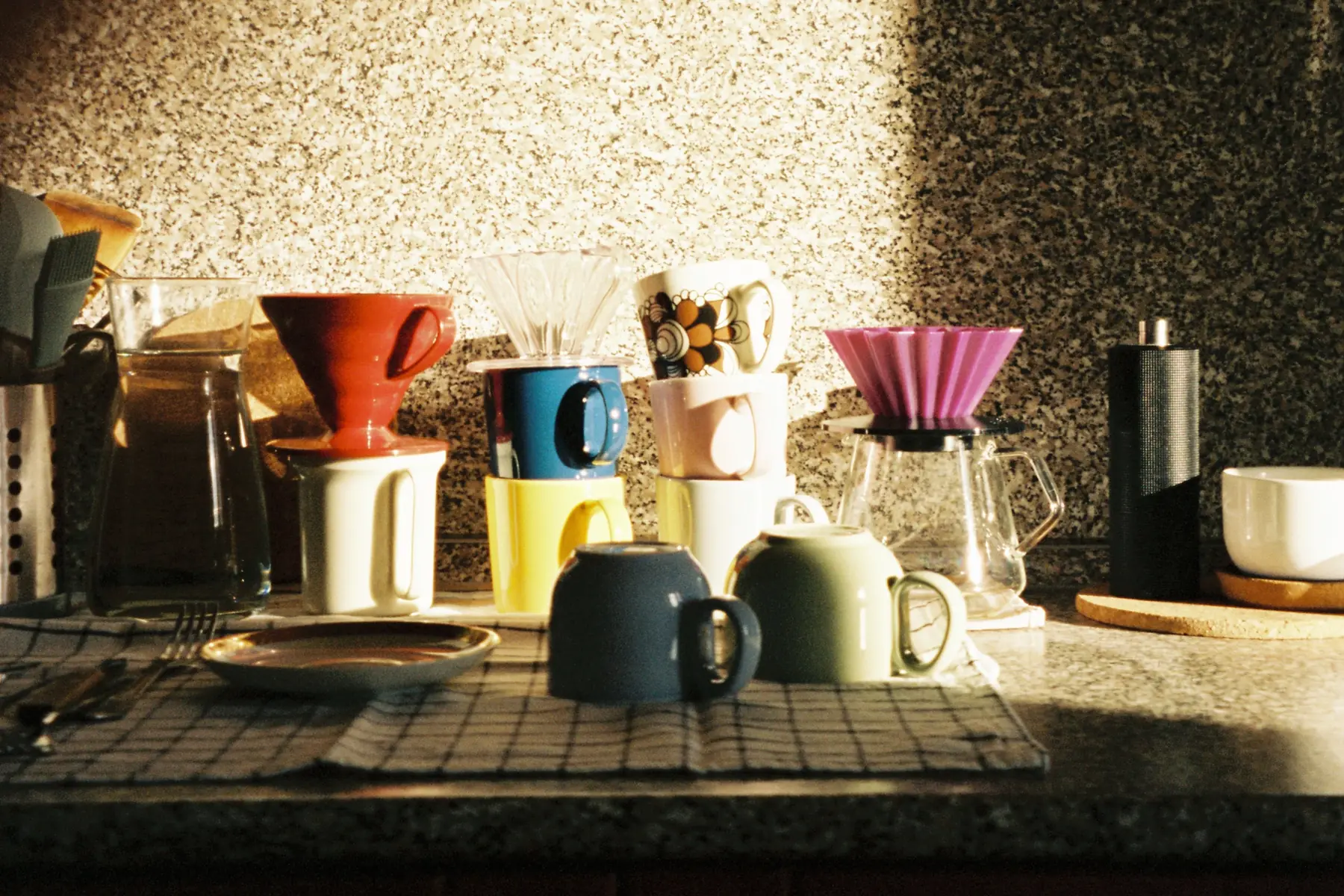
Setting up coffee at home comes down to three decisions: which brew method to start with, whether to grind your own beans, and what each cup will cost. This site already has a tool for each. The planner below runs all three in one go and ends with a card you can print and keep by the kettle.
It adds no rules of its own. Every line on the card comes from a guide or tool on this site, and it never names a model, a brand or a price for equipment.
How the planner works
The planner has three parts.
- Part 1, your mornings, is Method Match: five questions about texture, attention, batch size, cleanup and equipment. Each answer adds points to one or more methods, and the highest total wins. The card then gives that method’s baseline: the grind, the ratio and the brew time from its own guide, as the method comparison on the brewing page lists them.
- Part 2, grinding, is the Grind at Home Decision Test: five yes-or-no statements, one point for each yes. Four or five points says home grinding is likely to give you useful control; zero or one says keep the simpler routine and ask the roaster to grind small amounts for your method.
- Part 3, cost, is optional. It is the coffee-only part of the cost-per-cup formula: the bag price divided by the bag’s grams, times the coffee in a cup. The pour-over, French press and AeroPress baselines weigh their coffee, so the planner uses those doses unless you type your own.
Plan your setup
Plan your starting setup
Answer ten quick questions, and add a bag price if you like. The planner suggests a brew method and its baseline, says whether grinding at home suits your routine, works out the coffee cost per cup, and gives you a card to print. It names no models or brands.
How the planner decides
The planner adds nothing of its own. Part 1 is Method Match: each answer adds points to one or more methods, the highest total wins, and ties are broken by the texture answer, then the batch-size answer; if methods are still tied, the card shows them together. The grind, ratio and brew time are the method’s own baseline, from its guide.
Part 2 is the Grind at Home Decision Test: each yes is one point.
Part 3 is the coffee-only cost: the bag price divided by the bag’s grams, times the coffee per cup (20, 20, 17 g for the pour-over, French press and AeroPress baselines; the moka pot and drip guides weigh no single cup, so type yours), and times your cups a day and 365.24 for a year. Filters, milk, waste and equipment are in the full cost calculator.
What the card gives you
The card is a starting point to brew from, not a shopping list.
- The method and its baseline. The grind, ratio and brew time are the method guide’s own numbers. Open the guide for the steps.
- A grinding decision. It is the Decision Test’s outcome, including “keep the simpler routine for now”. It never names a grinder.
- What you need. These are the gear lines from the method guide’s “What you need” list, plus a line on grinding that follows your score. The coffee and water lines are left out, because the baseline already gives them.
- The coffee cost. If you added a bag price, the card shows the cost per cup for the coffee and the cost per year at your cups a day.
What it leaves out on purpose: brands, models and equipment prices. Those depend on where you live and what you already own, and the site has no sourced way to rank them.
Three example plans
Example: One mug before work
Brews one large mug on weekdays, likes a clean cup and owns an ordinary kettle.
- The cup you want:
- Clean and light
- How much attention you give the brew:
- I want to pour, wait, and finish
- How much coffee you make:
- One large mug
- Cleanup:
- Lift out a paper filter
- What you already own:
- Ordinary kettle
- Decision Test:
- yes to 2 of 5 statements
- Cost:
- $16.00 for 340 g, 1 cup a day
Your starting method is pour-over
Grind medium-fine · 1:16 (20 g coffee, 320 g water) · about 3–4 minutes
Compare before you buy (2 of 5 points)
About $0.94 a cup for the coffee (20 g a cup, the pour-over baseline), or $343.76 a year at 1 cup a day.
Example: A pot for the household
Makes two to four cups at once, wants the machine to handle the water and finishes a bag slowly.
- The cup you want:
- No preference yet
- How much attention you give the brew:
- I want the machine to handle the water
- How much coffee you make:
- Two to four cups
- Cleanup:
- Lift out a paper filter
- What you already own:
- Automatic coffee maker
- Decision Test:
- yes to 1 of 5 statements
- Cost:
- left empty
Your starting method is a drip coffee maker
Grind medium · 1:16 (about 62 g per liter) · set by the machine
Keep the simpler routine for now (1 of 5 points)
No bag price was added, so the card leaves out the cost. It is optional.
Example: A small, strong cup
Wants one small, concentrated cup, will pour and wait, uses more than one brewer and is happy to weigh a dose and clean a grinder.
- The cup you want:
- Concentrated for milk or dilution
- How much attention you give the brew:
- I want to pour, wait, and finish
- How much coffee you make:
- One small cup
- Cleanup:
- Lift out a paper filter
- What you already own:
- Ordinary kettle
- Decision Test:
- yes to 5 of 5 statements
- Cost:
- $14.00 for 12 oz, 2 cups a day
Your starting method is the AeroPress
Grind medium-fine · About 1:13 (17 g coffee, water to the 4 mark: about 220 g) · about 1:30 in all: a 30-second wait, then the press
Grinding at home suits your routine (5 of 5 points)
About $0.70 a cup for the coffee (17 g a cup, the AeroPress baseline), or $511.05 a year at 2 cups a day.
The three land in all three grinding outcomes: compare before you buy, keep the simpler routine, and grind at home. The household example leaves the bag price empty, so its card leaves out the cost, as yours will if you skip Part 3.
After the card: the first brews
Start with the method’s baseline recipe in its guide, and keep it unchanged for one brew, so you know what it tastes like with your coffee and your water. Then change one thing at a time if the cup needs adjustment, in the order your method guide gives: its troubleshooting section says what to try first. The One-Change Coffee Method explains how to keep each change readable, the seven-day dial-in plan spreads those changes over a week, and if the cup is sour, bitter or weak, the troubleshooting hub helps you name the problem first.
Frequently asked questions
Does the planner recommend a brewer or grinder model?
No. It names a method, such as pour-over, and the kind of gear its guide lists, such as a cone-style dripper and its paper filters. It never names a model, a brand or a price for equipment.
Why does the cost leave out filters, milk and equipment?
The card shows the coffee-only cost, which is the part every method shares. The full cost-per-cup calculator adds filters, milk, waste and equipment if you want them.
What if two methods tie?
Method Match does not pick a winner in a tie, so the card shows both methods and their baselines. Choose the one whose tradeoff suits you.
Is anything I enter saved?
No. Your answers stay in the page and are not saved or sent. The printed card is made in the page too.
- A home setup is three decisions: the brew method, whether to grind at home, and what a cup costs.
- The planner joins Method Match, the Grind at Home Decision Test and the cost-per-cup formula; it adds no new rules.
- The card gives your method guide’s baseline: its grind, ratio and brew time.
- It names no models or brands beyond the method itself: the gear list comes from each method guide’s “What you need”.
- Brew the baseline unchanged once, then change one thing at a time, in the order your method guide gives.
Sources
The planner restates these pages on this site; each one names its own sources.
- Method Match and the method comparison on the brewing page.
- How to Make Pour-Over Coffee, How to Make French Press Coffee, How to Make AeroPress Coffee, How to Use a Moka Pot and How to Make Better Drip Coffee: the baselines and the “What you need” lists.
- Is Grinding Coffee at Home Worth It?: the Grind at Home Decision Test.
- What Does Home Coffee Cost Per Cup?: the cost formula.
- U.S. Bureau of Labor Statistics, Average price data, coffee, 100%, ground roast, per lb. (APU0000717311): the optional US average price.
Published Updated
See sourcesReport a correction — fixes are logged in the Updated date.