
Article
How to Choose a Coffee Grinder
Edited and reviewed by Coffee Made Clear TeamUpdated 7 min read
Choose a burr grinder whose range reaches the way you brew.
For espresso, also look for fine, repeatable steps; for filter coffee, an even medium grind matters more than tiny steps.
Then choose hand or electric by how much you grind at once, and check that the burrs can be cleaned and replaced.
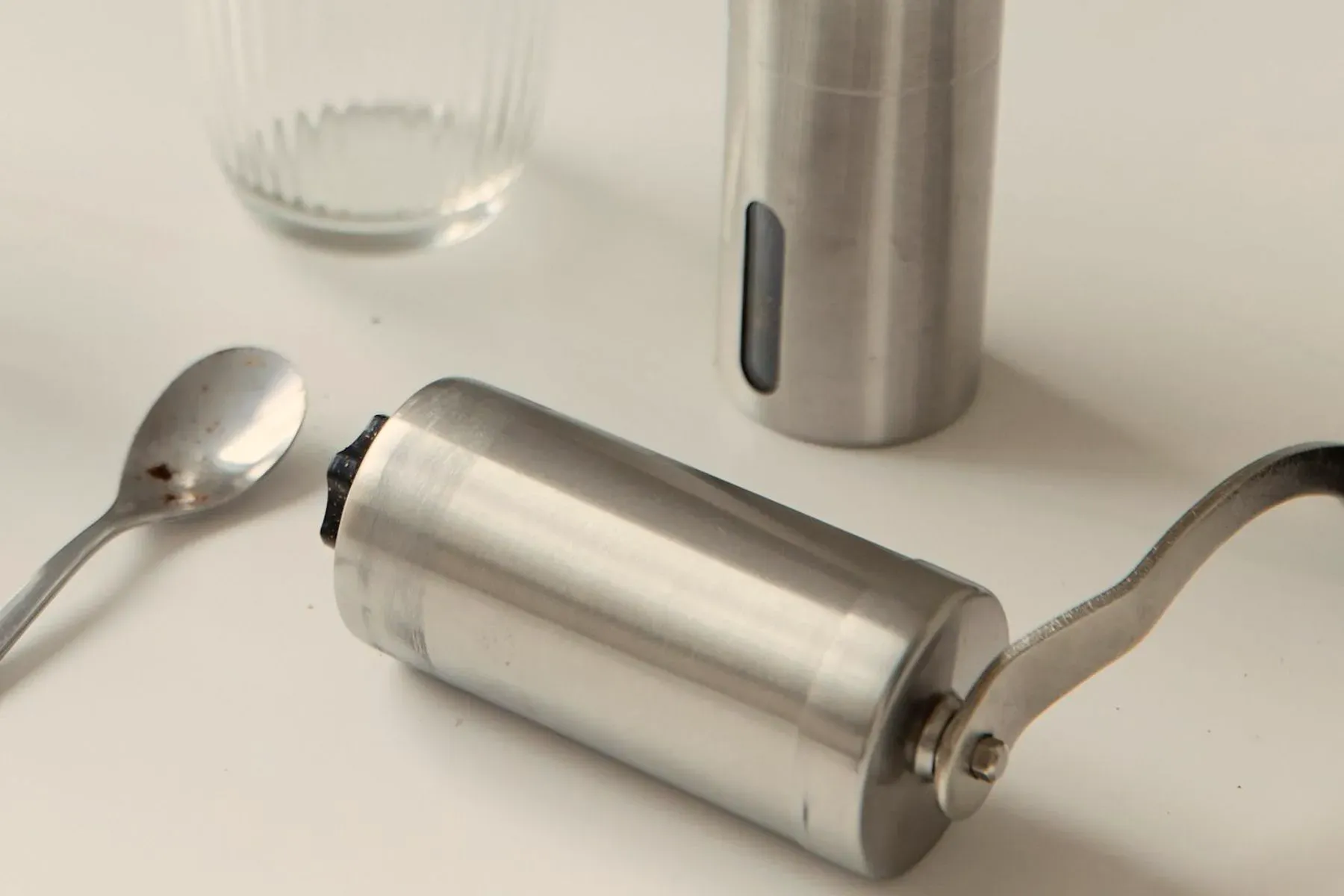
A grinder changes your coffee more than most other equipment. The same beans taste different ground evenly or unevenly, coarse or fine. Listings, though, talk about burr sizes, steps and motors as if you already know what matters.
In this guide we set out what to look for in a home grinder and why, from a trade association, grinder makers, roasters and published research. It gives criteria, not product picks.
What to look for
| Look for | Why it matters | What to check |
|---|---|---|
| Burrs, not blades | Burrs crush the beans to a set size; a blade chops them unevenly, and no two batches come out the same. | The listing says burr (conical or flat), not blade. |
| A range that covers your methods | French press wants a coarse grind, drip and pour-over a medium one, and espresso a fine one; some grinders made for brewed coffee never get fine enough for espresso. | The maker says which methods it grinds for, espresso included if you want it. |
| Small, repeatable steps | A few hundredths of a millimeter of burr movement can change an espresso shot by several seconds, so espresso needs fine steps; filter coffee is more forgiving. | Stepped or stepless, and how fine the steps are at the fine end of the range. |
| An even, predictable grind | Grounds of mixed sizes extract unevenly and can taste bitter and sour at once; no grinder makes identical particles, so the aim is a predictable spread. | Burr quality and a solid burr mount; a grinder that wobbles grinds less evenly. |
| Low retention and static | Some grounds always stay inside, rich in fines, and static makes them cling; they turn up stale in the next dose. | A short, straight chute and easy access to the burr chamber for cleaning. |
| Hand or electric, to fit your routine | Hand grinders are compact and quiet but slow, best for one or two cups; electric grinders are quicker and suit daily use, larger batches and espresso. | How many cups you grind for at once, and whether you mind a minute or two of turning. |
| Easy to clean, with burrs you can replace | Burrs wear out after hundreds of kilograms of coffee, and grinders need cleaning every few weeks to every few months. | Replacement burrs and parts sold by the maker, and a burr chamber you can open. |
Burrs, range and steps
Burrs, not blades. A burr grinder crushes the beans between two burrs set a chosen distance apart. The National Coffee Association recommends one, because it gives a more consistent grind and the flavors extract more evenly. A blade grinder chops: Counter Culture Coffee says a truly even grind is nearly impossible with one, and the same result every time is impossible. Our burr vs blade guide explains the difference.
A range for your methods. The longer coffee is in contact with water, the coarser the grind should be. The National Coffee Association gives coarse for French press and cold brew, medium for drip and pour-over, and fine for espresso. Check that the grinder reaches the finest grind you need. One maker says its grinder for brewed coffee will not grind fine enough for espresso, which needs particles under 200 microns. Mahlkönig says its standard burrs cannot reach the flour-like powder Turkish coffee needs. Our grind size chart gives a starting point for each method.
Small, repeatable steps. Espresso is sensitive to tiny changes: Baratza says a few dozen microns of burr movement can change a shot by several seconds. With coarse steps, the right shot may lie between two settings. A stepless grinder can stop anywhere, but Baratza notes that many are hard to return to a setting you used before. For filter coffee the steps matter less. Our stepped vs stepless guide compares the two.
Conical or flat. Both kinds set the grind by the gap between two burrs. Baratza describes conical burrs as rounder in flavor and a little more forgiving, and flat burrs as cleaner and more articulate, and says neither is better. Choose on the other criteria first.
Consistency, retention and static
Grounds of mixed sizes brew unevenly. Cafédirect puts it simply: some particles brew too fast and others too slowly, so the cup can taste bitter and sour at once. No grinder makes identical particles, though. Baratza says the aim is a stable, predictable spread. Espresso grounds usually have two peaks of particle size, and researchers found that a larger share of fines, particles under 100 microns, slows the flow and lengthens the shot.
Every grinder keeps some coffee inside. In one study of a single grinder, about 12% of the coffee stayed inside with no treatment. A small amount of water on the beans cut that to about 2.5%, though the authors warn that too much water can cause caking or corrosion. The retained grounds are rich in fines. Static from grinding makes grounds cling; Fellow says this happens with all grinders.
Two habits help with any grinder. Grind a little and throw it away before you brew; Baratza says a second or two flushes out old grounds. Then weigh your dose after grinding, because some grounds cling to the chute. Our guide to grinder retention and consistency goes further.
Hand or electric
Hand grinders use the same burrs but you turn them. Roasters describe them as compact, quiet and good for travel, but they take more effort and much more time; Merlo suggests them for one or two cups. Electric grinders are quicker and suit daily use and bigger batches. For regular espresso, Merlo says an electric grinder is usually the more practical choice. Our guide to hand grinders for filter coffee covers the manual side.
Cleaning and burr life
Oils and fines build up inside a grinder. Fellow says to clean the burrs at least every three months with daily use; a Baratza blog post suggests every few weeks, especially with darker roasts. Baratza warns against grinding rice to clean a grinder: it can turn into a hard, gummy mess. It suggests cleaning tablets made for burr grinders instead. Our guide to cleaning a coffee grinder has the steps.
Burrs wear out eventually. Mahlkönig says its home burrs last an average of 500 kg of coffee. Baratza’s support manager put its steel burrs at around 500 pounds of grinding and its ceramic burrs at 750, about 227 kg and 340 kg by our conversion. Life varies with bean density, roast and fineness. A grinder whose maker sells replacement burrs and parts can stay in service for years.
Common traps
- “Any grinder can make espresso.” Not if its range stops short of espresso fineness, or its steps are too coarse to land on the right shot.
- “A good grinder makes identical particles.” None does. Look for a predictable grind, not a perfect one.
- “Turn it finer whenever you like.” Baratza and Mahlkönig both say to run the grinder when you adjust finer with beans inside, so the burrs do not press against packed coffee.
- “Once dialed in, the setting never changes.” Baratza says settings normally shift between coffees, because beans differ in density, roast and age.
- “Slower grinding means worn burrs.” It can, but Baratza’s support manager notes that beans and roast change grinding speed and fines too.
Frequently asked questions
Can one grinder handle both espresso and filter coffee?
Only if its range reaches espresso fineness and its steps are small at the fine end. The National Coffee Association gives a fine grind for espresso and a medium one for drip. One maker says its grinder for brewed coffee will not grind fine enough for espresso, under 200 microns, and Baratza notes that with coarse steps the perfect shot may lie between two settings.
How often should I clean my grinder?
Makers differ. Fellow says to clean the burrs at least every three months if you grind daily; a Baratza blog post suggests every few weeks, especially with darker roasts. Between cleans, grind a few grams and throw them away before you brew.
When do burrs need replacing?
After a lot of coffee. Mahlkönig says its home burrs last an average of 500 kg; Baratza’s support manager put its steel burrs at around 500 pounds of grinding and its ceramic burrs at 750. Slower grinding or more fines can be a sign, but bean density, roast and age change those too.
Hand grinder or electric?
Roasters describe hand grinders as compact and quiet but slower and more work, best for one or two cups. Electric grinders are quicker and suit daily use and bigger batches. Merlo says that if you make espresso regularly, an electric grinder is usually the more practical choice.
Why do grounds cling and scatter?
Grinding charges the particles with static, so they clump and cling; researchers found less charge with moister beans and coarser settings. In one study a little water on the beans cut retention sharply, but the authors warn that too much can cause caking or corrosion. Check your grinder’s manual first: some makers say never to add water.
- A burr grinder gives an even, repeatable grind; the National Coffee Association recommends burrs over blades.
- Match the range to your methods: coarse for French press, medium for drip and pour-over, fine for espresso. Some grinders made for brewed coffee never get fine enough for espresso.
- Espresso needs small, repeatable steps: Baratza says a few dozen microns of burr movement can change a shot by several seconds.
- Every grinder keeps back some grounds. Grind a little first and throw it away, then weigh your dose after grinding.
- Burrs wear out slowly: Mahlkönig puts its home burrs at about 500 kg of coffee, so choose a grinder whose burrs and parts you can replace.
Sources
Pages used for the claims above.
- National Coffee Association, Drip coffee: burr and blade grinders.
- National Coffee Association, Pour-over coffee: grind size by method.
- National Coffee Association, Espresso: contact time and grind.
- Smrke, Eiermann and Yeretzian, The role of fines in espresso extraction dynamics, Scientific Reports (2024).
- Méndez Harper, Bumbaugh, Hendon and colleagues, Strategies to mitigate electrostatic charging during coffee grinding, iScience (2024): retention and water.
- Baratza, Stepped vs. Stepless: Which is Right for Your Grind?.
- Baratza, Dialing In Espresso: conical and flat burrs.
- Baratza, Common Grinding Myths: uniformity, cleaning and rice.
- Baratza, Switching Grind Settings with Confidence: purging and adjusting finer.
- Barista Magazine, Ask a Technician: Baratza (2021): burr life.
- Mahlkönig, Frequently Asked Question: home burr life and Turkish grinding.
- Fellow, cleaning and maintaining its brew grinder: cleaning interval and purging.
- Fellow, reducing mess and retention in its brew grinder: static.
- Fellow, gear guide for its brew grinder: espresso fineness.
- Merlo Coffee, Choosing a Coffee Grinder: Hand vs Electric.
- Cafédirect, Choosing the Right Coffee Grinder.
- Counter Culture Coffee, Coffee Basics: Brewing Better Coffee At Home: blade grinders.
Published Updated
See sourcesReport a correction — fixes are logged in the Updated date.