
Article
How to Choose a Home Espresso Machine
Edited and reviewed by Coffee Made Clear TeamUpdated 8 min read
First decide how hands-on you want to be, then match the heating system to how many milk drinks you make.
Look for stable temperature, about 9 bar at the coffee, and a basket that suits your grinder.
Budget for an espresso-capable grinder, and check the maker’s advice on water, descaling and backflushing before you buy.
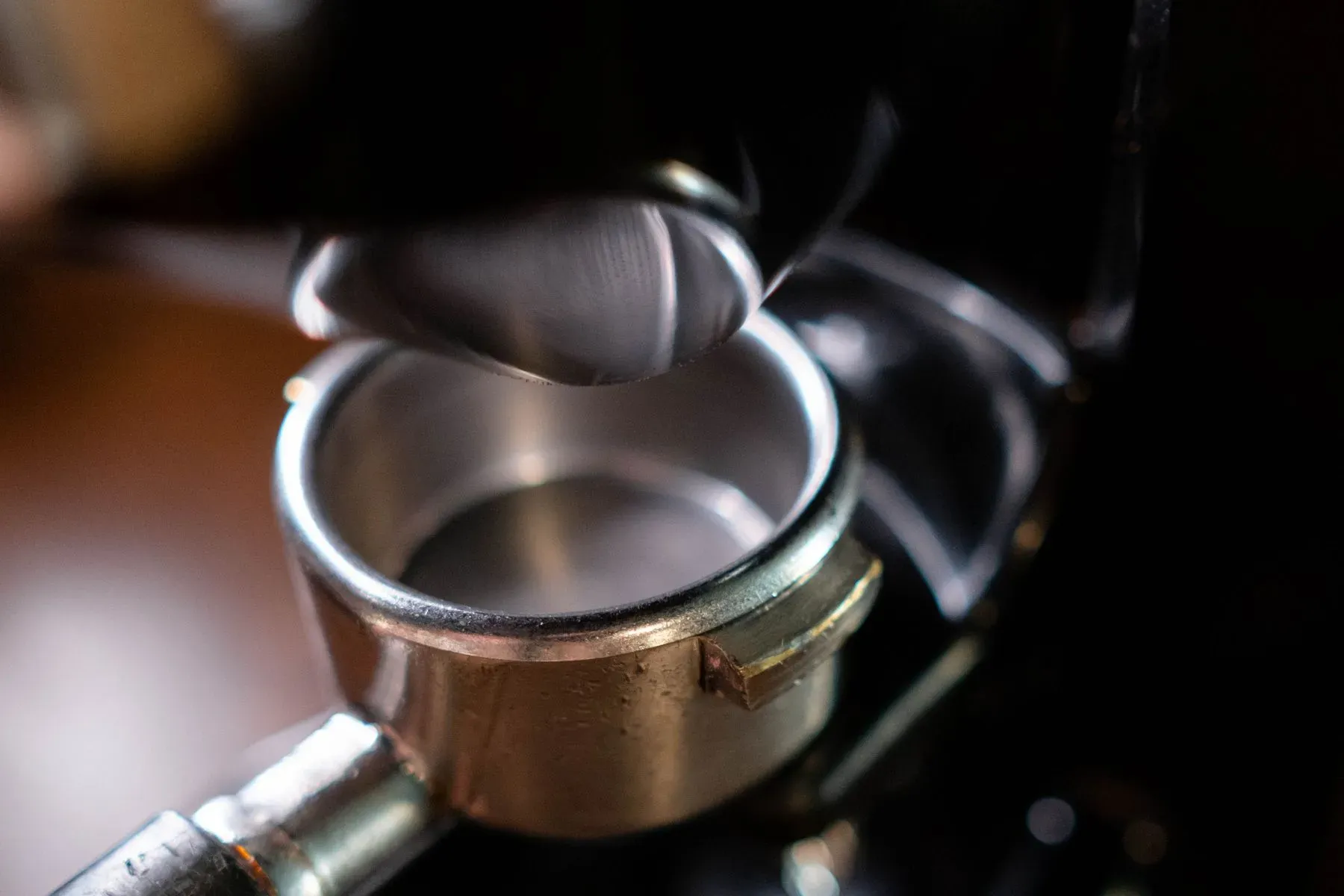
An espresso machine is a bigger choice than most coffee equipment. It sets your routine, your counter space and your upkeep, and it only works as well as the grinder beside it. Listings lead with pump pressure and boiler names; the things that change your morning are simpler.
In this guide we set out what to look for in a home espresso machine and why, from trade associations, machine makers, roasters and published research. It gives criteria, not product picks.
What to look for
| Look for | Why it matters | What to check |
|---|---|---|
| How hands-on you want to be | Manual and semi-automatic machines give you control but need a grinder and practice; bean-to-cup machines grind and brew for you, with little room to adjust. | Manual, semi-automatic, automatic or bean-to-cup, and what it leaves to you. |
| A heating system that fits your milk drinks | The heating system decides how soon you can brew and whether you can steam while you brew; fast heaters are ready in seconds, boilers take minutes. | Boiler type, warm-up time, and whether it brews and steams at once. |
| Stable brewing temperature | Espresso is brewed at about 90 to 96 °C, and small swings change the taste; a PID controller holds the temperature more steadily than a simple thermostat. | PID temperature control, and whether you can set the temperature. |
| About 9 bar at the coffee | Espresso is brewed at about 9 bar; a 15-bar pump rating is the pump’s maximum, not the pressure at the coffee. | The brew pressure, not only the pump rating, and an over-pressure valve. |
| Basket type and portafilter size | Pressurized baskets forgive an uneven grind; non-pressurized baskets give more control but need a capable espresso grinder. | Pressurized, non-pressurized or both, and the portafilter size (58 mm is the café standard). |
| A grinder that can grind for espresso | Espresso needs a fine, consistent grind adjusted in small steps; pre-ground coffee and grinders built for filter coffee fall short with a non-pressurized basket. | Budget for an espresso-capable grinder alongside the machine. |
| A steam wand for the milk you make | A manual wand gives you the most control over milk texture; a frothing aid on the wand is easier but gives less control. | Wand type, and whether it can steam while you brew. |
| Space, tank and water care | Hard water scales a machine and very soft or distilled water can damage it; a tank needs room to lift out, and plumbing in is optional. | The footprint with room to open it, the tank size, and the maker’s water advice. |
| Maintenance you will keep up | Descaling removes minerals and backflushing removes coffee oils; backflushing is only for machines with a three-way valve. | How the maker says to descale and clean it, and whether it can be backflushed. |
How hands-on, and how fast
The National Coffee Association describes manual, semi-automatic, automatic and super-automatic machines. On a semi-automatic, the machine makes the pressure and you decide how much water to use; a super-automatic, or bean-to-cup machine, grinds and brews for you with little room to customize. Breville says bean-to-cup convenience can sometimes cost some quality, and that these machines can be higher-maintenance, with pumps to rinse, cleaning cycles and descaling. A manual or semi-automatic machine needs a quality grinder and a tamper beside it.
The heating system sets how soon you can brew and whether you can steam at the same time. Breville says one of its fast-heater machines is ready in 3 seconds; a single-boiler manual says to wait a few minutes; La Marzocco gives 5 and 10 minutes for two dual-boiler machines. The National Coffee Association suggests asking how many shots you will make, and how often. Our guide to espresso machine types explains each heating system.
Temperature and pressure
Temperature. The Specialty Coffee Association’s heritage definition of espresso uses water at 195 to 205 °F, 90.5 to 96.1 °C, and a survey of baristas averaged 200.3 °F. La Marzocco says older thermostats weren’t very accurate and that PID control is now standard in most modern machines; it ships its machines set to 200 °F, 93 °C.
Pressure. The same definition says 9 to 10 atmospheres, and the barista survey found most used 9 bar. Breville’s own page describes a 9-bar extraction delivered by a 15-bar pump, and La Marzocco says its machines are calibrated to brew at 9 bar; the higher peak of its expansion valve is not to be confused with brew pressure. A 2002 study that compared 7, 9 and 11 atmospheres found 9 gave a consistent foam and fresh, fruity aromas. A bigger number on the pump does not mean better espresso.
Basket, grinder and steam
Breville says the most common portafilter sizes are 54 mm, 49 mm and 58 mm, the last standard in cafés. Pressurized (dual-wall) baskets build back pressure that makes up for an uneven grind or tamp, and Breville notes that entry-level machines tend to use them. Non-pressurized (single-wall) baskets give more control and fuller flavor, but Breville says they are hard to use without a premium burr grinder. Many portafilters take both.
Plan for the grinder at the same time as the machine. La Marzocco says only a dedicated espresso grinder can reach the fine, consistent grind espresso needs, and published research found that grinders differ in their share of fines, which changes the flow and the shot time. Our guide to choosing a coffee grinder covers what to look for.
Steam
For milk drinks, check the steam wand. Breville calls a steam wand a fully manual device that gives fine control over milk temperature, and says most baristas aim for 140 to 145 °F. A frothing aid on the wand, which Gaggia describes as drawing air in through a small hole, is easier but gives less control. La Marzocco puts typical commercial-grade steam pressure at 1.5 to 1.7 bar. Our guide to steaming milk shows the technique.
Safety. Steam and hot water cause burns and scalds. Keep your hands clear of the steam wand tip and the group head while the machine is on, point the wand into a jug or cloth when you purge it, and never aim it at yourself or other people. The portafilter, wand and group head stay hot after use, so let them cool before you clean them. An espresso machine runs on mains power and holds hot, pressurized water: do not force a portafilter that will not release, and unplug the machine before you clean or descale it. Follow your machine’s manual for descaling and for rinsing afterwards.
Space, water and upkeep
Breville suggests planning for room to lift a lid or pull out the water tank, and for nearby water and power. La Marzocco says plumbing in is optional and the tank is reliable; plumbing in needs 2 to 4 bar at the inlet and a drain within 4 feet.
Water causes most machine trouble. The National Coffee Association says to avoid distilled or softened water, and La Marzocco suggests water of 90 to 150 ppm total dissolved solids, warning that distilled water can damage parts and that scale damage is not covered by its warranty. Fellow suggests descaling every one to three months, depending on use and water. Backflushing removes coffee oils, not minerals: La Marzocco calls the two completely different jobs, and a retailer’s guide says only machines with a three-way valve can be backflushed. Our guide to cleaning and backflushing has the steps.
Common traps
- “A higher bar rating makes better espresso.” The pump rating is not the brew pressure; about 9 bar is the reference.
- “The machine matters most; any grinder will do.” A non-pressurized basket needs a capable espresso grinder.
- “Thick crema means great espresso.” A pressurized basket makes crema easier while masking grind and tamp errors.
- “Backflushing is the same as descaling.” Backflushing removes oils; descaling removes minerals.
- “Bean-to-cup means no upkeep.” Breville describes regular cleaning cycles and descaling.
Frequently asked questions
What pressure should an espresso machine brew at?
About 9 bar. The Specialty Coffee Association’s heritage definition of espresso says 9 to 10 atmospheres, and baristas surveyed most often used 9 bar. Breville says its 15-bar pump delivers a 9-bar extraction, so the number on the pump is not the brew pressure.
Do I need a 58 mm portafilter?
No. Breville says 58 mm is standard in cafés, and home machines often use 54 mm or 49 mm. Knowing your basket size and type matters more, because it sets your dose and how forgiving the machine is.
Pressurized or non-pressurized basket?
Pressurized baskets build back pressure that makes up for an uneven grind or tamp, so they suit beginners. Non-pressurized baskets give more control and, Breville says, fuller flavor, but they need a capable espresso grinder. Many portafilters take both.
How long does a machine take to warm up?
It depends on the heating system. Breville says one of its fast-heater machines is ready in 3 seconds; a single-boiler manual says to wait a few minutes; La Marzocco gives 5 and 10 minutes for two of its dual-boiler machines.
How often should I descale and backflush?
Fellow suggests descaling every one to three months, depending on use and water, or as the manual says. Backflush only a machine with a three-way valve: a retailer warns that forcing it on other machines can damage them.
- Decide first how hands-on you want to be: a semi-automatic machine gives control, a bean-to-cup machine gives convenience.
- Espresso is brewed at about 9 bar. A 15-bar pump rating is the pump’s maximum, not the pressure at the coffee.
- A PID controller holds the brewing temperature steadier than a simple thermostat, near the classic 90 to 96 °C range.
- Budget for a grinder: a non-pressurized basket needs a fine, consistent espresso grind; a pressurized basket forgives more.
- Water and upkeep matter: avoid distilled or softened water, descale on the maker’s schedule, and backflush only machines with a three-way valve.
Sources
Pages used for the claims above.
- Specialty Coffee Association, Defining the Ever-Changing Espresso, 25 magazine: the heritage definition and the barista survey.
- National Coffee Association, Espresso: machine types, questions to ask and water.
- Andueza and colleagues, Influence of water pressure on the final quality of arabica espresso coffee, Journal of Agricultural and Food Chemistry (2002).
- Smrke, Eiermann and Yeretzian, The role of fines in espresso extraction dynamics, Scientific Reports (2024).
- Breville, What are the different types of portafilters?.
- Breville, Pressurized vs. non-pressurized baskets.
- Breville, What is a super-automatic espresso machine?.
- Breville, A guide to buying a coffee machine: space and access.
- Breville, How to steam milk: A step-by-step guide.
- Breville, Milk frother vs. steamer: the steam wand.
- Breville, espresso machine product page: 15-bar pump, 9-bar extraction.
- Breville, fast-heater machine product page: ready in 3 seconds.
- La Marzocco Home, A Brief History of the PID.
- La Marzocco Home, Brewing at 6-Bar: 9-bar calibration.
- La Marzocco Home, FAQ: the expansion valve.
- La Marzocco Home, Water for Home Espresso Machines.
- La Marzocco Home, Why Buy a Home Espresso Grinder?.
- La Marzocco Home, Read this before you plumb in your espresso machine at home.
- La Marzocco Home, The Tale of the Dirty Solenoid: backflushing and descaling.
- La Marzocco Home, The Essential Guide to Mastering Espresso at Home: steam pressure.
- La Marzocco Home, dual-boiler machine guide: warm-up times.
- Gaggia North America, Steaming and Frothing.
- Gaggia, single-boiler machine manual: warm-up and baskets.
- Fellow, How to Descale an Espresso Machine.
- Seattle Coffee Gear (retailer), How to Backflush Your Espresso Machine: the three-way valve.
Published Updated
See sourcesReport a correction — fixes are logged in the Updated date.